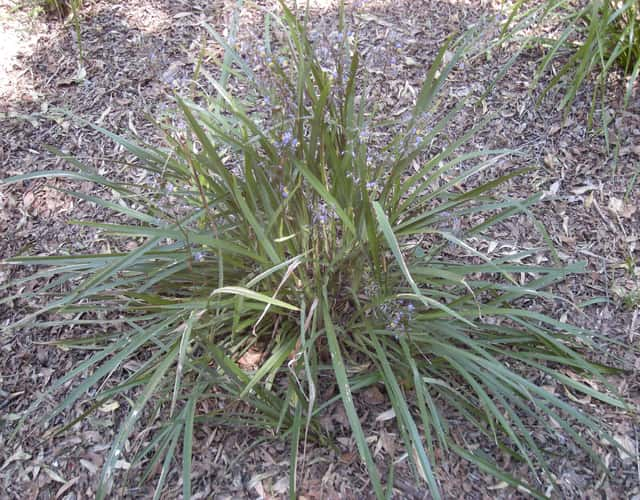
Asphodelaceae
Flax Lily (Dianella)
Dianella
An easy, low-maintenance garden plant: sun or part shade, well-drained soil and regular water only in the first year. Once established it tolerates drought and moderate frost (hardiness varies by species). Avoid waterlogged soil.
Every 7 days
Bright indirect
-5° - °C
% - %
Categories
What is Flax lily?
Flax lily (Dianella) is a easy-care plant from the Asphodelaceae family. Dianella is a genus of about 40 species of perennials in the Asphodelaceae family, native to Australia (home to about half of them), New Zealand, the Pacific islands, Southeast Asia and Africa. They form clumps of strappy green or variegated leaves that spread by rhizomes and reach 60 to 90 cm. From...
Flax lily grows up to 90cm, spread of 90cm, watering every 7 days. It is not suitable for indoor environments and safe for pets.
Unlike many tropical plants, Flax lily tolerates watering mistakes. Best for beginners. Unlike many popular species, Flax lily is safe to keep around pets.
How to Care for Flax lily?
TLDR: Flax lily needs Bright indirect, watering every 7 days, and temperatures between -5-30°C with 40-70% humidity.
How Often Should You Water Flax lily?
In the first year, water deeply about once a week to build roots. Once established, water only in long dry spells; in pots, when the top few centimetres of mix are dry. Too much water yellows the leaves and rots the roots.
How Much Light Does Flax lily Need?
Prefers an open, sunny spot but accepts part shade. In full sun it spreads faster; in shade the clump stays tidier.
What Is the Best Soil for Flax lily?
Adapts to many soil types as long as they drain well. In pots, use general potting mix with coarse sand.
What Pot Should You Use for Flax lily?
A wide pot with a drainage hole so the clump can spread; terracotta or plastic both work.
What Is Flax lily and Where Does It Come From?
Dianella is a genus of about 40 species of perennials in the Asphodelaceae family, native to Australia (home to about half of them), New Zealand, the Pacific islands, Southeast Asia and Africa. They form clumps of strappy green or variegated leaves that spread by rhizomes and reach 60 to 90 cm. From spring to midsummer they send branched stems above the leaves with small blue, purple or white star flowers with yellow stamens, followed by glossy blue-purple berries that last into autumn. They are widely used in landscaping for edging and mass planting. Aboriginal Australians weave baskets from the leaves. The fruit of most species should not be eaten.
How to Propagate Flax lily?
Clump division
Variegated and named varieties only stay true to type when divided.
- 1 Lift an established clump
- 2 Split it into pieces with rhizome, roots and a few leaves
- 3 Cut the leaves back by half to reduce water loss
- 4 Replant at the same depth and water well
Materials needed:
Seed
Fresh seed germinates best; seedlings can vary from the parent.
- 1 Remove the black seeds from ripe berries
- 2 Sow fresh with no pre-treatment in moist mix
- 3 Keep bright and lightly moist
- 4 Pot on once seedlings have a few leaves
Materials needed:
How Big Does Flax lily Grow?
TLDR: Flax lily can reach up to 90cm tall with Medium growth rate.
Max height
90cm
Spread
90cm
Foliage
Evergreen
Warning: Toxic Plant
This plant can be toxic if ingested. Keep out of reach of:
Plant Uses
Ornamental
Great for decoration
Ground Cover
Soil coverage
Is your plant showing symptoms?
Click on the symptom to discover possible causes:
What Diseases Commonly Affect Flax lily?
TLDR: Flax lily is susceptible to 6 known diseases. Monitor regularly for early detection.
Root Rot
Root rot is a serious fungal disease that affects the root system of plants, causing them to decay and die. It is primarily caused by overwatering, poor drainage, or soil-borne fungi such as Pythium, Phytophthora, Rhizoctonia, and Fusarium. The disease thrives in waterlogged conditions where roots are deprived of oxygen, making them susceptible to fungal infection.
Rust
Rust is a common fungal disease caused by fungi in the order Pucciniales that affects a wide variety of plants. The disease gets its name from the characteristic orange, yellow, or reddish-brown pustules that appear on leaves, resembling metal rust. This obligate fungal parasite requires living plants to survive and can cause significant economic losses in agricultural crops.
Slugs and Snails
Slugs and snails are mollusks that feed on plant tissue, causing irregular holes in leaves and damage to young seedlings. They are most active at night and in moist conditions, leaving characteristic silvery slime trails. These pests can quickly devastate gardens, especially during wet seasons.
Mealybugs
Mealybugs are small, soft-bodied insects covered with a white, waxy, cottony material. They are common pests of houseplants and outdoor plants in mild climates. These sap-sucking insects feed on plant tissue, causing damage, stunted growth, and can lead to plant death if left untreated. They produce sticky honeydew which attracts sooty mold.
Fun Facts
About half of all Dianella species are native to Australia.
Aboriginal Australians weave baskets from the leaves.
Frequently asked questions
How often should I water flax lily?
Are flax lily berries edible?
Does flax lily like sun or shade?
How do I propagate flax lily?
Compare with similar plants
| Attribute | Difficulty | Light | Watering | Pet Safe |
|---|---|---|---|---|
| Field Maple | Easy | Bright indirect | 14d | ✓ |
| Iberian Houseleek | Easy | Direct sun | 14d | ✓ |
| Silver Birch | Easy | Direct sun | 14d | ✓ |
| Common Blanketflower | Easy | Direct sun | 10d | ✓ |





