Oxalidaceae
Fleshy Wood Sorrel (Oxalis megalorrhiza)
Oxalis megalorrhiza
An easy, sun-loving plant that stores water in its stems and root. It grows mostly in fall, winter and spring; in strong heat it may drop leaves and rest. Use a fast-draining mix and let it dry between waterings. It handles light cold but not hard frost. It flings its seeds and pops up in nearby pots: remove the seed capsules if you don't want seedlings everywhere.
Every 7 days
Bright indirect
-3° - °C
% - %
Categories
What is Fleshy wood sorrel?
Fleshy wood sorrel (Oxalis megalorrhiza) is a easy-care plant from the Oxalidaceae family. Oxalis megalorrhiza is a succulent wood sorrel from the coast of South America: Peru, Chile, Ecuador, Bolivia and the Galapagos Islands. It now also grows wild in other places, such as New Zealand. The plant reaches about 20 cm. Underground it has a thick, long root, which gives the species its name...
Fleshy wood sorrel grows up to 20cm, watering every 7 days. It is suitable for indoor environments and not safe for pets.
Unlike many tropical plants, Fleshy wood sorrel tolerates watering mistakes. Best for beginners. Without precautions, ingestion can cause irritation in pets. Keep out of reach of cats and dogs. Without adequate drainage, root rot can develop within 14 days.
How to Care for Fleshy wood sorrel?
TLDR: Fleshy wood sorrel needs Bright indirect, watering every 7 days, and temperatures between -3-30°C with 40-70% humidity.
How Often Should You Water Fleshy wood sorrel?
During the growing season, water about once a week, only when the mix is dry. If it drops its leaves in summer, water very little until it sprouts again. Soggy roots rot.
How Much Light Does Fleshy wood sorrel Need?
Full sun or bright part shade. Indoors, the brightest window you have. In low light the stems stretch and the leaves go soft.
What Is the Best Soil for Fleshy wood sorrel?
Cactus and succulent mix with plenty of coarse sand or grit. Pot with a drainage hole.
What Pot Should You Use for Fleshy wood sorrel?
A clay pot with a drainage hole, somewhat deep for the thick root. It looks good in a bonsai pot with part of the root exposed.
What Is Fleshy wood sorrel and Where Does It Come From?
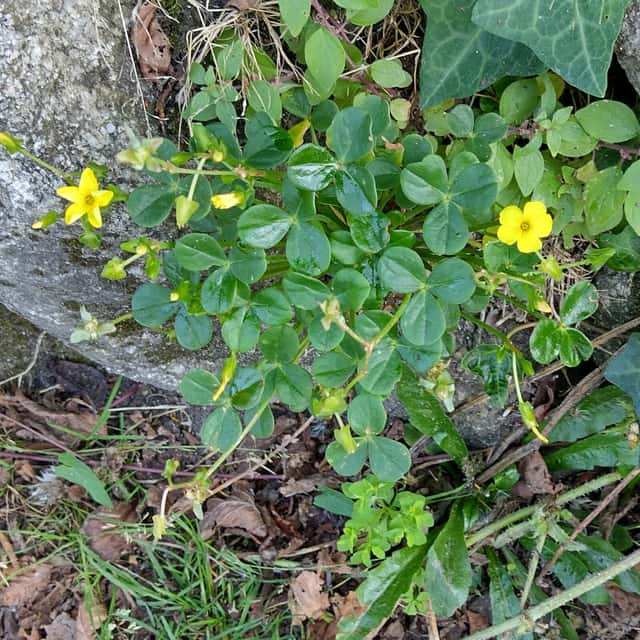
Oxalis megalorrhiza is a succulent wood sorrel from the coast of South America: Peru, Chile, Ecuador, Bolivia and the Galapagos Islands. It now also grows wild in other places, such as New Zealand. The plant reaches about 20 cm. Underground it has a thick, long root, which gives the species its name (megalorrhiza means "big root"). The stems are short and fleshy, with shiny, thick, dark green leaves made of three heart-shaped leaflets. The flowers are yellow, sometimes with orange veins, and appear from spring to fall. Many growers know it as Oxalis carnosa.
How to Propagate Fleshy wood sorrel?
Seed
Most of the time you won't need to sow: seedlings come up on their own in nearby pots.
- 1 Collect the capsules before they open, since they burst and throw the seeds
- 2 Scatter the seeds on moist sandy mix
- 3 Cover with a very thin layer of sand
- 4 Keep in bright light and moist until they germinate, then move to individual pots
Materials needed:
How Big Does Fleshy wood sorrel Grow?
TLDR: Fleshy wood sorrel can reach up to 20cm tall with Medium growth rate.
Max height
20cm
Foliage
Semi-evergreen
Warning: Toxic Plant
This plant can be toxic if ingested. Keep out of reach of:
Plant Uses
Ornamental
Great for decoration
Is your plant showing symptoms?
Click on the symptom to discover possible causes:
What Diseases Commonly Affect Fleshy wood sorrel?
TLDR: Fleshy wood sorrel is susceptible to 2 known diseases. Monitor regularly for early detection.
Root Rot
Root rot is a serious fungal disease that affects the root system of plants, causing them to decay and die. It is primarily caused by overwatering, poor drainage, or soil-borne fungi such as Pythium, Phytophthora, Rhizoctonia, and Fusarium. The disease thrives in waterlogged conditions where roots are deprived of oxygen, making them susceptible to fungal infection.
Rust
Rust is a common fungal disease caused by fungi in the order Pucciniales that affects a wide variety of plants. The disease gets its name from the characteristic orange, yellow, or reddish-brown pustules that appear on leaves, resembling metal rust. This obligate fungal parasite requires living plants to survive and can cause significant economic losses in agricultural crops.
Fun Facts
The name megalorrhiza comes from Greek and means big root.
Some flowers pollinate themselves before they even open.
Succulent collectors call it a weed, because its seeds end up in every pot.
Frequently asked questions
Why did my Oxalis megalorrhiza lose its leaves?
Why are seedlings coming up in my other pots?
Is it dangerous for cats and dogs?
Can I leave the root above the soil?
Compare with similar plants
| Attribute | Difficulty | Light | Watering | Pet Safe |
|---|---|---|---|---|
| Field Maple | Easy | Bright indirect | 14d | ✓ |
| Iberian Houseleek | Easy | Direct sun | 14d | ✓ |
| Silver Birch | Easy | Direct sun | 14d | ✓ |
| Common Blanketflower | Easy | Direct sun | 10d | ✓ |





