Zamiaceae
Florida Coontie (Zamia integrifolia): Care Guide
Zamia integrifolia
A slow, low-maintenance cycad for sun or part shade. Plant it in sandy, well-drained soil, water regularly until established and then only in dry spells; it tolerates drought, poor soil and salt spray. Feed lightly in the growing season, remove only damaged leaves, and watch for scale insects. All parts are poisonous: keep it away from pets and children.
Every 14 days
Bright indirect
-7° - 35°C
40% - 70%
Categories
What is Florida Coontie?
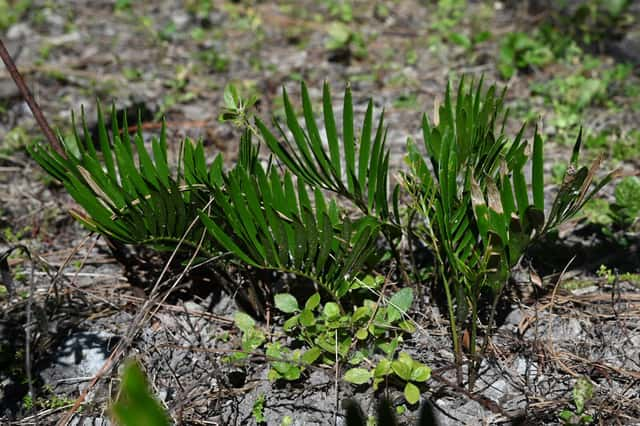
Florida Coontie (Zamia integrifolia) is a easy-care plant from the Zamiaceae family. Zamia integrifolia, the coontie or Florida arrowroot, is a small, tough cycad native to Florida, formerly Georgia, the Bahamas, Cuba, the Cayman Islands and Puerto Rico. It is the only cycad native to the continental United States. A fleshy, mostly underground stem produces arching, fern-like pinnat...
Florida Coontie grows up to 90cm, spread of 150cm, watering every 14 days, -7°C – 35°C, 40–70% humidity. It is suitable for indoor environments and not safe for pets.
Unlike many tropical plants, Florida Coontie tolerates watering mistakes. Best for beginners. Without precautions, ingestion can cause irritation in pets. Keep out of reach of cats and dogs. Without adequate drainage, root rot can develop within 28 days.
How to Care for Florida Coontie?
TLDR: Florida Coontie needs Bright indirect, watering every 14 days, and temperatures between -7-35°C with 40-70% humidity.
How Often Should You Water Florida Coontie?
Water every 1-2 weeks while young or in pots, letting the top of the soil dry between waterings. Established plants in the ground are very drought tolerant and need water only during long dry spells. Avoid soggy soil, which rots the fleshy stem.
How Much Light Does Florida Coontie Need?
Full sun to partial shade. In hot climates it looks best with some afternoon shade; indoors give it the brightest window available or a spot outdoors in dappled shade in summer.
What Is the Best Soil for Florida Coontie?
Sandy, well-drained soil, with or without organic matter; it grows better in richer soils. It tolerates acid to alkaline pH and salt spray. In pots use a gritty, fast-draining mix.
What Pot Should You Use for Florida Coontie?
A deep, heavy pot with drainage holes suits the long tuberous stem; terracotta helps the mix dry out between waterings.
Care Schedule
Fertilize
Every 90 days
Repot
Every 1095 days
What Is Florida Coontie and Where Does It Come From?
Zamia integrifolia, the coontie or Florida arrowroot, is a small, tough cycad native to Florida, formerly Georgia, the Bahamas, Cuba, the Cayman Islands and Puerto Rico. It is the only cycad native to the continental United States. A fleshy, mostly underground stem produces arching, fern-like pinnate leaves 20-100 cm long with 5-30 pairs of glossy leaflets. Plants are male or female: males carry slender cones, females broad cones that ripen to orange-red seeds. It is the larval host of the atala butterfly, and its starchy root was once processed into "Florida arrowroot" flour.
How to Propagate Florida Coontie?
Seed
Germination is slow and uneven. Seeds are toxic, so handle them with gloves and keep them away from pets.
- 1 Collect ripe orange-red seeds from a female cone, wearing gloves
- 2 Remove the fleshy seed coat, which must be stripped for germination
- 3 Sow just below the surface of a sandy, well-drained mix
- 4 Keep warm and lightly moist until the first leaf appears
Materials needed:
Division of the underground stem
Use only on established clumps. Keep newly divided pieces on the dry side so the cut does not rot.
- 1 Dig around a mature multi-stemmed clump
- 2 Cut off a side branch of the fleshy underground stem with a clean saw or knife
- 3 Let the cut dry for several days
- 4 Plant in sandy, well-drained soil and water sparingly until new leaves appear
Materials needed:
How Big Does Florida Coontie Grow?
TLDR: Florida Coontie can reach up to 90cm tall with Slow growth rate.
Max height
90cm
Spread
1.5m
Growth rate
Slow
Foliage
Evergreen
Warning: Toxic Plant
This plant can be toxic if ingested. Keep out of reach of:
Plant Uses
Ornamental
Great for decoration
Ground Cover
Soil coverage
Culinary Uses
- Historically the root was ground, soaked and rinsed repeatedly to remove the toxin and made into "Florida arrowroot" starch. Never eat any part of the plant without that processing.
Is your plant showing symptoms?
Click on the symptom to discover possible causes:
What Diseases Commonly Affect Florida Coontie?
TLDR: Florida Coontie is susceptible to 6 known diseases. Monitor regularly for early detection.
Scale Insects
Scale insects are small sap-sucking pests that appear as brown, shell-like bumps on plant stems and leaves. There are over 25 species, divided into armored (hard) and unarmored (soft) scales. They feed by piercing plant tissue and extracting sap, which weakens the plant and can lead to yellowing, stunted growth, and even death if left untreated. They also excrete honeydew, which attracts ants and promotes sooty mold growth.
Mealybugs
Mealybugs are small, soft-bodied insects covered with a white, waxy, cottony material. They are common pests of houseplants and outdoor plants in mild climates. These sap-sucking insects feed on plant tissue, causing damage, stunted growth, and can lead to plant death if left untreated. They produce sticky honeydew which attracts sooty mold.
Caterpillars
Caterpillars are the larval stage of moths and butterflies that feed voraciously on plant foliage, stems, flowers, and fruits. Common species include cabbage loopers, tomato hornworms, armyworms, and cutworms. These pests can cause extensive damage by consuming large amounts of plant tissue in a short time. They vary in size from small (1/4 inch) to large (5 inches), with colors ranging from green to brown, often featuring stripes or spots. Caterpillars are highly mobile and can quickly spread throughout gardens, making them one of the most destructive common pests.
Root Rot
Root rot is a serious fungal disease that affects the root system of plants, causing them to decay and die. It is primarily caused by overwatering, poor drainage, or soil-borne fungi such as Pythium, Phytophthora, Rhizoctonia, and Fusarium. The disease thrives in waterlogged conditions where roots are deprived of oxygen, making them susceptible to fungal infection.
Meaning & Symbolism
Seen as a symbol of endurance and heritage, linking Florida gardens to ancient plant lineages and to the Seminole and Tequesta peoples who made bread from it.
Fun Facts
It is the only cycad native to the continental United States
Its processed root starch was sold as "Florida arrowroot" from mills around Miami until World War I
It is the larval host of the atala butterfly, once thought extinct in Florida
Frequently asked questions
Is coontie poisonous to dogs and cats?
How much sun does a coontie need?
How cold can Zamia integrifolia get?
Why are caterpillars eating my coontie?
Compare with similar plants
| Attribute | Difficulty | Light | Watering | Pet Safe |
|---|---|---|---|---|
| Field Maple | Easy | Bright indirect | 14d | ✓ |
| Iberian Houseleek | Easy | Direct sun | 14d | ✓ |
| Silver Birch | Easy | Direct sun | 14d | ✓ |
| Common Blanketflower | Easy | Direct sun | 10d | ✓ |





