Urticaceae
Florida Pellitory: Ground Cover Plant
Parietaria floridana
A hardy and easy-to-grow plant that tolerates full sun to partial shade. It requires regular watering to keep the substrate uniformly moist, without waterlogging, as it is sensitive to root rot. It prefers well-drained sandy or calcareous soils, with a neutral to slightly alkaline pH. It grows quickly, self-seeds easily, and needs little maintenance apart from occasional light pruning.
Every 4 days
Bright indirect
10° - 32°C
50% - 80%
Categories
What is Florida Pellitory?
Florida Pellitory (Parietaria floridana) is a easy-care plant from the Urticaceae family. Parietaria floridana, commonly known as Florida pellitory, is an annual or short-lived herbaceous plant belonging to the Urticaceae family (nettles), although it lacks stinging hairs. Native to the southeastern United States, the Antilles, and much of Latin America, it grows in a branched and someti...
Florida Pellitory grows up to 40cm, watering every 4 days, 10°C – 32°C, 50–80% humidity. It is suitable for indoor environments and safe for pets.
Unlike many tropical plants, Florida Pellitory tolerates watering mistakes. Best for beginners. Unlike many popular species, Florida Pellitory is safe to keep around pets. Without adequate drainage, root rot can develop within 8 days.
How to Care for Florida Pellitory?
TLDR: Florida Pellitory needs Bright indirect, watering every 4 days, and temperatures between 10-32°C with 50-80% humidity.
How Often Should You Water Florida Pellitory?
Water approximately every 3-4 days, ensuring the substrate is moist but never waterlogged; overwatering is the most common cause of problems for this species.
How Much Light Does Florida Pellitory Need?
Place it in a location with full sun to partial shade; indoors, near a bright window where it receives several hours of bright light daily.
What Is the Best Soil for Florida Pellitory?
Use a well-drained, sandy or calcareous substrate with a pH between 6.5 and 7.8; avoid heavy clay mixtures that retain excessive water.
What Pot Should You Use for Florida Pellitory?
If grown in a pot, choose a terracotta container with good drainage, which helps prevent waterlogging of the substrate given its sensitivity to excess moisture.
Care Schedule
Fertilize
Every 180 days
What Is Florida Pellitory and Where Does It Come From?
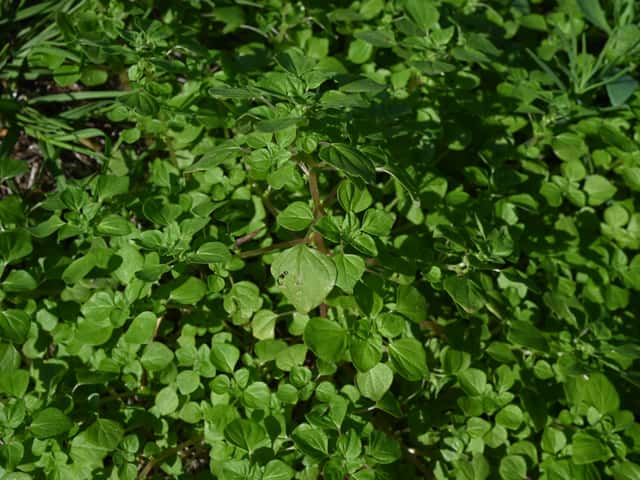
Parietaria floridana, commonly known as Florida pellitory, is an annual or short-lived herbaceous plant belonging to the Urticaceae family (nettles), although it lacks stinging hairs. Native to the southeastern United States, the Antilles, and much of Latin America, it grows in a branched and sometimes prostrate manner, reaching up to 40 cm in height. Its leaves are small, thin, heart-shaped or rhomboid, pale green, and have a fragile, translucent texture. It produces tiny, inconspicuous greenish flowers clustered in the leaf axils, blooming from spring until autumn (until the first frosts). It is common in sandy coasts, calcareous soils, and disturbed areas such as gardens or around greenhouses. Its pollen is a known respiratory allergen, so it is recommended to remove it before flowering for individuals sensitive to seasonal allergies.
How Big Does Florida Pellitory Grow?
TLDR: Florida Pellitory can reach up to 40cm tall with Fast growth rate.
Max height
40cm
Growth rate
Fast
Foliage
Deciduous
Plant Uses
Edible
Can be consumed
Ground Cover
Soil coverage
Culinary Uses
- Young leaves occasionally consumed cooked as a wild vegetable, although this is not a widely documented culinary practice
Is your plant showing symptoms?
Click on the symptom to discover possible causes:
What Diseases Commonly Affect Florida Pellitory?
TLDR: Florida Pellitory is susceptible to 4 known diseases. Monitor regularly for early detection.
Root Rot
Root rot is a serious fungal disease that affects the root system of plants, causing them to decay and die. It is primarily caused by overwatering, poor drainage, or soil-borne fungi such as Pythium, Phytophthora, Rhizoctonia, and Fusarium. The disease thrives in waterlogged conditions where roots are deprived of oxygen, making them susceptible to fungal infection.
Spider Mites
Spider mites are tiny arachnids (less than 1/20 inch long) related to spiders and ticks that feed on plant sap. They thrive in hot, dry conditions and can cause significant damage to ornamental and vegetable plants. During severe infestations, crop losses can reach 14% or higher as these pests disrupt vital plant processes including photosynthesis, carbon dioxide absorption, and transpiration.
Aphids
Aphids are small, soft-bodied, pear-shaped insects (1/16 to 1/8 inch long) that feed by sucking nutrient-rich sap from plants. They reproduce rapidly and can quickly weaken plants, causing distorted growth and transmitting plant viruses. Aphids come in various colors including green, black, red, yellow, brown, and gray. They secrete honeydew, a sticky substance that attracts ants and encourages sooty mold growth.
Leaf Spot
Leaf spot is a common fungal disease caused by various pathogens including Alternaria, Ascochyta, Colletotrichum, Septoria, and Venturia. It primarily affects leaves, causing discolored spots that can lead to premature leaf drop if left untreated.
Meaning & Symbolism
As a wild and spontaneous herb that colonizes coastal soils, cracks, and disturbed lands, Florida pellitory is informally associated with resilience and adaptability to difficult environments, rather than with documented cultural or historical symbolism.
Compare with similar plants
| Attribute | Difficulty | Light | Watering | Pet Safe |
|---|---|---|---|---|
| Field Maple | Easy | Bright indirect | 14d | ✓ |
| Silver Birch | Easy | Direct sun | 14d | ✓ |
| Common Blanketflower | Easy | Direct sun | 10d | ✓ |
| Cushion Bush | Easy | Direct sun | 14d | ✓ |
Choose & Compare
Sources & References
- Parietaria floridana - Wikipedia
- Parietaria floridana - Flora of the Southeastern United States (FSUS)
- Florida Pellitory (Parietaria floridana) Plant Care Guide - Plantiary
- Parietaria Floridana Plant Care & Growing Basics - PlantIn
- Pellitory (Parietaria floridana) - U.S. Fish & Wildlife Service
- Pennsylvania Pellitory (Parietaria pensylvanica) - Botanical Realm (genus-level pest reference)





