Saxifragaceae
Foamy Bells: Ground Cover Plant
Heucherella
Heucherella is a low-maintenance perennial that thrives best in partial shade with moist, well-drained soil. It tolerates both cool and warm summers (zones 4–9) and is rarely affected by pests and diseases. Water regularly, especially during dry periods, and fertilize with a half-strength all-purpose fertilizer in the spring. Divide the plant every 3–4 years to maintain vitality.
Every 7 days
Low light
-29° - 35°C
40% - 70%
Categories
What is Foamy Bells?
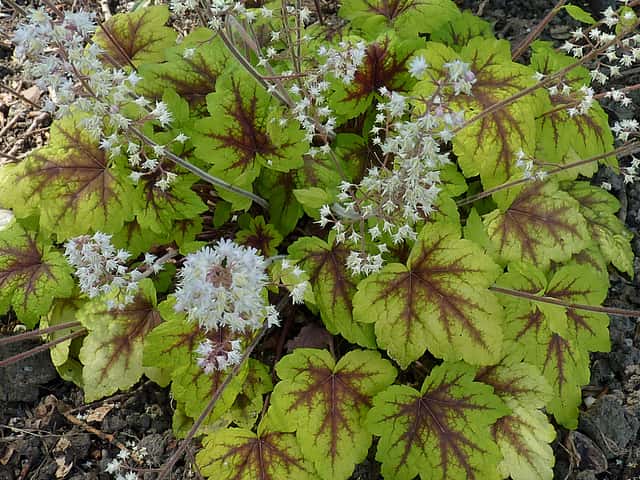
Foamy Bells (Heucherella) is a easy-care plant from the Saxifragaceae family. Heucherella is an intergeneric hybrid between Heuchera (Coral Bells) and Tiarella (Foamflower), commonly known as 'Foamy Bells'. The plant forms compact leaf rosettes with colorful, decorative foliage in shades of green, gold, orange, red, and bronze—depending on the variety. It is particularly popu...
Foamy Bells grows up to 45cm, spread of 45cm, watering every 7 days, -29°C – 35°C, 40–70% humidity. It is suitable for indoor environments and safe for pets.
Unlike many tropical plants, Foamy Bells tolerates watering mistakes. Best for beginners. Unlike many popular species, Foamy Bells is safe to keep around pets. Without adequate drainage, root rot can develop within 14 days.
How to Care for Foamy Bells?
TLDR: Foamy Bells needs Low light, watering every 7 days, and temperatures between -29-35°C with 40-70% humidity.
How Often Should You Water Foamy Bells?
Water approximately once a week, keeping the soil evenly moist—especially during hot summer periods. Avoid overhead watering; instead, water directly at the root to reduce the risk of fungal infections. Established plants tolerate short periods of drought well. Avoid standing water around the crown, as this can lead to crown rot.
How Much Light Does Foamy Bells Need?
Heucherella thrives best in partial shade (2–6 hours of direct sun). Morning sun with afternoon shade is ideal. Varieties with dark leaves can tolerate slightly more sun, while light and yellow-green varieties should be protected from intense midday sun to avoid leaf scorch.
What Is the Best Soil for Foamy Bells?
Plant in humus-rich, well-drained soil with a pH of 6.0–7.0. Add compost or well-rotted manure to improve drainage and nutrient content. Avoid heavy clay soil without amendment. Apply a 2–3 inch (5–8 cm) layer of mulch around the plant (not against the crown itself) to retain moisture and regulate soil temperature.
What Pot Should You Use for Foamy Bells?
Well-suited for pots and containers on shaded balconies and terraces. Choose a pot with good drainage holes—at least 10 inches (25 cm) deep. Use a humus-rich, lightweight potting mix. Containers dry out faster than garden beds, so water slightly more frequently and fertilize with half-strength liquid fertilizer every 4–6 weeks during the growing season.
Care Schedule
Fertilize
Every 60 days
Repot
Every 730 days
What Is Foamy Bells and Where Does It Come From?
Heucherella is an intergeneric hybrid between Heuchera (Coral Bells) and Tiarella (Foamflower), commonly known as 'Foamy Bells'. The plant forms compact leaf rosettes with colorful, decorative foliage in shades of green, gold, orange, red, and bronze—depending on the variety. It is particularly popular in shade gardens where it produces airy, cloud-like flower spikes in white and pink from late spring to midsummer. The foliage is semi-evergreen and provides winter structure in mild climates.
How to Propagate Foamy Bells?
Division
Cuttings
How Big Does Foamy Bells Grow?
TLDR: Foamy Bells can reach up to 45cm tall with Medium growth rate.
Max height
45cm
Spread
45cm
Growth rate
Medium
Foliage
Semi-evergreen
Plant Uses
Ornamental
Great for decoration
Ground Cover
Soil coverage
Is your plant showing symptoms?
Click on the symptom to discover possible causes:
What Diseases Commonly Affect Foamy Bells?
TLDR: Foamy Bells is susceptible to 8 known diseases. Monitor regularly for early detection.
Powdery Mildew
Powdery mildew is a common fungal disease caused by various fungi species including Erysiphe, Podosphaera, Oïdium, and Leveillula. It affects over 10,000 plant species worldwide. The disease thrives in warm, dry climates with high humidity and appears as a distinctive white powdery coating on plant surfaces.
Root Rot
Root rot is a serious fungal disease that affects the root system of plants, causing them to decay and die. It is primarily caused by overwatering, poor drainage, or soil-borne fungi such as Pythium, Phytophthora, Rhizoctonia, and Fusarium. The disease thrives in waterlogged conditions where roots are deprived of oxygen, making them susceptible to fungal infection.
Crown Rot
Crown rot is a serious fungal disease that attacks the crown (base) of the plant where the stem meets the soil. It is caused by various fungal pathogens including Phytophthora, Fusarium, and Rhizoctonia. The disease thrives in waterlogged conditions and can quickly spread to kill the entire plant if not addressed promptly.
Rust
Rust is a common fungal disease caused by fungi in the order Pucciniales that affects a wide variety of plants. The disease gets its name from the characteristic orange, yellow, or reddish-brown pustules that appear on leaves, resembling metal rust. This obligate fungal parasite requires living plants to survive and can cause significant economic losses in agricultural crops.
Compare with similar plants
| Attribute | Difficulty | Light | Watering | Pet Safe |
|---|---|---|---|---|
| Field Maple | Easy | Bright indirect | 14d | ✓ |
| Silver Birch | Easy | Direct sun | 14d | ✓ |
| Common Blanketflower | Easy | Direct sun | 10d | ✓ |
| Cushion Bush | Easy | Direct sun | 14d | ✓ |





