Plantaginaceae
Foxglove Beardtongue: Medicinal Uses & Care Tips
Penstemon digitalis
Care is simple when planted in a sunny or partially shaded spot with well-draining soil: it requires regular watering during the first year to establish the root system, but is drought-tolerant thereafter. It does not need regular fertilization; a light application of organic compost in the fall is sufficient. Deadheading the stems after flowering encourages a second, more profuse bloom.
Every 7 days
Bright indirect
-37° - 35°C
% - %
Categories
What is Foxglove Beardtongue?
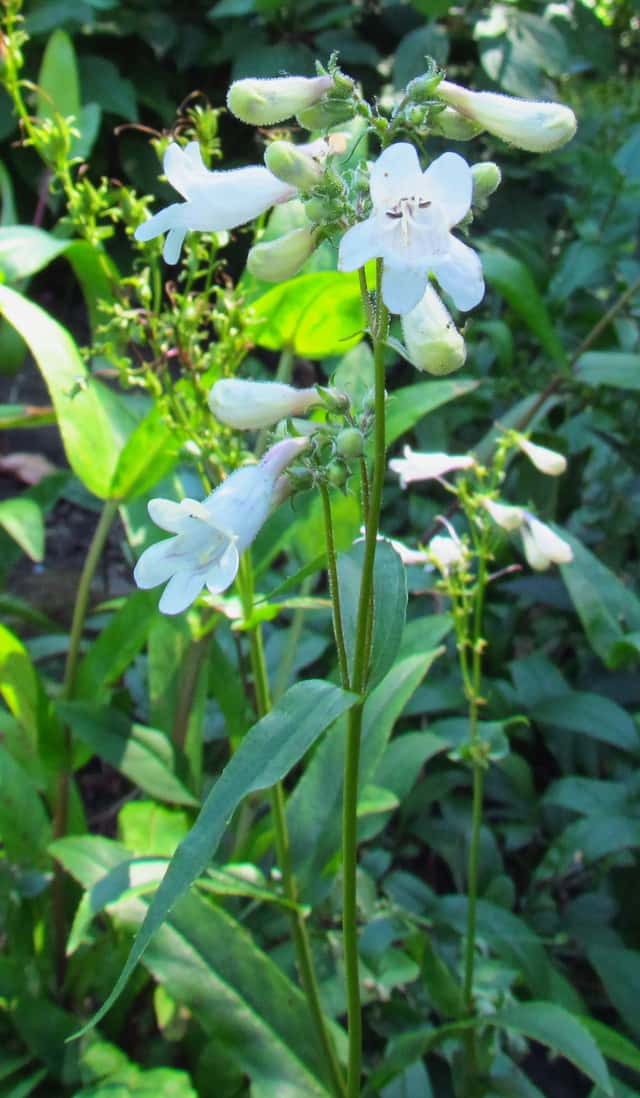
Foxglove Beardtongue (Penstemon digitalis) is a easy-care plant from the Plantaginaceae family. Penstemon digitalis, commonly known as foxglove beardtongue, is a perennial herbaceous plant native to eastern and central North America, belonging to the plantain family (Plantaginaceae). From its basal rosette, branched flowering stems rise 60–120 cm tall, bearing dense clusters of white, tubular,...
Foxglove Beardtongue grows up to 1.2m, spread of 60cm, watering every 7 days, -37°C – 35°C. It is not suitable for indoor environments and safe for pets.
Unlike many tropical plants, Foxglove Beardtongue tolerates watering mistakes. Best for beginners. Unlike many popular species, Foxglove Beardtongue is safe to keep around pets.
How to Care for Foxglove Beardtongue?
TLDR: Foxglove Beardtongue needs Bright indirect, watering every 7 days, and temperatures between -37-35°C with 40-70% humidity.
How Often Should You Water Foxglove Beardtongue?
Keep the soil consistently moist during the first season after planting, but avoid waterlogging. Mature plants tolerate short periods of drought well, so only water when the top layer of soil is dry—overwatering can lead to root rot.
How Much Light Does Foxglove Beardtongue Need?
For the most abundant flowering, at least 6 hours of direct sunlight per day is required; it can survive in partial shade (2–6 hours of light), but will produce fewer flowers and the stems may become leggy.
What Is the Best Soil for Foxglove Beardtongue?
It is not picky about soil type—thriving in clay, loam, or sandy soils—as long as there is good drainage. It prefers slightly acidic to neutral soil (pH 5.5–7.0).
What Pot Should You Use for Foxglove Beardtongue?
Primarily a perennial for garden beds, it can also be grown in larger pots (at least 30 cm in diameter) with ample drainage holes—such as terracotta or clay pots—which help wick away excess moisture.
Care Schedule
Fertilize
Every 180 days
What Is Foxglove Beardtongue and Where Does It Come From?
Penstemon digitalis, commonly known as foxglove beardtongue, is a perennial herbaceous plant native to eastern and central North America, belonging to the plantain family (Plantaginaceae). From its basal rosette, branched flowering stems rise 60–120 cm tall, bearing dense clusters of white, tubular, two-lipped flowers between May and July. Although its specific epithet refers to foxglove (Digitalis), the plant is not related to it and is non-toxic to humans, dogs, and cats. It is an excellent nectar source and pollinator plant, attracting bees, hummingbirds, and butterflies; it is also extremely cold-hardy (USDA zones 3a–8b) and a low-maintenance garden ornamental.
How Big Does Foxglove Beardtongue Grow?
TLDR: Foxglove Beardtongue can reach up to 1.2m tall with Fast growth rate.
Max height
1.2m
Spread
60cm
Growth rate
Fast
Foliage
Semi-evergreen
Plant Uses
Ornamental
Great for decoration
Medicinal
Medicinal properties
Medicinal Uses
- Native American Cherokee and Ojibwe peoples traditionally used a decoction of the root to relieve toothaches and headaches.
- A poultice made from the leaves was applied to treat cuts and burns.
- It was an ingredient in complex medicinal decoctions used to soothe digestive issues and reduce fever.
Is your plant showing symptoms?
Click on the symptom to discover possible causes:
What Diseases Commonly Affect Foxglove Beardtongue?
TLDR: Foxglove Beardtongue is susceptible to 5 known diseases. Monitor regularly for early detection.
Powdery Mildew
Powdery mildew is a common fungal disease caused by various fungi species including Erysiphe, Podosphaera, Oïdium, and Leveillula. It affects over 10,000 plant species worldwide. The disease thrives in warm, dry climates with high humidity and appears as a distinctive white powdery coating on plant surfaces.
Rust
Rust is a common fungal disease caused by fungi in the order Pucciniales that affects a wide variety of plants. The disease gets its name from the characteristic orange, yellow, or reddish-brown pustules that appear on leaves, resembling metal rust. This obligate fungal parasite requires living plants to survive and can cause significant economic losses in agricultural crops.
Root Rot
Root rot is a serious fungal disease that affects the root system of plants, causing them to decay and die. It is primarily caused by overwatering, poor drainage, or soil-borne fungi such as Pythium, Phytophthora, Rhizoctonia, and Fusarium. The disease thrives in waterlogged conditions where roots are deprived of oxygen, making them susceptible to fungal infection.
Leaf Spot
Leaf spot is a common fungal disease caused by various pathogens including Alternaria, Ascochyta, Colletotrichum, Septoria, and Venturia. It primarily affects leaves, causing discolored spots that can lead to premature leaf drop if left untreated.
Meaning & Symbolism
A symbol of resilience, independence, and strength, as it blooms even in rocky, dry habitats. Additionally, it is known as an expression of gratitude and hope; its dignified, upright inflorescence radiates grace and inner strength.
Compare with similar plants
| Attribute | Difficulty | Light | Watering | Pet Safe |
|---|---|---|---|---|
| Field Maple | Easy | Bright indirect | 14d | ✓ |
| Silver Birch | Easy | Direct sun | 14d | ✓ |
| Common Blanketflower | Easy | Direct sun | 10d | ✓ |
| Cushion Bush | Easy | Direct sun | 14d | ✓ |
Choose & Compare
Sources & References
- NC State Extension Plant Toolbox - Penstemon digitalis
- Missouri Botanical Garden Plant Finder - Penstemon digitalis
- Planters Place - Watch for Fungal Diseases on Penstemon
- American Penstemon Society - Propagating by Seed
- The Cargo Cult Cafe - Foxglove Beardtongue Medicinal Uses
- PictureThis - Language and Meaning of Foxglove Beardtongue
- Wikipedia - Penstemon digitalis





