Plantaginaceae
Foxglove (Digitalis Genus)
Digitalis
Easy in a garden with a mild climate. Grow in full sun where summers are cool and in part shade where the sun is strong. It likes fertile, moist, well-drained soil with compost. Keep the soil moist but not soggy. It flowers in spring and summer of its second year; cut spent spikes to the ground for a second flush. Let some seed drop and it renews itself. Wear gloves when handling: every part is toxic.
Every 7 days
Partial shade
° - °C
% - %
Categories
What is Foxglove?
Foxglove (Digitalis) is a easy-care plant from the Plantaginaceae family. Digitalis is the foxglove genus, in the plantain family (Plantaginaceae). It has 20 to 27 species native to Europe, western Asia and northwest Africa. Most are biennials or short-lived perennials: in the first year they form a ground-hugging rosette of leaves, and in the second they send up a tall s...
Foxglove grows up to 1.8m, spread of 60cm, watering every 7 days. It is not suitable for indoor environments and not safe for pets.
Unlike many tropical plants, Foxglove tolerates watering mistakes. Best for beginners. Without precautions, ingestion can cause irritation in pets. Keep out of reach of cats and dogs.
How to Care for Foxglove?
TLDR: Foxglove needs Partial shade, watering every 7 days, and temperatures between 15-30°C with 40-70% humidity.
How Often Should You Water Foxglove?
Keep the soil moist, never bone dry or waterlogged, watering about once a week in hot weather. Water at the base; wet leaves and soggy soil encourage spots and rot.
How Much Light Does Foxglove Need?
Full sun in cool climates; part shade or afternoon shade in hot areas, where strong sun cuts flowering.
What Is the Best Soil for Foxglove?
Fertile, loose, moist but well-drained soil rich in organic matter, slightly acidic to neutral. On clay, dig in plenty of compost.
What Pot Should You Use for Foxglove?
Best in the ground. In a container, use a deep pot, at least 30 cm, with drainage holes, and keep it away from children and pets.
Care Schedule
Fertilize
Every 365 days
What Is Foxglove and Where Does It Come From?
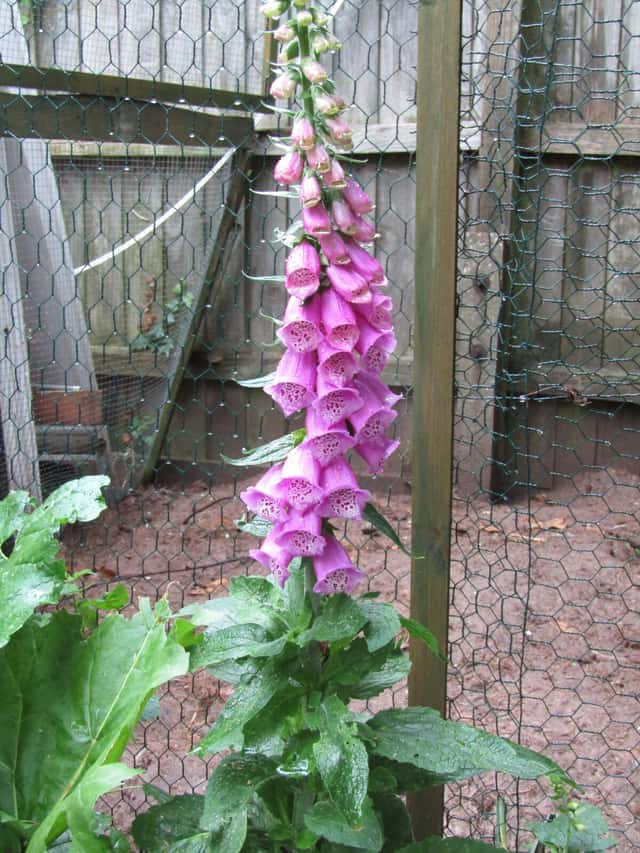
Digitalis is the foxglove genus, in the plantain family (Plantaginaceae). It has 20 to 27 species native to Europe, western Asia and northwest Africa. Most are biennials or short-lived perennials: in the first year they form a ground-hugging rosette of leaves, and in the second they send up a tall spike, up to 1.8 m (6 ft), lined with tubular flowers. The flowers hang to one side of the stem, often spotted inside, in purple, pink, white or yellow. The name comes from Latin digitus, finger, after flowers that fit like a thimble. The whole plant is highly poisonous.
How to Propagate Foxglove?
Sowing
Sow thinly: crowded seedlings catch fungal disease easily. Spring-sown plants usually flower the following year.
- 1 Scatter seed on the surface of moist mix without covering it, as it needs light to germinate
- 2 Keep bright and moist at about 20 °C (68 °F)
- 3 Prick out seedlings at 2 true leaves
- 4 Harden off for 10-15 days before planting out
- 5 Space plants 30-60 cm apart
Materials needed:
How Big Does Foxglove Grow?
TLDR: Foxglove can reach up to 1.8m tall with Fast growth rate.
Max height
1.8m
Spread
60cm
Growth rate
Fast
Warning: Toxic Plant
This plant can be toxic if ingested. Keep out of reach of:
Plant Uses
Ornamental
Great for decoration
Medicinal Uses
- Industrial source of cardiac glycosides (digoxin) used in heart medicines. Never use the plant at home: it can kill.
Is your plant showing symptoms?
Click on the symptom to discover possible causes:
What Diseases Commonly Affect Foxglove?
TLDR: Foxglove is susceptible to 13 known diseases. Monitor regularly for early detection.
Aphids
Aphids are small, soft-bodied, pear-shaped insects (1/16 to 1/8 inch long) that feed by sucking nutrient-rich sap from plants. They reproduce rapidly and can quickly weaken plants, causing distorted growth and transmitting plant viruses. Aphids come in various colors including green, black, red, yellow, brown, and gray. They secrete honeydew, a sticky substance that attracts ants and encourages sooty mold growth.
Mealybugs
Mealybugs are small, soft-bodied insects covered with a white, waxy, cottony material. They are common pests of houseplants and outdoor plants in mild climates. These sap-sucking insects feed on plant tissue, causing damage, stunted growth, and can lead to plant death if left untreated. They produce sticky honeydew which attracts sooty mold.
Thrips
Thrips are tiny cigar-shaped insects (1/25-inch long) that damage plants by sucking plant juices and scraping at fruits, flowers, and leaves. With over 6,000 species and rapid reproduction (lifecycle as short as 14 days), they can quickly infest plants and transmit viruses like tomato spotted wilt virus.
Root-Knot Nematodes
Root-knot nematodes (Meloidogyne species) are microscopic roundworms that parasitize plant roots, causing characteristic galls or knots. These soil-borne pests are among the most economically damaging plant pathogens worldwide, affecting a wide range of ornamental and edible plants. The nematodes inject enzymes into root cells, causing abnormal swelling and disrupting water and nutrient uptake.
Fun Facts
The name Digitalis was coined in 1542 from the German Fingerhut, thimble.
In 1785 physician William Withering described using foxglove to treat the heart.
Digoxin, a heart drug still in use, comes mainly from Digitalis lanata.
Frequently asked questions
Is foxglove poisonous?
Why didn't my foxglove flower in its first year?
How do I get foxgloves to flower again?
Do foxgloves come back every year?
Compare with similar plants
| Attribute | Difficulty | Light | Watering | Pet Safe |
|---|---|---|---|---|
| Field Maple | Easy | Bright indirect | 14d | ✓ |
| Iberian Houseleek | Easy | Direct sun | 14d | ✓ |
| Silver Birch | Easy | Direct sun | 14d | ✓ |
| Common Blanketflower | Easy | Direct sun | 10d | ✓ |





