Asphodelaceae
Foxtail Lily: Full Sun Plant
Eremurus stenophyllus
Plant the fleshy tubers in spring or fall approximately 1 inch deep in rich, moist, and above all, perfectly drained soil. Choose a full sun location sheltered from the wind to protect the tall flower spikes. Water moderately during growth and flowering, allowing the soil to dry out between waterings. Significantly reduce watering in summer after flowering and during winter to prevent root rot. Mulching helps protect the tubers from frost.
Every 10 days
Direct sun
-20° - 35°C
% - %
Categories
What is Foxtail Lily?
Foxtail Lily (Eremurus stenophyllus) is a medium-care plant from the Asphodelaceae family. Eremurus stenophyllus, commonly known as the Foxtail Lily or Desert Candle, is a tuberous-rooted perennial native to the steppes and semi-desert regions of Central Asia. It forms a rosette of narrow, strap-like leaves from which a tall, erect flower spike emerges in summer, reaching heights of 4 to...
Foxtail Lily grows up to 1.4m, spread of 60cm, watering every 10 days, -20°C – 35°C. It is not suitable for indoor environments and safe for pets.
Unlike many popular species, Foxtail Lily is safe to keep around pets.
How to Care for Foxtail Lily?
TLDR: Foxtail Lily needs Direct sun, watering every 10 days, and temperatures between -20-35°C with 40-70% humidity.
How Often Should You Water Foxtail Lily?
Allow the soil to dry out deeply between waterings; Eremurus is far more sensitive to overwatering than to drought. Stop all watering as soon as flowering ends and the foliage begins to yellow and enter summer dormancy.
How Much Light Does Foxtail Lily Need?
Place Eremurus stenophyllus in the sunniest spot in the garden, sheltered from strong winds that could break its tall flower spikes.
What Is the Best Soil for Foxtail Lily?
Prefer rich, fertile, and exceptionally well-drained soil; add coarse sand or gravel to improve drainage. The plant is very tolerant of alkaline soils but dislikes heavy, waterlogged ground.
What Pot Should You Use for Foxtail Lily?
While traditionally grown in the ground, Eremurus can be planted in a large, deep pot with excellent drainage (large holes, gravel layer) for a temporary display; ensure the container is at least 16 inches deep.
Care Schedule
Fertilize
Every 180 days
Repot
Every 2000 days
What Is Foxtail Lily and Where Does It Come From?
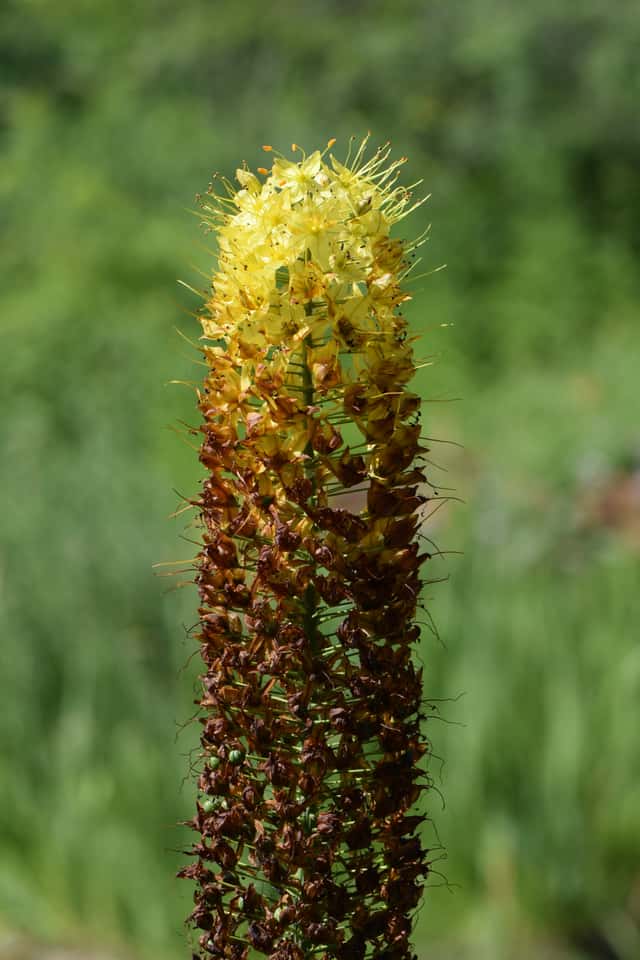
Eremurus stenophyllus, commonly known as the Foxtail Lily or Desert Candle, is a tuberous-rooted perennial native to the steppes and semi-desert regions of Central Asia. It forms a rosette of narrow, strap-like leaves from which a tall, erect flower spike emerges in summer, reaching heights of 4 to 5 feet. This spike is densely packed with small, star-shaped yellow flowers that turn brownish at the base as they age. A recipient of the RHS Award of Garden Merit, it is highly prized for its spectacular architectural presence in the garden.
How to Propagate Foxtail Lily?
How Big Does Foxtail Lily Grow?
TLDR: Foxtail Lily can reach up to 1.4m tall with Medium growth rate.
Max height
1.4m
Spread
60cm
Growth rate
Medium
Foliage
Deciduous
Plant Uses
Ornamental
Great for decoration
Is your plant showing symptoms?
Click on the symptom to discover possible causes:
What Diseases Commonly Affect Foxtail Lily?
TLDR: Foxtail Lily is susceptible to 4 known diseases. Monitor regularly for early detection.
Root Rot
Root rot is a serious fungal disease that affects the root system of plants, causing them to decay and die. It is primarily caused by overwatering, poor drainage, or soil-borne fungi such as Pythium, Phytophthora, Rhizoctonia, and Fusarium. The disease thrives in waterlogged conditions where roots are deprived of oxygen, making them susceptible to fungal infection.
Crown Rot
Crown rot is a serious fungal disease that attacks the crown (base) of the plant where the stem meets the soil. It is caused by various fungal pathogens including Phytophthora, Fusarium, and Rhizoctonia. The disease thrives in waterlogged conditions and can quickly spread to kill the entire plant if not addressed promptly.
Slugs and Snails
Slugs and snails are mollusks that feed on plant tissue, causing irregular holes in leaves and damage to young seedlings. They are most active at night and in moist conditions, leaving characteristic silvery slime trails. These pests can quickly devastate gardens, especially during wet seasons.
Grey Mould
Meaning & Symbolism
With its flower spike reaching toward the sky, the Foxtail Lily symbolizes elegance, grandeur, and perseverance, evoking the vast Central Asian steppes of its origin.
Compare with similar plants
| Attribute | Difficulty | Light | Watering | Pet Safe |
|---|---|---|---|---|
| Dark Fieldcap | Medium | Low light | 2d | ⚠️ |
| Azalea | Medium | Partial shade | 3d | ⚠️ |
| Muriel's Bamboo | Medium | Partial shade | 3d | ✓ |
| Bougainvillea | Medium | Direct sun | 7d | ⚠️ |




