Asparagaceae
Polygonatum odoratum: Fragrant Solomon's Seal Care Guide
Polygonatum odoratum
Grow fragrant Solomon's seal in humus-rich, moisture-retentive but well-drained soil in a shaded woodland setting. It tolerates deep shade to dappled sun, needs consistent moisture during the growing season, and largely takes care of itself once established, slowly spreading via rhizomes to form an attractive colony.
Every 4 days
Low light
-15° - 27°C
40% - 70%
Categories
What is Fragrant Solomon's Seal?
Fragrant Solomon's Seal (Polygonatum odoratum) is a easy-care plant from the Asparagaceae family. Polygonatum odoratum, commonly called fragrant or angular Solomon's seal, is a rhizomatous woodland perennial native to temperate Europe and Asia, from the UK through Russia to China, Korea, and Japan. Named for the angular ridges along its arching stems, this shade-loving perennial produces elegant...
Fragrant Solomon's Seal grows up to 80cm, spread of 40cm, watering every 4 days, -15°C – 27°C, 40–70% humidity. It is not suitable for indoor environments and not safe for pets.
Unlike many tropical plants, Fragrant Solomon's Seal tolerates watering mistakes. Best for beginners. Without precautions, ingestion can cause irritation in pets. Keep out of reach of cats and dogs.
How to Care for Fragrant Solomon's Seal?
TLDR: Fragrant Solomon's Seal needs Low light, watering every 4 days, and temperatures between -15-27°C with 40-70% humidity.
How Often Should You Water Fragrant Solomon's Seal?
Water deeply once or twice a week during spring and summer to keep the soil evenly moist; ease off in winter when the plant is dormant. Avoid waterlogging, as the rhizome is prone to rot in soggy soil.
How Much Light Does Fragrant Solomon's Seal Need?
Best in partial to full shade with dappled morning light; protect from hot, direct afternoon sun which can scorch the leaves.
What Is the Best Soil for Fragrant Solomon's Seal?
Plant in rich, humus-heavy soil amended with compost for good drainage and fertility; a slightly acidic to neutral pH (6.0-7.5) is ideal.
What Pot Should You Use for Fragrant Solomon's Seal?
If grown in a container, choose a wide, unglazed terracotta pot with generous drainage holes to let excess moisture escape and roots breathe, since the rhizome is sensitive to waterlogging.
Care Schedule
Fertilize
Every 90 days
What Is Fragrant Solomon's Seal and Where Does It Come From?
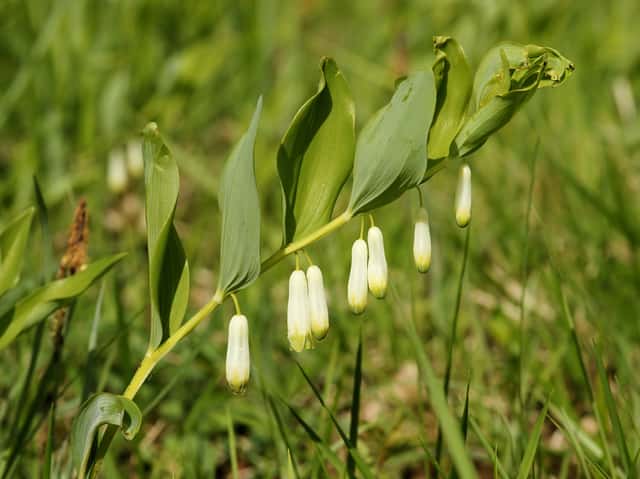
Polygonatum odoratum, commonly called fragrant or angular Solomon's seal, is a rhizomatous woodland perennial native to temperate Europe and Asia, from the UK through Russia to China, Korea, and Japan. Named for the angular ridges along its arching stems, this shade-loving perennial produces elegant rows of pendant, bell-shaped, creamy-white flowers with green tips beneath alternate elliptical leaves each spring. In autumn the foliage turns golden before dying back to a knobby rhizome marked with round scars -- said to resemble wax seals -- that persists underground through winter. The rhizome is a well-known ingredient in Traditional Chinese Medicine (known as Yu Zhu), while the ripe blue-black berries are toxic and should never be eaten.
How to Propagate Fragrant Solomon's Seal?
Rhizome Division
Handle rhizomes gently to avoid bruising, and always wear gloves since sap can irritate skin.
- 1 Lift the clump in early spring or fall once foliage has died back
- 2 Use a clean, sharp knife to cut the rhizome into sections, each with at least one growth bud
- 3 Replant sections horizontally about 5 cm deep in humus-rich soil
- 4 Water well and keep consistently moist until new shoots appear
Materials needed:
Seed Propagation
Division is far more reliable than seed for home gardeners.
- 1 Collect ripe berries in fall and clean the seeds from the toxic pulp (wear gloves)
- 2 Sow seeds fresh in trays of moist, gritty compost
- 3 Keep outdoors or in a cold frame to receive winter chilling
- 4 Germination is slow and irregular, sometimes taking a year or more
Materials needed:
How Big Does Fragrant Solomon's Seal Grow?
TLDR: Fragrant Solomon's Seal can reach up to 80cm tall with Medium growth rate.
Max height
80cm
Spread
40cm
Growth rate
Medium
Foliage
Deciduous
Warning: Toxic Plant
This plant can be toxic if ingested. Keep out of reach of:
Plant Uses
Ornamental
Great for decoration
Medicinal
Medicinal properties
Ground Cover
Soil coverage
Medicinal Uses
- Rhizome used in Traditional Chinese Medicine (Yu Zhu) to nourish yin and moisten the lungs
- Traditionally used to soothe dry cough and fatigue
- Historically applied topically in folk medicine for bruises and minor wounds (use only under professional guidance)
Culinary Uses
- Young spring shoots can be blanched and eaten like asparagus in some traditions
- Dried, processed rhizome is used in East Asian herbal teas and tonics
- Note: mature stems, leaves, and especially the berries are toxic and must never be eaten raw
Is your plant showing symptoms?
Click on the symptom to discover possible causes:
What Diseases Commonly Affect Fragrant Solomon's Seal?
TLDR: Fragrant Solomon's Seal is susceptible to 6 known diseases. Monitor regularly for early detection.
Root Rot
Root rot is a serious fungal disease that affects the root system of plants, causing them to decay and die. It is primarily caused by overwatering, poor drainage, or soil-borne fungi such as Pythium, Phytophthora, Rhizoctonia, and Fusarium. The disease thrives in waterlogged conditions where roots are deprived of oxygen, making them susceptible to fungal infection.
Leaf Spot
Leaf spot is a common fungal disease caused by various pathogens including Alternaria, Ascochyta, Colletotrichum, Septoria, and Venturia. It primarily affects leaves, causing discolored spots that can lead to premature leaf drop if left untreated.
Rust
Rust is a common fungal disease caused by fungi in the order Pucciniales that affects a wide variety of plants. The disease gets its name from the characteristic orange, yellow, or reddish-brown pustules that appear on leaves, resembling metal rust. This obligate fungal parasite requires living plants to survive and can cause significant economic losses in agricultural crops.
Whiteflies
Whiteflies are small, soft-bodied, winged insects closely related to aphids and mealybugs. They are moth-like in appearance, about 1/16 inch long, triangular in shape, and gray-white in color. These sap-sucking pests feed on plant tissue, causing yellowing, stunted growth, and wilting. They also excrete honeydew, which attracts ants and promotes sooty mold growth. Whiteflies can transmit serious plant viruses.
Meaning & Symbolism
The round scars left on the rhizome after each year's stem dies back resemble wax seals, giving rise to the plant's name and its folk association with protection, sealing wounds, and quiet endurance through winter dormancy.
Fun Facts
The genus name Polygonatum comes from Greek for 'many knees,' referring to the jointed rhizome.
The round scars on the rhizome resemble wax seals, inspiring the common name Solomon's seal.
Its dried rhizome, called Yu Zhu, has been used in Chinese herbal medicine for centuries.
Frequently asked questions
Is Solomon's seal toxic to pets?
How much sun does Solomon's seal need?
How often should I water Solomon's seal?
Can I grow Solomon's seal in a pot?
Compare with similar plants
| Attribute | Difficulty | Light | Watering | Pet Safe |
|---|---|---|---|---|
| Field Maple | Easy | Bright indirect | 14d | ✓ |
| Silver Birch | Easy | Direct sun | 14d | ✓ |
| Common Blanketflower | Easy | Direct sun | 10d | ✓ |
| Cushion Bush | Easy | Direct sun | 14d | ✓ |
Choose & Compare
Sources & References
- Angular Solomon's Seal (Polygonatum Odoratum) Care Guide - Plantiary
- Polygonatum odoratum var. pluriflorum - NC State Extension Plant Toolbox
- Polygonatum odoratum | angular Solomon's seal - RHS
- Perennial Solutions: Polygonatum odoratum 'Variegatum' - Greenhouse Product News
- Polygonatum odoratum - Wikipedia





