Tamaricaceae
French Tamarisk (Tamarix gallica) Care Guide
Tamarix gallica
Plant in full sun with well-drained soil; it tolerates sandy, clay, alkaline and saline conditions but dislikes waterlogging. Water regularly during the first year to establish the root system, then rely mostly on rainfall, watering only during prolonged drought. Prune lightly after flowering to shape the plant and encourage the next season's blooms.
Every 14 days
Direct sun
-15° - 40°C
% - %
Categories
What is French Tamarisk?
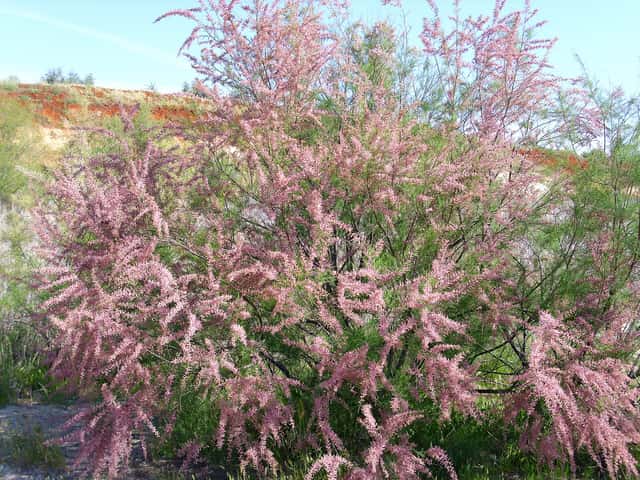
French Tamarisk (Tamarix gallica) is a easy-care plant from the Tamaricaceae family. French Tamarisk (Tamarix gallica) is a fast-establishing, salt-tolerant deciduous shrub or small tree native to the Mediterranean basin and parts of the Middle East. Valued for its feathery, blue-green scale-like foliage and airy plumes of pale pink flowers that appear in late spring and again in su...
French Tamarisk grows up to 5.0m, spread of 600cm, watering every 14 days, -15°C – 40°C. It is not suitable for indoor environments and safe for pets.
Unlike many tropical plants, French Tamarisk tolerates watering mistakes. Best for beginners. Unlike many popular species, French Tamarisk is safe to keep around pets.
How to Care for French Tamarisk?
TLDR: French Tamarisk needs Direct sun, watering every 14 days, and temperatures between -15-40°C with 40-70% humidity.
How Often Should You Water French Tamarisk?
Water young plants weekly during their first growing season; once established, French Tamarisk is highly drought-tolerant and needs supplemental water only during extended dry spells. Always let soil dry out between waterings, as it strongly dislikes standing water.
How Much Light Does French Tamarisk Need?
Give it full sun exposure with at least 6 hours of direct light daily. It cannot tolerate shade and will produce far fewer flowers if planted in a shaded spot.
What Is the Best Soil for French Tamarisk?
Grows in sandy, loamy or clay soils as long as drainage is good; avoid shallow chalky soils. It is unusually tolerant of saline and alkaline conditions, making it ideal for coastal plantings.
What Pot Should You Use for French Tamarisk?
Best grown in open ground rather than containers; if grown in a large pot (e.g., for bonsai), choose a wide, well-draining terracotta or ceramic container with generous drainage holes to prevent waterlogged roots.
What Is French Tamarisk and Where Does It Come From?
French Tamarisk (Tamarix gallica) is a fast-establishing, salt-tolerant deciduous shrub or small tree native to the Mediterranean basin and parts of the Middle East. Valued for its feathery, blue-green scale-like foliage and airy plumes of pale pink flowers that appear in late spring and again in summer, it is widely planted in coastal gardens, hedgerows and dune-stabilization projects thanks to its remarkable tolerance of wind, salt spray, drought and poor soils.
How to Propagate French Tamarisk?
Seed sowing
Seeds lose viability quickly, so sow them as fresh as possible for best germination rates.
- 1 Sow fresh seed on the surface of a light, well-draining seed mix
- 2 Keep the substrate consistently moist until germination
- 3 Transplant seedlings once they have 2-3 true leaves
Materials needed:
Semi-hardwood stem cutting
Cuttings root readily; keep them sheltered from harsh sun until well rooted.
- 1 Take 15-25 cm semi-hardwood or hardwood cuttings in late summer or autumn
- 2 Remove lower leaves and dip the cut end in rooting hormone
- 3 Insert into moist, well-draining soil or sand and keep lightly moist
Materials needed:
How Big Does French Tamarisk Grow?
TLDR: French Tamarisk can reach up to 5.0m tall with Medium growth rate.
Max height
5.0m
Spread
6.0m
Growth rate
Medium
Foliage
Deciduous
Plant Uses
Ornamental
Great for decoration
Medicinal
Medicinal properties
Edible
Can be consumed
Medicinal Uses
- Traditionally used as an astringent and diuretic
- Bark and leaves used in folk remedies for rheumatism and diarrhea
- Manna exudate historically used as a mild laxative and expectorant
Culinary Uses
- Sweet manna exudate historically harvested and used as a natural sweetener
- Manna used as an ingredient in traditional Persian confections such as gaz
Is your plant showing symptoms?
Click on the symptom to discover possible causes:
What Diseases Commonly Affect French Tamarisk?
TLDR: French Tamarisk is susceptible to 7 known diseases. Monitor regularly for early detection.
Canker
Canker is a disease caused by various fungi and bacteria that create necrotic, sunken areas on bark of branches, stems, and trunks. Pathogens enter through wounds and natural openings, especially when plants are stressed. Canker can gradually weaken or kill branches by disrupting water and nutrient flow.
Powdery Mildew
Powdery mildew is a common fungal disease caused by various fungi species including Erysiphe, Podosphaera, Oïdium, and Leveillula. It affects over 10,000 plant species worldwide. The disease thrives in warm, dry climates with high humidity and appears as a distinctive white powdery coating on plant surfaces.
Root Rot
Root rot is a serious fungal disease that affects the root system of plants, causing them to decay and die. It is primarily caused by overwatering, poor drainage, or soil-borne fungi such as Pythium, Phytophthora, Rhizoctonia, and Fusarium. The disease thrives in waterlogged conditions where roots are deprived of oxygen, making them susceptible to fungal infection.
Scale Insects
Scale insects are small sap-sucking pests that appear as brown, shell-like bumps on plant stems and leaves. There are over 25 species, divided into armored (hard) and unarmored (soft) scales. They feed by piercing plant tissue and extracting sap, which weakens the plant and can lead to yellowing, stunted growth, and even death if left untreated. They also excrete honeydew, which attracts ants and promotes sooty mold growth.
Meaning & Symbolism
French Tamarisk carries associations with resilience and hospitality, linked in biblical tradition to Abraham's tree at Beersheba, and is prized in Mediterranean gardens as a symbol of endurance against harsh coastal conditions.
Fun Facts
French Tamarisk can flower twice a year, first in late spring and again in summer.
It secretes a sweet substance called manna from insect-damaged branches, historically used to make Persian confections.
Despite its delicate, feathery appearance, it can survive in salty, sandy soils where few other trees can grow.
Frequently asked questions
Is French Tamarisk toxic to pets or humans?
How much water does French Tamarisk need?
Can French Tamarisk grow near the coast?
When should I prune French Tamarisk?
What pests or diseases affect French Tamarisk?
Compare with similar plants
| Attribute | Difficulty | Light | Watering | Pet Safe |
|---|---|---|---|---|
| Field Maple | Easy | Bright indirect | 14d | ✓ |
| Silver Birch | Easy | Direct sun | 14d | ✓ |
| Common Blanketflower | Easy | Direct sun | 10d | ✓ |
| Cushion Bush | Easy | Direct sun | 14d | ✓ |





