Araceae
Friar's Cowl: Ground Cover Plant
Arisarum vulgare
An easy, low-maintenance woodland perennial. Grow in shade to semi-shade in organically rich, well-draining soil, and keep the soil lightly moist without letting it become waterlogged -- this species is prone to root rot in soggy conditions. Water regularly through the autumn-to-spring growing and flowering season, then reduce watering (without letting the rhizome dry out completely) once the foliage dies back for summer dormancy.
Every 7 days
Low light
-5° - °C
% - %
Categories
What is Friar's Cowl?
Friar's Cowl (Arisarum vulgare) is a easy-care plant from the Araceae family. Friar's Cowl (Arisarum vulgare) is a low-growing, rhizomatous perennial in the arum family (Araceae), native to the Mediterranean Basin -- southern Europe, North Africa, and parts of the Caucasus. It rarely exceeds 30 cm in height and forms clumps of glossy, heart- to arrow-shaped basal leaves that...
Friar's Cowl grows up to 30cm, watering every 7 days. It is not suitable for indoor environments and not safe for pets.
Unlike many tropical plants, Friar's Cowl tolerates watering mistakes. Best for beginners. Without precautions, ingestion can cause irritation in pets. Keep out of reach of cats and dogs.
How to Care for Friar's Cowl?
TLDR: Friar's Cowl needs Low light, watering every 7 days, and temperatures between -5-30°C with 40-70% humidity.
How Often Should You Water Friar's Cowl?
Let the top layer of soil dry slightly between waterings, but never let the rhizome dry out completely. Water regularly during the autumn-to-spring growing season and cut back during summer dormancy.
How Much Light Does Friar's Cowl Need?
Thrives in full shade to semi-shade, such as under woodland canopy. Avoid direct midday sun, which can scorch and dehydrate the leaves.
What Is the Best Soil for Friar's Cowl?
Use a loamy or sandy soil enriched with organic matter (compost or humus), with a pH between about 5.5 and 8. Good drainage is essential -- compacted, poorly aerated soil encourages root disease.
What Pot Should You Use for Friar's Cowl?
If grown in a container, choose a wide, unglazed terracotta pot with ample drainage holes -- terracotta's porosity helps prevent the waterlogging this rhizomatous plant is sensitive to.
What Is Friar's Cowl and Where Does It Come From?
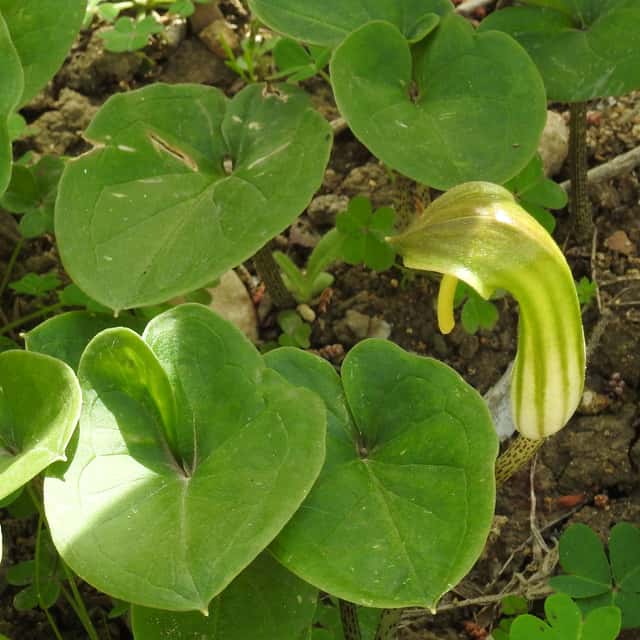
Friar's Cowl (Arisarum vulgare) is a low-growing, rhizomatous perennial in the arum family (Araceae), native to the Mediterranean Basin -- southern Europe, North Africa, and parts of the Caucasus. It rarely exceeds 30 cm in height and forms clumps of glossy, heart- to arrow-shaped basal leaves that sometimes carry faint silvery markings. Its most distinctive feature is the flower: a purplish-brown and white striped spathe curls forward into a hood, resembling a monk's cowl, and encloses a fleshy spadix bearing tiny purple flowers. It blooms from autumn through spring and spreads readily via underground rhizomes, making it a useful woodland ground cover.
How to Propagate Friar's Cowl?
Rhizome Division
- Divide only once the plant has fully died down for the season.
- Keep divisions in shade until new growth appears.
- 1 Lift the rhizome
After the foliage dies back in summer, carefully dig up the dormant rhizome.
- 2 Divide
Separate the rhizome into sections, each with at least one growth point.
- 3 Replant
Replant each section at the same depth in shaded, well-draining, organically rich soil and water lightly.
Materials needed:
Seed Propagation
- Fresh seed germinates more reliably than stored seed.
- 1 Sow
Sow fresh seed in a shady spot as soon as it ripens, or sow stored seed in early spring.
- 2 Grow on
Once seedlings are large enough to handle, prick them out into individual pots.
- 3 Overwinter
Grow the young plants under cover for their first winter and plant out once dormant, after the tuber has reached a reasonable size.
Materials needed:
How Big Does Friar's Cowl Grow?
TLDR: Friar's Cowl can reach up to 30cm tall with Medium growth rate.
Max height
30cm
Growth rate
Medium
Foliage
Deciduous
Warning: Toxic Plant
This plant can be toxic if ingested. Keep out of reach of:
Plant Uses
Ornamental
Great for decoration
Ground Cover
Soil coverage
Edible
Can be consumed
Medicinal Uses
- No medicinal uses have been documented for this species.
Culinary Uses
- The tuberous root has historically been eaten as an emergency famine food after thorough washing and cooking to remove its acrid, irritating juice; the raw plant is not safe to eat due to calcium oxalate crystals.
Is your plant showing symptoms?
Click on the symptom to discover possible causes:
What Diseases Commonly Affect Friar's Cowl?
TLDR: Friar's Cowl is susceptible to 2 known diseases. Monitor regularly for early detection.
Root Rot
Root rot is a serious fungal disease that affects the root system of plants, causing them to decay and die. It is primarily caused by overwatering, poor drainage, or soil-borne fungi such as Pythium, Phytophthora, Rhizoctonia, and Fusarium. The disease thrives in waterlogged conditions where roots are deprived of oxygen, making them susceptible to fungal infection.
Powdery Mildew
Powdery mildew is a common fungal disease caused by various fungi species including Erysiphe, Podosphaera, Oïdium, and Leveillula. It affects over 10,000 plant species worldwide. The disease thrives in warm, dry climates with high humidity and appears as a distinctive white powdery coating on plant surfaces.
Meaning & Symbolism
The plant's common name comes from its flower's resemblance to a hooded friar's cowl, evoking quiet contemplation and the shaded Mediterranean woodland floors where it grows.
Compare with similar plants
| Attribute | Difficulty | Light | Watering | Pet Safe |
|---|---|---|---|---|
| Field Maple | Easy | Bright indirect | 14d | ✓ |
| Silver Birch | Easy | Direct sun | 14d | ✓ |
| Common Blanketflower | Easy | Direct sun | 10d | ✓ |
| Cushion Bush | Easy | Direct sun | 14d | ✓ |





