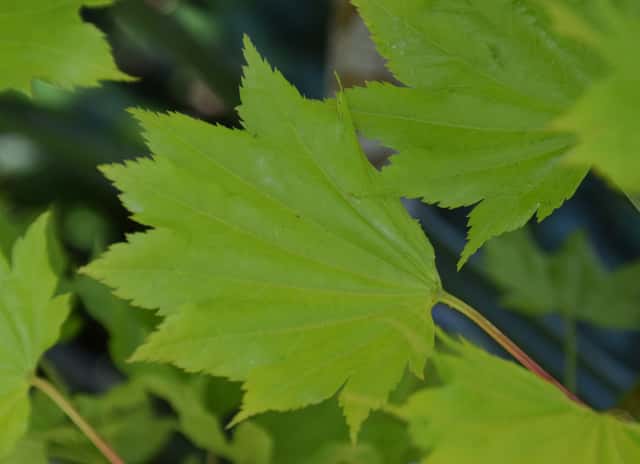
Sapindaceae
Full Moon Maple: Pet-Safe Plant
Acer shirasawanum
Grow in a sheltered spot with morning sun and afternoon shade, water regularly to keep the soil evenly moist without waterlogging, and mulch to protect the shallow roots. Feed lightly once a year and prune only to remove dead or crossing branches during dormancy.
Every 7 days
Partial shade
5° - 29°C
40% - 60%
Categories
What is Full Moon Maple?
Full Moon Maple (Acer shirasawanum) is a medium-care plant from the Sapindaceae family. Acer shirasawanum, or the Full Moon Maple, is a slow-growing deciduous tree or large shrub native to Japan, prized for its rounded, star-shaped leaves that emerge bright yellow-green in spring and turn brilliant orange and red in autumn. Reaching 5-6 meters (16-20 feet) tall and wide at maturity, it...
Full Moon Maple grows up to 6.0m, spread of 550cm, watering every 7 days, 5°C – 29°C, 40–60% humidity. It is not suitable for indoor environments and safe for pets.
Unlike many popular species, Full Moon Maple is safe to keep around pets.
How to Care for Full Moon Maple?
TLDR: Full Moon Maple needs Partial shade, watering every 7 days, and temperatures between 5-29°C with 40-60% humidity.
How Often Should You Water Full Moon Maple?
Water deeply about once a week during the growing season, allowing the top of the soil to dry slightly between waterings. Increase frequency during hot, dry spells and reduce in winter.
How Much Light Does Full Moon Maple Need?
Provide bright, filtered light or morning sun with afternoon shade; too much direct sun, especially in hot climates, can scorch the delicate leaves.
What Is the Best Soil for Full Moon Maple?
Plant in well-draining, slightly acidic to neutral soil enriched with organic matter. Avoid heavy, waterlogged clay, which encourages root rot.
What Pot Should You Use for Full Moon Maple?
If grown in a container, choose a wide, sturdy pot with generous drainage holes, ideally glazed ceramic or wood, to keep roots cool and prevent waterlogging.
Care Schedule
Fertilize
Every 365 days
Repot
Every 730 days
What Is Full Moon Maple and Where Does It Come From?
Acer shirasawanum, or the Full Moon Maple, is a slow-growing deciduous tree or large shrub native to Japan, prized for its rounded, star-shaped leaves that emerge bright yellow-green in spring and turn brilliant orange and red in autumn. Reaching 5-6 meters (16-20 feet) tall and wide at maturity, it forms an elegant, rounded canopy that works beautifully as a specimen tree or understory planting.
How to Propagate Full Moon Maple?
Seed propagation
Seedlings raised from species trees may show natural variation in leaf color and form; cold stratification is essential for reliable germination.
- 1 Collect ripe samaras (winged seeds) in autumn once they turn brown
- 2 Stratify seeds in moist sand or peat in the refrigerator for 90-120 days
- 3 Sow stratified seeds in well-draining seed compost in early spring
- 4 Keep the soil consistently moist and place in a sheltered, partly shaded spot
- 5 Transplant seedlings once they have 2-3 sets of true leaves
Materials needed:
Grafting
Grafting is the standard method for propagating named cultivars true-to-type; it requires practice and clean, sharp tools.
- 1 Select a healthy, disease-free scion from the desired cultivar in late winter
- 2 Prepare a compatible Acer rootstock, typically an Acer palmatum seedling
- 3 Make a clean whip-and-tongue or side-veneer cut on both scion and rootstock
- 4 Join the pieces tightly and secure with grafting tape or wax
- 5 Keep the graft in a humid, sheltered environment until the union forms
Materials needed:
How Big Does Full Moon Maple Grow?
TLDR: Full Moon Maple can reach up to 6.0m tall with Slow growth rate.
Max height
6.0m
Spread
5.5m
Growth rate
Slow
Foliage
Deciduous
Plant Uses
Ornamental
Great for decoration
Is your plant showing symptoms?
Click on the symptom to discover possible causes:
What Diseases Commonly Affect Full Moon Maple?
TLDR: Full Moon Maple is susceptible to 8 known diseases. Monitor regularly for early detection.
Verticillium Wilt
Verticillium wilt is a soil-borne fungal disease caused primarily by the fungi Verticillium dahliae and V. albo-atrum. These pathogens infect plant roots and grow within the vascular tissues, blocking water and nutrient transport, resulting in wilting and eventual plant death. The disease affects over 350 plant species including vegetables, fruits, ornamental flowers, and trees. The fungi can survive in soil for more than 10 years as resistant structures called microsclerotia.
Anthracnose
Anthracnose is a fungal disease caused by fungi in the genus Colletotrichum that affects many plants, including vegetables, fruits, and trees. The disease thrives in cool, wet conditions, causing dark, sunken lesions on leaves, stems, flowers, and fruits.
Leaf Spot
Leaf spot is a common fungal disease caused by various pathogens including Alternaria, Ascochyta, Colletotrichum, Septoria, and Venturia. It primarily affects leaves, causing discolored spots that can lead to premature leaf drop if left untreated.
Root Rot
Root rot is a serious fungal disease that affects the root system of plants, causing them to decay and die. It is primarily caused by overwatering, poor drainage, or soil-borne fungi such as Pythium, Phytophthora, Rhizoctonia, and Fusarium. The disease thrives in waterlogged conditions where roots are deprived of oxygen, making them susceptible to fungal infection.
Meaning & Symbolism
The maple is widely regarded as a symbol of balance and grace; in Japan, the seasonal transformation of this tree from vivid green to fiery red is celebrated as a reminder of change and the beauty of impermanence.
Compare with similar plants
| Attribute | Difficulty | Light | Watering | Pet Safe |
|---|---|---|---|---|
| Dark Fieldcap | Medium | Low light | 2d | ⚠️ |
| Azalea | Medium | Partial shade | 3d | ⚠️ |
| Field Maple | Easy | Bright indirect | 14d | ✓ |
| Muriel's Bamboo | Medium | Partial shade | 3d | ✓ |




