Asparagaceae
Furcraea
Furcraea
It wants strong sun, soil that drains and very little water. A hard frost will kill it, so in colder zones keep it in a pot and bring it inside for winter while it's small.
Every 14 days
Direct sun
° - °C
% - %
Categories
What is Furcraea?
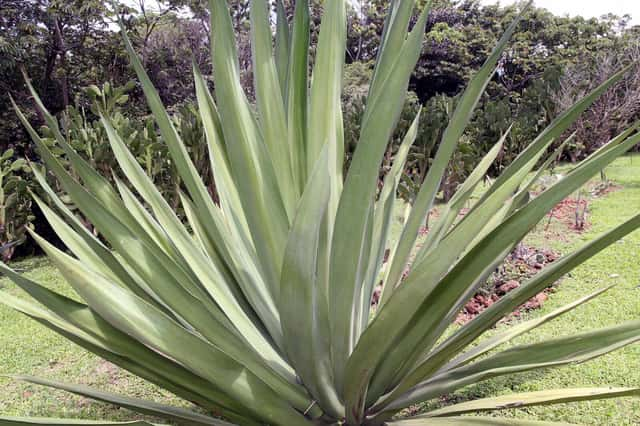
Furcraea (Furcraea) is a easy-care plant from the Asparagaceae family. Furcraea is a genus of about 26 succulent rosette plants that look a lot like agaves, native to Mexico, the Caribbean, Central America and northern South America. The leaves are long and, in some species, have spines along the edge. The rosette goes years without flowering. When it finally does, it...
Furcraea grows up to 8.0m, spread of 200cm, watering every 14 days. It is suitable for indoor environments and safe for pets.
Unlike many tropical plants, Furcraea tolerates watering mistakes. Best for beginners. Unlike many popular species, Furcraea is safe to keep around pets. Without adequate drainage, root rot can develop within 28 days.
How to Care for Furcraea?
TLDR: Furcraea needs Direct sun, watering every 14 days, and temperatures between 15-30°C with 40-70% humidity.
How Often Should You Water Furcraea?
Water when the soil is completely dry, usually every 14 days or longer. Mature plants can go a long time without water.
How Much Light Does Furcraea Need?
Direct sun, all day if you can. Indoors, it needs your brightest window.
What Is the Best Soil for Furcraea?
Fast-draining soil with sand or grit. It handles poor ground too: fique has been studied for bringing back worn-out, eroded soil.
What Pot Should You Use for Furcraea?
A wide, heavy pot with drainage holes, since the rosette gets big and top-heavy. The larger species need to go in the ground after a few years.
What Is Furcraea and Where Does It Come From?
Furcraea is a genus of about 26 succulent rosette plants that look a lot like agaves, native to Mexico, the Caribbean, Central America and northern South America. The leaves are long and, in some species, have spines along the edge. The rosette goes years without flowering. When it finally does, it sends up a huge stalk over 10 ft (3 m) tall with white or greenish flowers that turn into tiny plantlets, and then the mother plant dies. Fique, a fiber used for packing in Colombia, comes from this genus. Mauritius hemp (Furcraea foetida) has its own page.
How to Propagate Furcraea?
Stalk plantlets and base pups
Watch the leaf edges: many species have spines.
- 1 Wait for plantlets to drop from the stalk or for pups to show at the base
- 2 Pick up the plantlet or cut the pup away, wearing gloves
- 3 Plant it in a pot of fast-draining soil
- 4 Water lightly and keep it out of the cold until it settles in
Materials needed:
How Big Does Furcraea Grow?
TLDR: Furcraea can reach up to 8.0m tall with Medium growth rate.
Max height
8.0m
Spread
2.0m
Foliage
Evergreen
Plant Uses
Ornamental
Great for decoration
Is your plant showing symptoms?
Click on the symptom to discover possible causes:
What Diseases Commonly Affect Furcraea?
TLDR: Furcraea is susceptible to 3 known diseases. Monitor regularly for early detection.
Scale Insects
Scale insects are small sap-sucking pests that appear as brown, shell-like bumps on plant stems and leaves. There are over 25 species, divided into armored (hard) and unarmored (soft) scales. They feed by piercing plant tissue and extracting sap, which weakens the plant and can lead to yellowing, stunted growth, and even death if left untreated. They also excrete honeydew, which attracts ants and promotes sooty mold growth.
Curculionidae
Curculionidae (weevils) are small beetles that feed on plants. Adults chew leaf margins, leaving crescent-shaped notches, primarily at night. The larvae live in the substrate and consume roots, causing decline, yellowing, and wilting even when the substrate is moist, and in severe cases, plant death. They frequently affect ornamentals and garden plants such as strawberries, citrus, roses, hydrangeas, azaleas, blueberries, begonias, and many potted plants.
Caterpillars
Caterpillars are the larval stage of moths and butterflies that feed voraciously on plant foliage, stems, flowers, and fruits. Common species include cabbage loopers, tomato hornworms, armyworms, and cutworms. These pests can cause extensive damage by consuming large amounts of plant tissue in a short time. They vary in size from small (1/4 inch) to large (5 inches), with colors ranging from green to brown, often featuring stripes or spots. Caterpillars are highly mobile and can quickly spread throughout gardens, making them one of the most destructive common pests.
Fun Facts
In some species the flower stalk reaches 25 ft (7.5 m)
Furcraea macdougalii is pollinated by bats
Fique, used for packing in Colombia, comes from plants in this genus
Frequently asked questions
Does furcraea die after flowering?
How often should I water furcraea?
How cold can furcraea get?
Is furcraea toxic to cats and dogs?
Compare with similar plants
| Attribute | Difficulty | Light | Watering | Pet Safe |
|---|---|---|---|---|
| Field Maple | Easy | Bright indirect | 14d | ✓ |
| Iberian Houseleek | Easy | Direct sun | 14d | ✓ |
| Silver Birch | Easy | Direct sun | 14d | ✓ |
| Common Blanketflower | Easy | Direct sun | 10d | ✓ |





