Hydrangeaceae
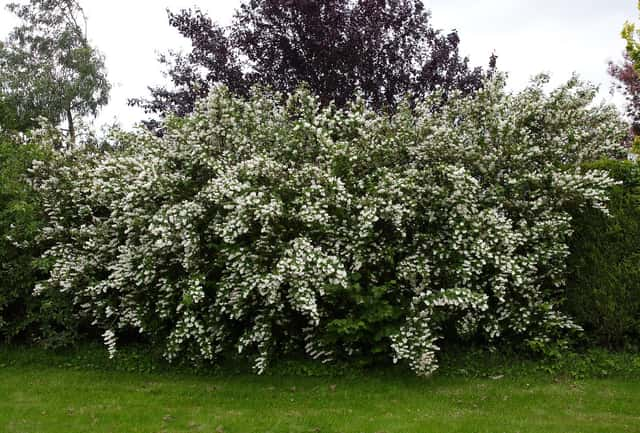
Fuzzy Deutzia (Deutzia scabra)
Deutzia scabra
An easy temperate shrub: full sun or part shade, moist, well-drained soil and one pruning a year right after flowering.
Every 7 days
Bright indirect
-29° - 35°C
% - %
Categories
What is Fuzzy Deutzia?
Fuzzy Deutzia (Deutzia scabra) is a easy-care plant from the Hydrangeaceae family. Deutzia scabra is a deciduous shrub in the hydrangea family, native to Japan, where it grows at forest edges from central to southern Honshu and Kyushu. It forms an upright clump of arching stems 2 to 3 m tall, with leaves as rough as sandpaper (scabra means rough) and reddish-brown bark that peels...
Fuzzy Deutzia grows up to 3.0m, spread of 240cm, watering every 7 days, -29°C – 35°C. It is not suitable for indoor environments and safe for pets.
Unlike many tropical plants, Fuzzy Deutzia tolerates watering mistakes. Best for beginners. Unlike many popular species, Fuzzy Deutzia is safe to keep around pets.
How to Care for Fuzzy Deutzia?
TLDR: Fuzzy Deutzia needs Bright indirect, watering every 7 days, and temperatures between -29-35°C with 40-70% humidity.
How Often Should You Water Fuzzy Deutzia?
Water weekly in the first year and during dry spells. Once established it manages on rainfall, but dislikes long dry periods or soggy soil.
How Much Light Does Fuzzy Deutzia Need?
Flowers best in full sun, 6 hours or more. It tolerates part shade with fewer blooms.
What Is the Best Soil for Fuzzy Deutzia?
Grows in many soils, from sand to clay, as long as they are fertile, moist and well drained. A layer of compost in spring helps.
What Pot Should You Use for Fuzzy Deutzia?
Best in the ground. In a container, use a large, deep pot of 50 cm or more with drainage holes.
What Is Fuzzy Deutzia and Where Does It Come From?
Deutzia scabra is a deciduous shrub in the hydrangea family, native to Japan, where it grows at forest edges from central to southern Honshu and Kyushu. It forms an upright clump of arching stems 2 to 3 m tall, with leaves as rough as sandpaper (scabra means rough) and reddish-brown bark that peels in sheets on older stems. In late spring and early summer it is covered for about two weeks with 8 to 15 cm panicles of small, star-shaped, lightly fragrant white flowers. Double-flowered cultivars such as 'Plena' and 'Candidissima' exist, as do pink forms.
How to Propagate Fuzzy Deutzia?
Softwood to semi-ripe cuttings
Leafless hardwood cuttings taken in late autumn also root well.
- 1 In early summer, cut 10 to 15 cm tips from this year's shoots
- 2 Remove the lower leaves and dip the base in rooting hormone
- 3 Insert into moist, sandy compost
- 4 Keep in bright shade and humid until rooted
Materials needed:
Seed
The seed is very fine, so do not cover it with soil.
- 1 Collect the dry capsules in autumn
- 2 Surface-sow in spring
- 3 Keep moist and in a bright spot
- 4 Pot on seedlings once they have a few leaves
Materials needed:
How Big Does Fuzzy Deutzia Grow?
TLDR: Fuzzy Deutzia can reach up to 3.0m tall with Medium growth rate.
Max height
3.0m
Spread
2.4m
Growth rate
Medium
Foliage
Deciduous
Plant Uses
Ornamental
Great for decoration
Is your plant showing symptoms?
Click on the symptom to discover possible causes:
What Diseases Commonly Affect Fuzzy Deutzia?
TLDR: Fuzzy Deutzia is susceptible to 3 known diseases. Monitor regularly for early detection.
Aphids
Aphids are small, soft-bodied, pear-shaped insects (1/16 to 1/8 inch long) that feed by sucking nutrient-rich sap from plants. They reproduce rapidly and can quickly weaken plants, causing distorted growth and transmitting plant viruses. Aphids come in various colors including green, black, red, yellow, brown, and gray. They secrete honeydew, a sticky substance that attracts ants and encourages sooty mold growth.
Leaf Spot
Leaf spot is a common fungal disease caused by various pathogens including Alternaria, Ascochyta, Colletotrichum, Septoria, and Venturia. It primarily affects leaves, causing discolored spots that can lead to premature leaf drop if left untreated.
Root Rot
Root rot is a serious fungal disease that affects the root system of plants, causing them to decay and die. It is primarily caused by overwatering, poor drainage, or soil-borne fungi such as Pythium, Phytophthora, Rhizoctonia, and Fusarium. The disease thrives in waterlogged conditions where roots are deprived of oxygen, making them susceptible to fungal infection.
Fun Facts
Scabra means rough, after its sandpaper-like leaves
In Japan it is called marubautsugi
The stems have a hollow pith
Frequently asked questions
When should I prune deutzia?
Why didn't it flower?
Is it invasive?
Is it toxic?
Compare with similar plants
| Attribute | Difficulty | Light | Watering | Pet Safe |
|---|---|---|---|---|
| Field Maple | Easy | Bright indirect | 14d | ✓ |
| Iberian Houseleek | Easy | Direct sun | 14d | ✓ |
| Silver Birch | Easy | Direct sun | 14d | ✓ |
| Common Blanketflower | Easy | Direct sun | 10d | ✓ |





