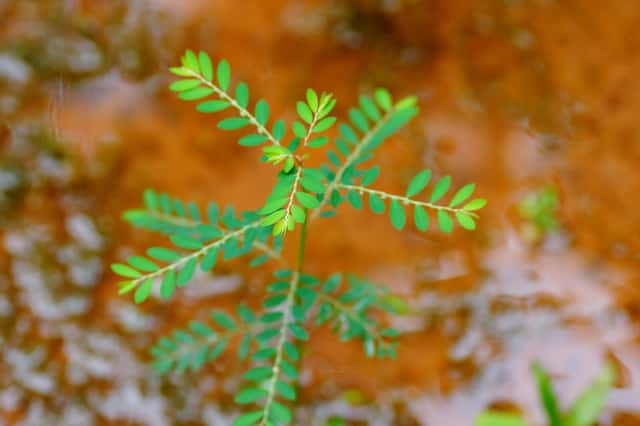
Phyllanthaceae
Gale of the wind (Phyllanthus niruri)
Phyllanthus niruri
An easy, fast herb for sun or part shade in moist, free-draining soil. It is an annual, so let a few plants drop seed if you want it back next year.
Every 3 days
Bright indirect
° - °C
% - %
Categories
What is Gale of the wind?
Gale of the wind (Phyllanthus niruri) is a easy-care plant from the Phyllanthaceae family. Phyllanthus niruri is a small herb of tropical America, found from Texas and Mexico through Central and South America, and also in India. It grows 50 to 70 cm tall, with thin upright branches and small pale green leaflets lined up in two rows, so each branch looks like a compound leaf. Tiny pale gre...
Gale of the wind grows up to 70cm, watering every 3 days. It is not suitable for indoor environments and safe for pets.
Unlike many tropical plants, Gale of the wind tolerates watering mistakes. Best for beginners. Unlike many popular species, Gale of the wind is safe to keep around pets.
How to Care for Gale of the wind?
TLDR: Gale of the wind needs Bright indirect, watering every 3 days, and temperatures between 15-30°C with 40-70% humidity.
How Often Should You Water Gale of the wind?
Keep the soil lightly moist, watering every 2 to 3 days in hot weather. Do not let it sit in water: soggy soil rots the roots.
How Much Light Does Gale of the wind Need?
Full sun or part shade. Some afternoon shade helps in strong summer sun.
What Is the Best Soil for Gale of the wind?
Grows in almost any soil, but does best with plenty of organic matter and good drainage.
What Pot Should You Use for Gale of the wind?
A medium pot or window box with a drainage hole and a mix rich in organic matter. It also does well straight in a garden bed.
What Is Gale of the wind and Where Does It Come From?
Phyllanthus niruri is a small herb of tropical America, found from Texas and Mexico through Central and South America, and also in India. It grows 50 to 70 cm tall, with thin upright branches and small pale green leaflets lined up in two rows, so each branch looks like a compound leaf. Tiny pale green flowers, sometimes tinged red, hang under the branches, followed by round capsules no bigger than a pinhead. It is a short-lived annual that finishes its life in a few months and sheds plenty of seed, so it pops up on its own in beds, paths and yards. In the Caribbean it is called gale of the wind, and in South America chanca piedra, or stonebreaker, after its folk use for kidney stones. It is easily confused with Phyllanthus amarus and P. tenellus, which share the same common names.
How to Propagate Gale of the wind?
Seed
In practice it reseeds itself: leave a few mature plants in the bed.
- 1 Cut stems once the capsules are ripe and let them dry on paper
- 2 Scatter the seed on the soil surface without burying it
- 3 Mist to keep it moist
- 4 Move seedlings to a pot or bed once they are 5 cm tall
Materials needed:
How Big Does Gale of the wind Grow?
TLDR: Gale of the wind can reach up to 70cm tall with Fast growth rate.
Max height
70cm
Growth rate
Fast
Plant Uses
Medicinal
Medicinal properties
Medicinal Uses
- Tea of the leafy stems is a folk remedy for kidney stones; studies have not shown convincing benefit
- Used in folk medicine for liver complaints; a Cochrane review found no clear benefit in hepatitis B
- Talk to a doctor before using it, especially if pregnant, on medication or with kidney disease
Is your plant showing symptoms?
Click on the symptom to discover possible causes:
What Diseases Commonly Affect Gale of the wind?
TLDR: Gale of the wind is susceptible to 1 known diseases. Monitor regularly for early detection.
Fun Facts
Chanca piedra, its Spanish name, means stone breaker
The flowers and seed capsules hang under the branches, hence the name seed-under-leaf
A lot of dried stonebreaker on sale is really Phyllanthus amarus or P. tenellus
Frequently asked questions
Is gale of the wind an annual?
How often should I water Phyllanthus niruri?
Does chanca piedra tea work for kidney stones?
How is it different from Phyllanthus amarus?
Compare with similar plants
| Attribute | Difficulty | Light | Watering | Pet Safe |
|---|---|---|---|---|
| Field Maple | Easy | Bright indirect | 14d | ✓ |
| Iberian Houseleek | Easy | Direct sun | 14d | ✓ |
| Silver Birch | Easy | Direct sun | 14d | ✓ |
| Common Blanketflower | Easy | Direct sun | 10d | ✓ |





