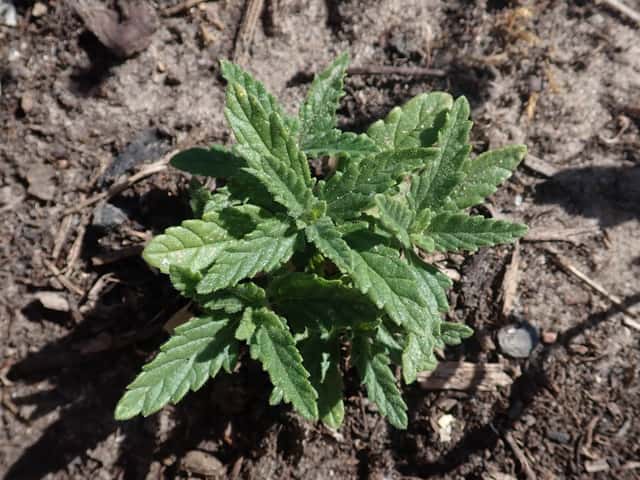
Verbenaceae
Garden Verbena: Ground Cover Plant
Glandularia x hybrida
Grow garden verbena in full sun with well-drained soil and moderate watering, allowing the surface to dry out between waterings. It is drought-tolerant once established but sensitive to waterlogging, which promotes root rot. Fertilize monthly during the growing season and deadhead spent flowers to encourage new blooms.
Every 7 days
Direct sun
10° - 32°C
30% - 60%
Categories
What is Garden Verbena?
Garden Verbena (Glandularia x hybrida) is a easy-care plant from the Verbenaceae family. Garden verbena (Glandularia x hybrida, synonym Verbena x hybrida) is an ornamental plant of hybrid origin, resulting from crosses between South American species of the genus Glandularia. With a low-growing, trailing, or slightly upright habit, it forms compact mounds covered by dense, colorful flowe...
Garden Verbena grows up to 30cm, spread of 45cm, watering every 7 days, 10°C – 32°C, 30–60% humidity. It is not suitable for indoor environments and safe for pets.
Unlike many tropical plants, Garden Verbena tolerates watering mistakes. Best for beginners. Unlike many popular species, Garden Verbena is safe to keep around pets.
How to Care for Garden Verbena?
TLDR: Garden Verbena needs Direct sun, watering every 7 days, and temperatures between 10-32°C with 30-60% humidity.
How Often Should You Water Garden Verbena?
Water deeply about once a week, letting the soil dry out between waterings. Avoid wetting the foliage and reduce frequency during rainy periods to prevent fungal diseases.
How Much Light Does Garden Verbena Need?
Requires full sun, with 6 to 10 hours of direct light daily, to bloom well; flowering is significantly reduced in partial shade.
What Is the Best Soil for Garden Verbena?
Prefers well-drained, sandy to loamy soil with a slightly acidic to neutral pH (5.5-7.0). In heavy soils, mix in organic compost to improve drainage.
What Pot Should You Use for Garden Verbena?
Choose pots or planters with good drainage and bottom holes; clay or ceramic pots help prevent excess moisture. It is also excellent for hanging baskets and window boxes due to its trailing habit.
Care Schedule
Fertilize
Every 30 days
What Is Garden Verbena and Where Does It Come From?
Garden verbena (Glandularia x hybrida, synonym Verbena x hybrida) is an ornamental plant of hybrid origin, resulting from crosses between South American species of the genus Glandularia. With a low-growing, trailing, or slightly upright habit, it forms compact mounds covered by dense, colorful flower clusters from early summer through fall. It is widely cultivated in gardens, window boxes, hanging baskets, and flower beds for its abundant and prolonged blooming, as well as its ability to attract butterflies and pollinators.
How to Propagate Garden Verbena?
Stem Cuttings
Use rooting hormone to speed up the process and keep the substrate moist but not waterlogged.
- 1 Cut a healthy 3-4 inch stem without flowers
- 2 Remove leaves from the bottom half of the stem
- 3 Plant in a light, slightly moist substrate
- 4 Keep in a spot with indirect light until rooted
Materials needed:
Sowing Seeds
Germination can be irregular; be patient and maintain constant moisture.
- 1 Sow in light substrate 6-8 weeks before the last frost
- 2 Lightly cover the seeds, as they need little light to germinate
- 3 Keep the substrate moist and in a location with temperatures between 70-75°F
- 4 Transplant seedlings after 2-3 true leaves appear
Materials needed:
How Big Does Garden Verbena Grow?
TLDR: Garden Verbena can reach up to 30cm tall with Fast growth rate.
Max height
30cm
Spread
45cm
Growth rate
Fast
Foliage
Semi-evergreen
Plant Uses
Ornamental
Great for decoration
Ground Cover
Soil coverage
Is your plant showing symptoms?
Click on the symptom to discover possible causes:
What Diseases Commonly Affect Garden Verbena?
TLDR: Garden Verbena is susceptible to 7 known diseases. Monitor regularly for early detection.
Powdery Mildew
Powdery mildew is a common fungal disease caused by various fungi species including Erysiphe, Podosphaera, Oïdium, and Leveillula. It affects over 10,000 plant species worldwide. The disease thrives in warm, dry climates with high humidity and appears as a distinctive white powdery coating on plant surfaces.
Spider Mites
Spider mites are tiny arachnids (less than 1/20 inch long) related to spiders and ticks that feed on plant sap. They thrive in hot, dry conditions and can cause significant damage to ornamental and vegetable plants. During severe infestations, crop losses can reach 14% or higher as these pests disrupt vital plant processes including photosynthesis, carbon dioxide absorption, and transpiration.
Aphids
Aphids are small, soft-bodied, pear-shaped insects (1/16 to 1/8 inch long) that feed by sucking nutrient-rich sap from plants. They reproduce rapidly and can quickly weaken plants, causing distorted growth and transmitting plant viruses. Aphids come in various colors including green, black, red, yellow, brown, and gray. They secrete honeydew, a sticky substance that attracts ants and encourages sooty mold growth.
Gray Mold (Botrytis Blight)
Gray mold, caused by the fungus Botrytis cinerea, is one of the most common fungal diseases in plants. It affects over 200 plant species, including ornamentals, vegetables, fruits, and houseplants. The disease thrives in cool, humid conditions with poor air circulation, causing grayish spots and soft rot on infected tissues.
Meaning & Symbolism
Historically associated with protection, healing, and family bonds, verbena is considered a symbol of enchantment and domestic harmony in various cultures.
Compare with similar plants
| Attribute | Difficulty | Light | Watering | Pet Safe |
|---|---|---|---|---|
| Field Maple | Easy | Bright indirect | 14d | ✓ |
| Silver Birch | Easy | Direct sun | 14d | ✓ |
| Common Blanketflower | Easy | Direct sun | 10d | ✓ |
| Cushion Bush | Easy | Direct sun | 14d | ✓ |





