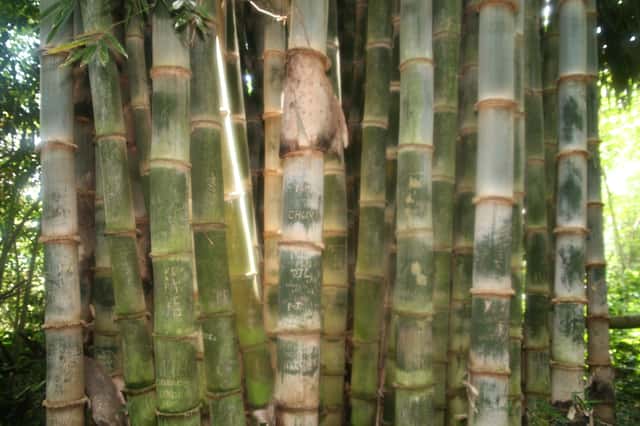
Poaceae
Giant Bamboo (Dendrocalamus giganteus)
Dendrocalamus giganteus
Plant in full sun with rich, well-draining soil. Water regularly during the first two years. Once established, tolerates moderate drought. Fertilize monthly during the growing season.
Every 3 days
Direct sun
15° - 34°C
60% - 90%
Categories
What is Giant Bamboo?
Giant Bamboo (Dendrocalamus giganteus) is a medium-care plant from the Poaceae family. Dendrocalamus giganteus, commonly known as Giant Bamboo, is one of the largest bamboo species in the world, capable of reaching heights of up to 30 meters. Native to Southeast Asia — particularly India and Myanmar — it is prized for its impressive stature, extraordinarily fast growth, and versatile...
Giant Bamboo grows up to 30.0m, spread of 1500cm, watering every 3 days, 15°C – 34°C, 60–90% humidity. It is not suitable for indoor environments and safe for pets.
Unlike many popular species, Giant Bamboo is safe to keep around pets.
How to Care for Giant Bamboo?
TLDR: Giant Bamboo needs Direct sun, watering every 3 days, and temperatures between 15-34°C with 60-90% humidity.
How Often Should You Water Giant Bamboo?
Water every 2-4 days keeping soil consistently moist, especially during the first two years. Avoid waterlogging. Once established, short dry periods can be tolerated.
How Much Light Does Giant Bamboo Need?
Requires full sun — at least 4-6 hours of direct sunlight per day. In partial shade, growth rate is significantly reduced.
What Is the Best Soil for Giant Bamboo?
Prefers rich loamy soil with good drainage and high organic matter. Ideal pH 5.5-6.5. Avoid compacted or waterlogged soils.
What Pot Should You Use for Giant Bamboo?
For ornamental garden use, plant directly in the ground with a rhizome barrier to control spreading. If container growing, use pots of at least 100 liters.
Care Schedule
Fertilize
Every 30 days
What Is Giant Bamboo and Where Does It Come From?
Dendrocalamus giganteus, commonly known as Giant Bamboo, is one of the largest bamboo species in the world, capable of reaching heights of up to 30 meters. Native to Southeast Asia — particularly India and Myanmar — it is prized for its impressive stature, extraordinarily fast growth, and versatile uses from construction to ornamental landscaping.
How to Propagate Giant Bamboo?
Clump Division
Perform division in early spring before new shoots emerge. Reduce foliage to minimize transpiration stress.
- 1 Dig around the edge of the clump exposing rhizomes with at least 2-3 culms
- 2 Cut the division with a sharp spade or machete
- 3 Plant immediately in the final location 10-15 cm deep
- 4 Water thoroughly and keep soil moist for 30 days
Materials needed:
Culm Cutting
Success rate is lower than division. Use high-concentration rooting hormone. Avoid direct sun exposure during rooting.
- 1 Cut a mature culm (2-3 years old) into sections with 2-3 nodes
- 2 Apply rooting hormone to cut ends
- 3 Bury horizontally in moist substrate 5 cm deep
- 4 Keep in a shaded, humid location
Materials needed:
How Big Does Giant Bamboo Grow?
TLDR: Giant Bamboo can reach up to 30.0m tall with Fast growth rate.
Max height
30.0m
Spread
15.0m
Growth rate
Fast
Foliage
Evergreen
Plant Uses
Ornamental
Great for decoration
Edible
Can be consumed
Medicinal Uses
- The siliceous secretion from culms is traditionally used as a tonic and aphrodisiac in Asian medicine
Culinary Uses
- Young shoots are edible when cooked — mild flavor and crunchy texture, widely used in Asian cuisine
Is your plant showing symptoms?
Click on the symptom to discover possible causes:
What Diseases Commonly Affect Giant Bamboo?
TLDR: Giant Bamboo is susceptible to 6 known diseases. Monitor regularly for early detection.
Root Rot
Root rot is a serious fungal disease that affects the root system of plants, causing them to decay and die. It is primarily caused by overwatering, poor drainage, or soil-borne fungi such as Pythium, Phytophthora, Rhizoctonia, and Fusarium. The disease thrives in waterlogged conditions where roots are deprived of oxygen, making them susceptible to fungal infection.
Spider Mites
Spider mites are tiny arachnids (less than 1/20 inch long) related to spiders and ticks that feed on plant sap. They thrive in hot, dry conditions and can cause significant damage to ornamental and vegetable plants. During severe infestations, crop losses can reach 14% or higher as these pests disrupt vital plant processes including photosynthesis, carbon dioxide absorption, and transpiration.
Aphids
Aphids are small, soft-bodied, pear-shaped insects (1/16 to 1/8 inch long) that feed by sucking nutrient-rich sap from plants. They reproduce rapidly and can quickly weaken plants, causing distorted growth and transmitting plant viruses. Aphids come in various colors including green, black, red, yellow, brown, and gray. They secrete honeydew, a sticky substance that attracts ants and encourages sooty mold growth.
Mealybugs
Mealybugs are small, soft-bodied insects covered with a white, waxy, cottony material. They are common pests of houseplants and outdoor plants in mild climates. These sap-sucking insects feed on plant tissue, causing damage, stunted growth, and can lead to plant death if left untreated. They produce sticky honeydew which attracts sooty mold.
Meaning & Symbolism
Giant Bamboo symbolizes strength, longevity, flexibility and prosperity across Asian cultures.
Fun Facts
Can grow up to 30 cm per day during peak growing season — making it one of the fastest-growing plants on Earth
Mature culms can be up to 30 cm in diameter and have been used as construction beams and water pipes for centuries
It flowers only once every approximately 40 years, and after flowering the entire clump dies
Native to the tropical forests of India and Myanmar, it has been cultivated for millennia by Southeast Asian peoples
Frequently asked questions
How often should I water Giant Bamboo?
Is Giant Bamboo toxic to pets and humans?
How much sun does Giant Bamboo need?
Can Giant Bamboo be grown in a container?
How fast does Giant Bamboo grow?
Compare with similar plants
| Attribute | Difficulty | Light | Watering | Pet Safe |
|---|---|---|---|---|
| Dark Fieldcap | Medium | Low light | 2d | ⚠️ |
| Azalea | Medium | Partial shade | 3d | ⚠️ |
| Muriel's Bamboo | Medium | Partial shade | 3d | ✓ |
| Bougainvillea | Medium | Direct sun | 7d | ⚠️ |




