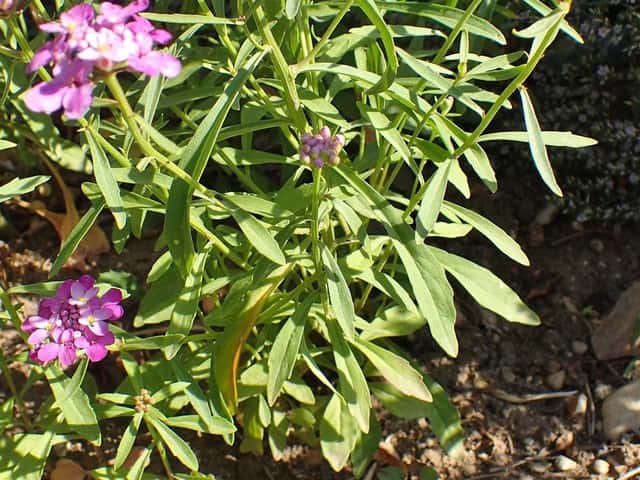
Brassicaceae
Globe Candytuft: Aromatic Plant
Iberis umbellata
Globe candytuft is an easy-care, fast-growing annual that rewards minimal fuss with months of fragrant bloom. Give it full sun and well-drained, even poor or alkaline soil, and avoid rich, waterlogged beds. Water only once the soil has dried out, feed lightly if at all, and shear plants back by about a third after the first flush of flowers to encourage a second round of bloom.
Every 7 days
Direct sun
18° - 27°C
% - %
Categories
What is Globe Candytuft?
Globe Candytuft (Iberis umbellata) is a easy-care plant from the Brassicaceae family. Iberis umbellata, commonly known as globe candytuft, is a fast-growing annual flowering plant in the mustard family (Brassicaceae), native to southern Europe. It forms a low, bushy mound of slender green leaves topped with dense, flattened clusters of small, four-petaled flowers in white, pink, purp...
Globe Candytuft grows up to 50cm, spread of 30cm, watering every 7 days, 18°C – 27°C. It is not suitable for indoor environments and safe for pets.
Unlike many tropical plants, Globe Candytuft tolerates watering mistakes. Best for beginners. Unlike many popular species, Globe Candytuft is safe to keep around pets.
How to Care for Globe Candytuft?
TLDR: Globe Candytuft needs Direct sun, watering every 7 days, and temperatures between 18-27°C with 40-70% humidity.
How Often Should You Water Globe Candytuft?
Let the soil dry out between waterings - globe candytuft is drought-tolerant once established, and overwatering is the most common cause of root rot and reduced flowering. Water deeply but infrequently, and never let pots or beds stay waterlogged.
How Much Light Does Globe Candytuft Need?
Give globe candytuft full sun for at least 6 hours a day; it flowers poorly and can turn leggy in shade. A south- or west-facing bed or windowsill is ideal.
What Is the Best Soil for Globe Candytuft?
Plant in well-drained, even lean or poor soil - rich, heavy, or waterlogged ground encourages root rot and floppy growth. It tolerates a wide pH range from mildly acidic to alkaline/chalky, so no special soil amending is usually needed.
What Pot Should You Use for Globe Candytuft?
Use a shallow, wide container with generous drainage holes - unglazed terracotta is ideal, since its porous walls help the fast-draining soil mix dry out between waterings and discourage root rot.
What Is Globe Candytuft and Where Does It Come From?
Iberis umbellata, commonly known as globe candytuft, is a fast-growing annual flowering plant in the mustard family (Brassicaceae), native to southern Europe. It forms a low, bushy mound of slender green leaves topped with dense, flattened clusters of small, four-petaled flowers in white, pink, purple, or crimson from late spring through summer. Valued for its sweetly scented blooms and drought tolerance, it thrives in poor, well-drained soil and is a popular choice for cottage gardens, rock gardens, borders, and containers, where it also attracts bees, moths, and butterflies.
How Big Does Globe Candytuft Grow?
TLDR: Globe Candytuft can reach up to 50cm tall with Fast growth rate.
Max height
50cm
Spread
30cm
Growth rate
Fast
Foliage
Deciduous
Plant Uses
Ornamental
Great for decoration
Aromatic
Pleasant fragrance
Is your plant showing symptoms?
Click on the symptom to discover possible causes:
What Diseases Commonly Affect Globe Candytuft?
TLDR: Globe Candytuft is susceptible to 8 known diseases. Monitor regularly for early detection.
Bacterial Leaf Spot
Bacterial leaf spot is a plant disease caused by bacteria in the Xanthomonas and Pseudomonas genera that affects various ornamental and edible plants. The bacteria infect leaves through wounds or natural openings, causing characteristic lesions that can lead to premature leaf drop and plant weakening.
Leaf Spot
Leaf spot is a common fungal disease caused by various pathogens including Alternaria, Ascochyta, Colletotrichum, Septoria, and Venturia. It primarily affects leaves, causing discolored spots that can lead to premature leaf drop if left untreated.
Root Rot
Root rot is a serious fungal disease that affects the root system of plants, causing them to decay and die. It is primarily caused by overwatering, poor drainage, or soil-borne fungi such as Pythium, Phytophthora, Rhizoctonia, and Fusarium. The disease thrives in waterlogged conditions where roots are deprived of oxygen, making them susceptible to fungal infection.
Powdery Mildew
Powdery mildew is a common fungal disease caused by various fungi species including Erysiphe, Podosphaera, Oïdium, and Leveillula. It affects over 10,000 plant species worldwide. The disease thrives in warm, dry climates with high humidity and appears as a distinctive white powdery coating on plant surfaces.
Meaning & Symbolism
In Victorian floriography, candytuft is most often linked to indifference, though many gardeners now read its resilience in poor, rocky soil as a symbol of quiet steadfastness and enduring friendship.
Compare with similar plants
| Attribute | Difficulty | Light | Watering | Pet Safe |
|---|---|---|---|---|
| Field Maple | Easy | Bright indirect | 14d | ✓ |
| Silver Birch | Easy | Direct sun | 14d | ✓ |
| Common Blanketflower | Easy | Direct sun | 10d | ✓ |
| Cushion Bush | Easy | Direct sun | 14d | ✓ |





