Ranunculaceae
golden columbine: Complete Care Guide
Aquilegia chrysantha
Thrives in moist, well-drained soil in partial shade. It is cold-hardy but requires consistent moisture and protection from intense afternoon sun in hot climates.
Every 7 days
Bright indirect
-40° - 35°C
30% - 50%
Categories
What is golden columbine?
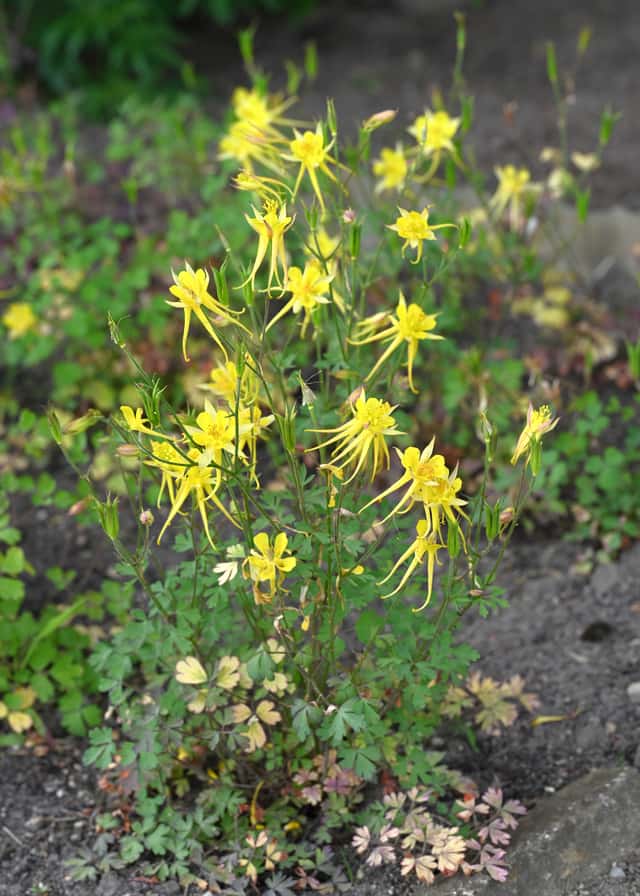
golden columbine (Aquilegia chrysantha) is a medium-care plant from the Ranunculaceae family. Aquilegia chrysantha, commonly known as the golden columbine, is a herbaceous perennial native to the Southwestern United States and Northern Mexico. It is celebrated for its large, canary-yellow flowers that feature exceptionally long, outward-curving spurs. The plant produces delicate, fern-like,...
golden columbine grows up to 1.2m, spread of 75cm, watering every 7 days, -40°C – 35°C, 30–50% humidity. It is not suitable for indoor environments and not safe for pets.
Without precautions, ingestion can cause irritation in pets. Keep out of reach of cats and dogs.
How to Care for golden columbine?
TLDR: golden columbine needs Bright indirect, watering every 7 days, and temperatures between -40-35°C with 30-50% humidity.
How Often Should You Water golden columbine?
Water regularly to keep the soil evenly moist, especially during the first growing season and during periods of drought.
How Much Light Does golden columbine Need?
Prefers dappled sunlight or partial shade. In cooler climates, it can tolerate more sun if the soil is kept consistently moist.
What Is the Best Soil for golden columbine?
Requires rich, organic soil that retains moisture but drains well. Amend heavy clay with compost or peat moss.
What Pot Should You Use for golden columbine?
Best grown in garden beds due to its deep taproot, but can be grown in deep, large containers with excellent drainage.
Care Schedule
Fertilize
Every 90 days
What Is golden columbine and Where Does It Come From?
Aquilegia chrysantha, commonly known as the golden columbine, is a herbaceous perennial native to the Southwestern United States and Northern Mexico. It is celebrated for its large, canary-yellow flowers that feature exceptionally long, outward-curving spurs. The plant produces delicate, fern-like, blue-green foliage that remains attractive throughout the growing season. It is a favorite for pollinators, particularly hummingbirds and hawkmoths, which are attracted to its nectar-rich blooms.
How to Propagate golden columbine?
Seed Sowing
- Self-seeds easily in the garden if spent flowers are not removed.
- Fresh seeds have a higher germination rate than old ones.
- 1 Cold Stratification
Place seeds in a damp paper towel inside a sealed bag and refrigerate for 3-4 weeks to simulate winter.
- 2 Sowing
Sow seeds on the surface of a moist seed-starting mix. Do not cover them, as they require light to germinate.
- 3 Germination
Keep the soil moist and place in a bright, cool location until seedlings emerge.
Materials needed:
Root Division
- Columbines have a sensitive taproot and often do not survive division.
- Keep newly divided plants well-shaded and moist until established.
- 1 Excavation
Carefully dig up the entire root ball in early spring before new growth is significant.
- 2 Splitting
Use a sharp, sterile knife to divide the crown into sections, ensuring each piece has several healthy roots and at least one bud.
- 3 Replanting
Replant the divisions immediately at the same depth they were growing and water thoroughly.
Materials needed:
How Big Does golden columbine Grow?
TLDR: golden columbine can reach up to 1.2m tall with Medium growth rate.
Max height
1.2m
Spread
75cm
Growth rate
Medium
Foliage
Deciduous
Warning: Toxic Plant
This plant can be toxic if ingested. Keep out of reach of:
Plant Uses
Ornamental
Great for decoration
Is your plant showing symptoms?
Click on the symptom to discover possible causes:
What Diseases Commonly Affect golden columbine?
TLDR: golden columbine is susceptible to 7 known diseases. Monitor regularly for early detection.
Powdery Mildew
Powdery mildew is a common fungal disease caused by various fungi species including Erysiphe, Podosphaera, Oïdium, and Leveillula. It affects over 10,000 plant species worldwide. The disease thrives in warm, dry climates with high humidity and appears as a distinctive white powdery coating on plant surfaces.
Leaf Spot
Leaf spot is a common fungal disease caused by various pathogens including Alternaria, Ascochyta, Colletotrichum, Septoria, and Venturia. It primarily affects leaves, causing discolored spots that can lead to premature leaf drop if left untreated.
Crown Rot
Crown rot is a serious fungal disease that attacks the crown (base) of the plant where the stem meets the soil. It is caused by various fungal pathogens including Phytophthora, Fusarium, and Rhizoctonia. The disease thrives in waterlogged conditions and can quickly spread to kill the entire plant if not addressed promptly.
Aphids
Aphids are small, soft-bodied, pear-shaped insects (1/16 to 1/8 inch long) that feed by sucking nutrient-rich sap from plants. They reproduce rapidly and can quickly weaken plants, causing distorted growth and transmitting plant viruses. Aphids come in various colors including green, black, red, yellow, brown, and gray. They secrete honeydew, a sticky substance that attracts ants and encourages sooty mold growth.
Meaning & Symbolism
In the language of flowers, columbines can represent folly, but also strength and the hope of success.
Compare with similar plants
| Attribute | Difficulty | Light | Watering | Pet Safe |
|---|---|---|---|---|
| Dark Fieldcap | Medium | Low light | 2d | ⚠️ |
| Azalea | Medium | Partial shade | 3d | ⚠️ |
| Muriel's Bamboo | Medium | Partial shade | 3d | ✓ |
| Bougainvillea | Medium | Direct sun | 7d | ⚠️ |




