Orchidaceae
Grasshopper orchid: Pet-Safe Plant
Lycaste locusta
This orchid prefers bright, filtered light, cool nights, and consistently high humidity. Water generously during active growth, letting the mix dry slightly between waterings, then reduce watering during the cooler rest period. Grow in a small pot with a fast-draining bark mix to prevent root rot, and fertilize lightly only while actively growing.
Every 4 days
Bright indirect
7° - 27°C
55% - 80%
Categories
What is Grasshopper orchid?
Grasshopper orchid (Lycaste locusta) is a hard-care plant from the Orchidaceae family. Lycaste locusta, also classified as Ida locusta or Sudamerlycaste locusta, is a large, cool-to-warm growing orchid native to Peru, where it grows as a lithophyte on sunny limestone embankments and rocky slopes between 2,000 and 3,000 meters elevation. Its oblong pseudobulbs support 2-3 broad, pleate...
Grasshopper orchid grows up to 65cm, watering every 4 days, 7°C – 27°C, 55–80% humidity. It is suitable for indoor environments and safe for pets.
Unlike easy-care plants, Grasshopper orchid demands constant attention to humidity and light. Not recommended for beginners. Unlike many popular species, Grasshopper orchid is safe to keep around pets. Without adequate drainage, root rot can develop within 8 days.
How to Care for Grasshopper orchid?
TLDR: Grasshopper orchid needs Bright indirect, watering every 4 days, and temperatures between 7-27°C with 55-80% humidity.
How Often Should You Water Grasshopper orchid?
Water 2-3 times per week during active growth, letting the top of the mix dry slightly between waterings; cut back significantly during the cooler winter rest period to prevent rot.
How Much Light Does Grasshopper orchid Need?
Provide bright, indirect light (about 20,000-30,000 lux) with direct midday sun filtered through a sheer curtain or shade cloth.
What Is the Best Soil for Grasshopper orchid?
Pot in a fast-draining bark-based orchid mix (roughly two parts bark to one part perlite or charcoal) in a snug pot that allows 1-2 seasons of new root growth before repotting.
What Pot Should You Use for Grasshopper orchid?
Use a small, well-draining plastic or terracotta orchid pot with ample drainage holes, sized only slightly larger than the root mass to reduce the risk of a soggy mix.
Care Schedule
Fertilize
Every 14 days
Repot
Every 730 days
What Is Grasshopper orchid and Where Does It Come From?
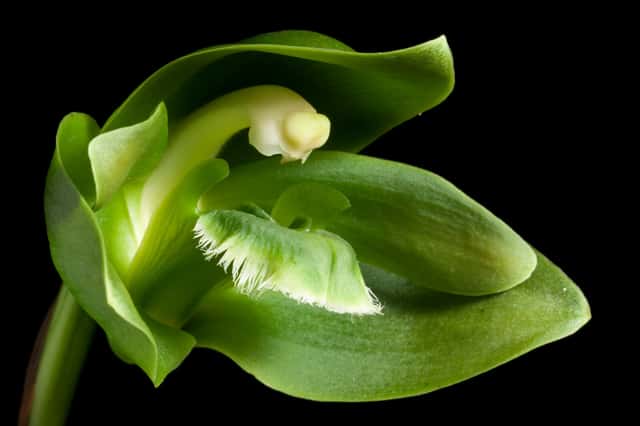
Lycaste locusta, also classified as Ida locusta or Sudamerlycaste locusta, is a large, cool-to-warm growing orchid native to Peru, where it grows as a lithophyte on sunny limestone embankments and rocky slopes between 2,000 and 3,000 meters elevation. Its oblong pseudobulbs support 2-3 broad, pleated, elliptic-lanceolate leaves reaching up to 80 cm long, and in cultivation it blooms in spring (fall in the wild) with pendant, waxy, green flowers up to 11.5 cm across and a fringed lip, carrying a distinct scent of apples.
How to Propagate Grasshopper orchid?
Pseudobulb division
Avoid heavy watering for the first 1-2 weeks after division to let the cuts callus over; keep divisions warm and humid but not wet.
- 1 Wait until the plant has at least 6-8 healthy pseudobulbs before dividing
- 2 Remove the plant from its pot and gently wash old potting mix away from the roots
- 3 Cut through the rhizome with a sterile blade, keeping at least 3-4 pseudobulbs per division
- 4 Dust cut surfaces with cinnamon or a fungicide to prevent rot
- 5 Pot each division in fresh, well-draining orchid bark mix and keep humidity high while new roots establish
Materials needed:
How Big Does Grasshopper orchid Grow?
TLDR: Grasshopper orchid can reach up to 65cm tall with Medium growth rate.
Max height
65cm
Growth rate
Medium
Foliage
Evergreen
Plant Uses
Ornamental
Great for decoration
Is your plant showing symptoms?
Click on the symptom to discover possible causes:
What Diseases Commonly Affect Grasshopper orchid?
TLDR: Grasshopper orchid is susceptible to 7 known diseases. Monitor regularly for early detection.
Root Rot
Root rot is a serious fungal disease that affects the root system of plants, causing them to decay and die. It is primarily caused by overwatering, poor drainage, or soil-borne fungi such as Pythium, Phytophthora, Rhizoctonia, and Fusarium. The disease thrives in waterlogged conditions where roots are deprived of oxygen, making them susceptible to fungal infection.
Leaf Spot
Leaf spot is a common fungal disease caused by various pathogens including Alternaria, Ascochyta, Colletotrichum, Septoria, and Venturia. It primarily affects leaves, causing discolored spots that can lead to premature leaf drop if left untreated.
Bacterial Soft Rot
Bacterial soft rot is a destructive plant disease caused primarily by bacteria from the genera Pectobacterium (formerly Erwinia) and Dickeya. These bacteria produce enzymes that break down plant cell walls, causing rapid and foul-smelling tissue decomposition. It mainly affects succulent tissues such as tubers, fruits, stems, and bulbs, being especially problematic in warm and humid conditions.
Scale Insects
Scale insects are small sap-sucking pests that appear as brown, shell-like bumps on plant stems and leaves. There are over 25 species, divided into armored (hard) and unarmored (soft) scales. They feed by piercing plant tissue and extracting sap, which weakens the plant and can lead to yellowing, stunted growth, and even death if left untreated. They also excrete honeydew, which attracts ants and promotes sooty mold growth.
Meaning & Symbolism
The Grasshopper Orchid symbolizes resilience and quiet strength, having adapted to thrive on exposed rocky embankments and limestone cliffs high in the Peruvian Andes. Its ability to flourish in such harsh, mineral-poor conditions has made it an emblem of endurance and adaptability.
Compare with similar plants
| Attribute | Difficulty | Light | Watering | Pet Safe |
|---|---|---|---|---|
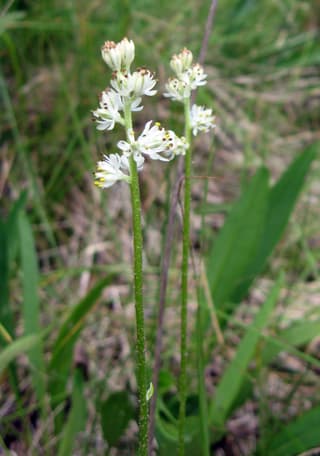
| Sticky false asphodel | Hard | Bright indirect | 1d | ✓ |
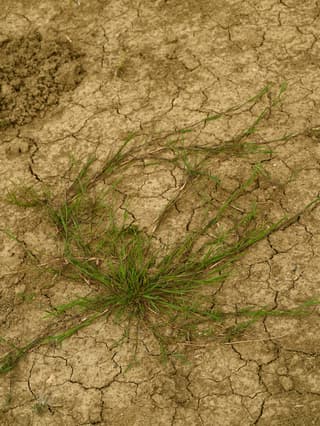
| Creeping bentgrass | Hard | Direct sun | 3d | ✓ |
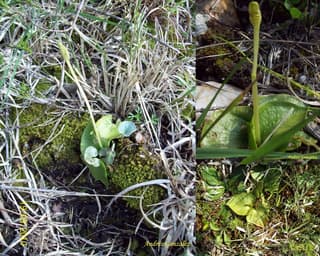
| Bulbous Adder's-tongue | Hard | Partial shade | 4d | ✓ |
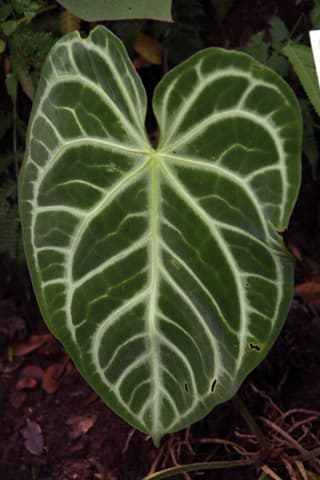
| Crystal Anthurium | Hard | Partial shade | 7d | ⚠️ |