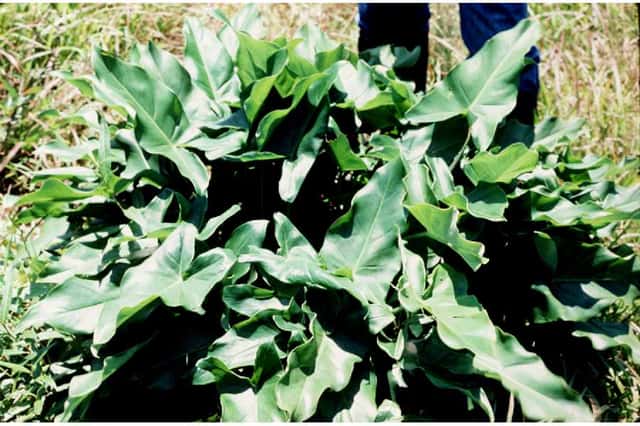
Araceae
Green Arrow Arum: Edible Plant
Peltandra virginica
Thrives in full sun to part shade and must be kept rooted in consistently saturated, boggy soil or shallow standing water year-round. Prefers acidic, organic-rich muck, sand, or peat substrate and is essentially trouble-free once established in a pond margin or bog garden.
Every 1 days
Bright indirect
° - °C
% - %
Categories
What is Green Arrow Arum?
Green Arrow Arum (Peltandra virginica) is a easy-care plant from the Araceae family. Green arrow arum is an emergent perennial native to freshwater wetlands, marshes, and pond margins of eastern North America. It forms clumps of glossy, arrowhead-shaped leaves rising from thick rhizomes, with greenish-white flowers borne on a spadix wrapped in a pale green spathe in spring. The plan...
Green Arrow Arum grows up to 90cm, spread of 60cm, watering every 1 days. It is not suitable for indoor environments and not safe for pets.
Unlike many tropical plants, Green Arrow Arum tolerates watering mistakes. Best for beginners. Without precautions, ingestion can cause irritation in pets. Keep out of reach of cats and dogs.
How to Care for Green Arrow Arum?
TLDR: Green Arrow Arum needs Bright indirect, watering every 1 days, and temperatures between 15-30°C with 40-70% humidity.
How Often Should You Water Green Arrow Arum?
Never let the soil dry out; grow it submerged in up to 15 cm of water or in permanently saturated bog soil, as it cannot tolerate drying between waterings like a typical potted plant.
How Much Light Does Green Arrow Arum Need?
Give it full sun for the best flowering and densest foliage, though it tolerates partial to full shade well, especially in warmer climates.
What Is the Best Soil for Green Arrow Arum?
Use an acidic, organic-rich substrate such as muck, sand, or peat with a pH between 4.0 and 6.0, mimicking its native marsh habitat.
What Pot Should You Use for Green Arrow Arum?
Grow in a submersible aquatic planting basket with no drainage, set at the edge of a pond or in a bog container that holds water permanently.
Care Schedule
Fertilize
Every 14 days
Misting
Every 3 days
Rotate
Every 7 days
Repot
Every 365 days
What Is Green Arrow Arum and Where Does It Come From?
Green arrow arum is an emergent perennial native to freshwater wetlands, marshes, and pond margins of eastern North America. It forms clumps of glossy, arrowhead-shaped leaves rising from thick rhizomes, with greenish-white flowers borne on a spadix wrapped in a pale green spathe in spring. The plant grows rooted in mud under shallow standing water and is a key food source for waterfowl, muskrats, and other wetland wildlife.
How to Propagate Green Arrow Arum?
Rhizome Division
Divide every few years to control spread and rejuvenate dense clumps; handle rhizomes gently and keep them moist during the process.
- 1 In early spring, lift or expose an established clump's rhizome mass.
- 2 Cut the rhizome into sections, ensuring each piece has at least one growth point/leaf bud and some roots.
- 3 Replant divisions immediately into mud or an aquatic planting basket filled with heavy loam or peaty substrate.
- 4 Submerge or saturate so the crown sits just below to at the water/soil surface.
- 5 Keep constantly wet while new growth establishes.
Materials needed:
Seed Propagation
Fresh seed germinates far more reliably than dried/stored seed; mimic natural marsh conditions of cold, wet winters.
- 1 Collect ripe brown berries from the spadix in late summer to fall.
- 2 Clean seeds from the gelatinous pulp and sow fresh, as seeds do not store well dry.
- 3 Sow onto the surface of wet mud or shallow water in trays or pots.
- 4 Keep seeds cold and moist over winter to break dormancy (natural or refrigerated stratification).
- 5 Germination occurs in spring; keep seedlings submerged/saturated as they grow.
Materials needed:
How Big Does Green Arrow Arum Grow?
TLDR: Green Arrow Arum can reach up to 90cm tall with Medium growth rate.
Max height
90cm
Spread
60cm
Growth rate
Medium
Foliage
Deciduous
Warning: Toxic Plant
This plant can be toxic if ingested. Keep out of reach of:
Plant Uses
Ornamental
Great for decoration
Edible
Can be consumed
Culinary Uses
- Rhizomes and seeds were historically eaten by Indigenous peoples after prolonged cooking or drying, which breaks down the calcium oxalate crystals that make the raw plant irritating.
Is your plant showing symptoms?
Click on the symptom to discover possible causes:
What Diseases Commonly Affect Green Arrow Arum?
TLDR: Green Arrow Arum is susceptible to 2 known diseases. Monitor regularly for early detection.
Leaf Spot
Leaf spot is a common fungal disease caused by various pathogens including Alternaria, Ascochyta, Colletotrichum, Septoria, and Venturia. It primarily affects leaves, causing discolored spots that can lead to premature leaf drop if left untreated.
Rust
Rust is a common fungal disease caused by fungi in the order Pucciniales that affects a wide variety of plants. The disease gets its name from the characteristic orange, yellow, or reddish-brown pustules that appear on leaves, resembling metal rust. This obligate fungal parasite requires living plants to survive and can cause significant economic losses in agricultural crops.
Meaning & Symbolism
As 'tuckahoe,' the starchy rhizome was a historic survival food for Indigenous peoples of eastern North America's wetlands, so the plant is often associated with resilience and sustenance drawn from the marsh.
Compare with similar plants
| Attribute | Difficulty | Light | Watering | Pet Safe |
|---|---|---|---|---|
| Field Maple | Easy | Bright indirect | 14d | ✓ |
| Silver Birch | Easy | Direct sun | 14d | ✓ |
| Common Blanketflower | Easy | Direct sun | 10d | ✓ |
| Cushion Bush | Easy | Direct sun | 14d | ✓ |





