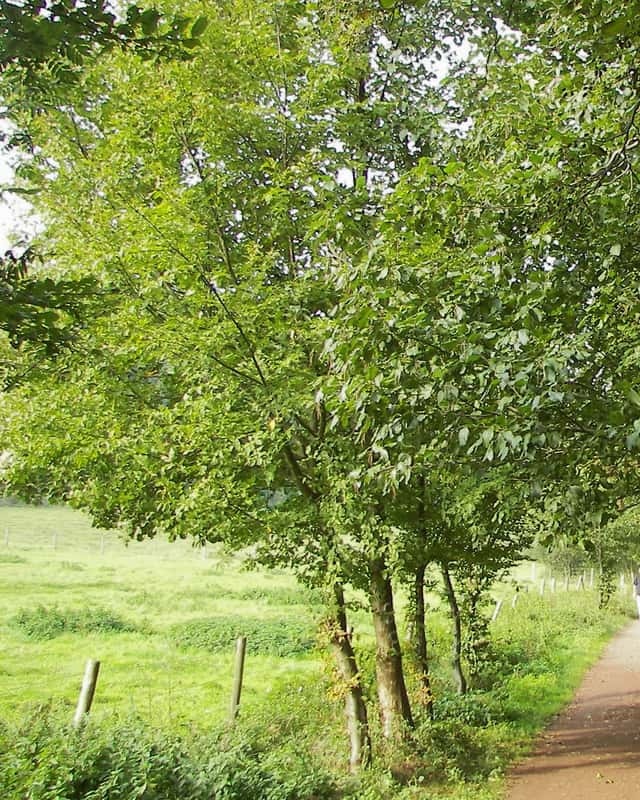
Betulaceae
Grey Alder (Alnus incana)
Alnus incana
An easy-care, tough tree once established. Grow in full sun to part shade in consistently moist to wet soil; it tolerates poor, sandy, clay and even nutrient-poor ground thanks to its nitrogen-fixing root nodules. Very cold hardy (USDA zones 2-6) and largely free of serious pests, though it can be affected by Phytophthora root/collar rot, canker and occasional powdery mildew.
Every 7 days
Bright indirect
-40° - 35°C
40% - 80%
Categories
What is Grey Alder?
Grey Alder (Alnus incana) is a easy-care plant from the Betulaceae family. Grey alder is a fast-growing deciduous tree native to the cooler regions of Europe and parts of North America, prized for its hardiness, adaptability to poor and wet soils, and its role as a pioneer species that fixes nitrogen in the soil. It produces distinctive purplish male catkins and small cone...
Grey Alder grows up to 18.0m, spread of 600cm, watering every 7 days, -40°C – 35°C, 40–80% humidity. It is not suitable for indoor environments and safe for pets.
Unlike many tropical plants, Grey Alder tolerates watering mistakes. Best for beginners. Unlike many popular species, Grey Alder is safe to keep around pets.
How to Care for Grey Alder?
TLDR: Grey Alder needs Bright indirect, watering every 7 days, and temperatures between -40-35°C with 40-80% humidity.
How Often Should You Water Grey Alder?
Keep soil consistently moist to wet, especially while young; established trees tolerate occasional flooding but dislike prolonged drought.
How Much Light Does Grey Alder Need?
Thrives in full sun for the best growth and flowering, but tolerates partial shade.
What Is the Best Soil for Grey Alder?
Adapts to sandy, loamy, clay and nutrient-poor soils with mildly acidic to mildly alkaline pH (5.5-7.5); avoid soil that stays completely dry.
What Pot Should You Use for Grey Alder?
Best planted directly in the ground; not suited to container growing due to its mature size and vigorous root system.
What Is Grey Alder and Where Does It Come From?
Grey alder is a fast-growing deciduous tree native to the cooler regions of Europe and parts of North America, prized for its hardiness, adaptability to poor and wet soils, and its role as a pioneer species that fixes nitrogen in the soil. It produces distinctive purplish male catkins and small cone-like female catkins in late winter before the leaves emerge.
How to Propagate Grey Alder?
Seed propagation
Stratification breaks seed dormancy and greatly improves germination; sow thinly since seeds are very small.
- 1 Collect ripe seed cones in autumn
- 2 Extract and clean the small seeds
- 3 Cold-stratify the seeds in moist sand or peat for 8-12 weeks
- 4 Sow shallowly, barely covering with soil, in a cold frame or seedbed in spring
- 5 Keep the medium moist until germination
Materials needed:
Hardwood cutting
Use clean, sharp tools and keep the rooting medium consistently moist but not waterlogged.
- 1 Take semi-hardwood or hardwood cuttings about 15-20cm long from healthy side shoots
- 2 Dip the cut end in rooting hormone
- 3 Insert cuttings into a well-draining mix of perlite and peat
- 4 Keep under high humidity and out of direct sun until roots form
- 5 Transplant once a strong root system develops
Materials needed:
How Big Does Grey Alder Grow?
TLDR: Grey Alder can reach up to 18.0m tall with Fast growth rate.
Max height
18.0m
Spread
6.0m
Growth rate
Fast
Foliage
Deciduous
Plant Uses
Ornamental
Great for decoration
Edible
Can be consumed
Culinary Uses
- Boiled young catkins (bitter, resinous, minor food source)
Is your plant showing symptoms?
Click on the symptom to discover possible causes:
What Diseases Commonly Affect Grey Alder?
TLDR: Grey Alder is susceptible to 4 known diseases. Monitor regularly for early detection.
Canker
Canker is a disease caused by various fungi and bacteria that create necrotic, sunken areas on bark of branches, stems, and trunks. Pathogens enter through wounds and natural openings, especially when plants are stressed. Canker can gradually weaken or kill branches by disrupting water and nutrient flow.
Powdery Mildew
Powdery mildew is a common fungal disease caused by various fungi species including Erysiphe, Podosphaera, Oïdium, and Leveillula. It affects over 10,000 plant species worldwide. The disease thrives in warm, dry climates with high humidity and appears as a distinctive white powdery coating on plant surfaces.
Phytophthora Root Rot
Disease caused by fungus-like organisms (oomycetes) that live in soil and can survive for years. It affects roots, stem, and crown of plants, being especially severe in waterlogged or poorly drained soils. It is the second most common cause of root rot in trees and shrubs.
Root Rot
Root rot is a serious fungal disease that affects the root system of plants, causing them to decay and die. It is primarily caused by overwatering, poor drainage, or soil-borne fungi such as Pythium, Phytophthora, Rhizoctonia, and Fusarium. The disease thrives in waterlogged conditions where roots are deprived of oxygen, making them susceptible to fungal infection.
Meaning & Symbolism
In Celtic folklore, alder trees symbolize protection, courage and quiet strength, growing at the water's edge as a boundary between worlds; its wood turns blood-red when cut, linking it to warriors and battle magic.
Fun Facts
Grey alder's roots host nitrogen-fixing bacteria, allowing it to thrive in poor soils where few other trees survive.
Its catkins form in autumn and stay dormant through winter, opening in very early spring before the leaves appear.
The wood turns a deep orange-red when freshly cut, a trait that gave rise to alder's folkloric link to blood and battle.
Grey alder is one of the most cold-hardy alder species, surviving winters as cold as USDA zone 2.
Frequently asked questions
Is grey alder toxic to pets or humans?
How much water does grey alder need?
Can grey alder grow in poor soil?
What diseases affect grey alder?
Is grey alder suitable for a small garden?
Compare with similar plants
| Attribute | Difficulty | Light | Watering | Pet Safe |
|---|---|---|---|---|
| Field Maple | Easy | Bright indirect | 14d | ✓ |
| Silver Birch | Easy | Direct sun | 14d | ✓ |
| Common Blanketflower | Easy | Direct sun | 10d | ✓ |
| Cushion Bush | Easy | Direct sun | 14d | ✓ |
Choose & Compare
Sources & References
- Alnus incana | Grey alder - Van den Berk Nurseries
- Alnus incana - PFAF Plant Database
- Speckled Alder - Alnus incana | UFOR Nursery & Lab
- Gray Alder - Calscape
- Alnus incana (Gray alder) | Native Plants of North America
- Phytophthora disease of alder (Phytophthora alni) - Forest Research
- Alnus incana (grey alder) | CABI Compendium
- Alder mythology and folklore | Trees for Life





