Amaranthaceae
Grey Saltbush (Atriplex cinerea) Growing Guide
Atriplex cinerea
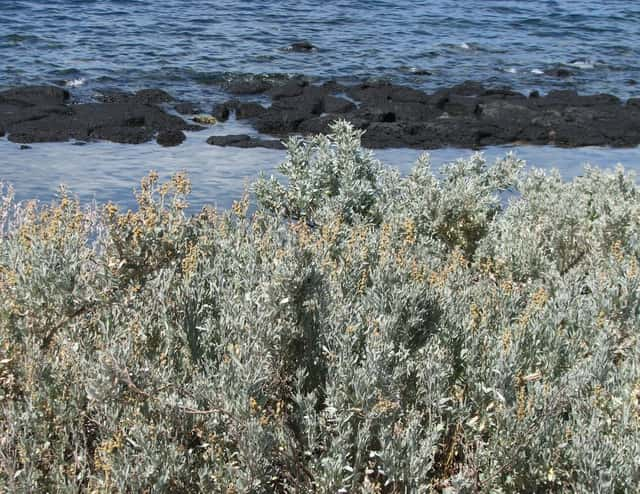
A very tough coastal shrub: full sun, well-drained sandy soil and almost no watering once established. It handles strong wind, salt spray, drought and saline or alkaline soil, which is why it is used to stabilize dunes and in seaside gardens.
Every 14 days
Direct sun
° - °C
% - %
Categories
What is Grey Saltbush?
Grey Saltbush (Atriplex cinerea) is a easy-care plant from the Amaranthaceae family. Atriplex cinerea is a salt-tolerant shrub in the Amaranthaceae family, native to the coasts of southern Australia (Western Australia, South Australia, Victoria, Tasmania and New South Wales), with a small natural population in New Zealand. It grows on coastal sands, sheltered bays, salt marshes and...
Grey Saltbush grows up to 1.8m, spread of 250cm, watering every 14 days. It is not suitable for indoor environments and safe for pets.
Unlike many tropical plants, Grey Saltbush tolerates watering mistakes. Best for beginners. Unlike many popular species, Grey Saltbush is safe to keep around pets.
How to Care for Grey Saltbush?
TLDR: Grey Saltbush needs Direct sun, watering every 14 days, and temperatures between 15-30°C with 40-70% humidity.
How Often Should You Water Grey Saltbush?
Water young plants every one to two weeks during their first summer; once established, rainfall is usually enough. Avoid waterlogged soil.
How Much Light Does Grey Saltbush Need?
Plant in full sun. In shade it grows sparse and loses the silvery color of its foliage.
What Is the Best Soil for Grey Saltbush?
Prefers very free-draining sandy or gravelly soil; tolerates saline, alkaline and poor soils.
What Pot Should You Use for Grey Saltbush?
Not a container plant; for seedlings use deep pots with a sandy mix and plant out early.
What Is Grey Saltbush and Where Does It Come From?
Atriplex cinerea is a salt-tolerant shrub in the Amaranthaceae family, native to the coasts of southern Australia (Western Australia, South Australia, Victoria, Tasmania and New South Wales), with a small natural population in New Zealand. It grows on coastal sands, sheltered bays, salt marshes and the edges of salt lakes. It forms erect or spreading mounds up to 1.8 m tall and 2.5 m or more wide, with silvery-grey leaves covered in bladder hairs that store salt. Plants are usually either male, with dense brown flower spikes up to 5 cm long, or female, with inconspicuous flowers in the leaf axils.
How to Propagate Grey Saltbush?
Cuttings
Cuttings strike easily; stems that touch the ground also root on their own and can be separated.
- 1 Take semi-hardwood cuttings 10 to 15 cm long
- 2 Strip the leaves from the lower half
- 3 Insert into a well-drained sandy mix
- 4 Keep lightly moist until rooted
Materials needed:
Seed sowing
Seeds from brown fruits germinate readily; black seeds can take years. Viability varies a lot.
- 1 Rinse the seeds in water to wash off the salt
- 2 Sow 2 to 3 seeds per pot in a sandy mix
- 3 Keep moist until germination
Materials needed:
How Big Does Grey Saltbush Grow?
TLDR: Grey Saltbush can reach up to 1.8m tall with Medium growth rate.
Max height
1.8m
Spread
2.5m
Growth rate
Medium
Foliage
Evergreen
Plant Uses
Ornamental
Great for decoration
Edible
Can be consumed
Ground Cover
Soil coverage
Culinary Uses
- Edible leaves with a salty taste, used cooked as greens or as a seasoning
Is your plant showing symptoms?
Click on the symptom to discover possible causes:
Fun Facts
Bladder hairs on the leaves store the salt the plant takes up, giving it its silvery tone.
Early British settlers in Australia mistook the plant for a kind of sage.
A single mound can grow more than 4 m wide.
Frequently asked questions
Can Atriplex cinerea handle salt spray?
How often should I water grey saltbush?
Are Atriplex cinerea leaves edible?
How do you propagate Atriplex cinerea?
Compare with similar plants
| Attribute | Difficulty | Light | Watering | Pet Safe |
|---|---|---|---|---|
| Field Maple | Easy | Bright indirect | 14d | ✓ |
| Iberian Houseleek | Easy | Direct sun | 14d | ✓ |
| Silver Birch | Easy | Direct sun | 14d | ✓ |
| Common Blanketflower | Easy | Direct sun | 10d | ✓ |





