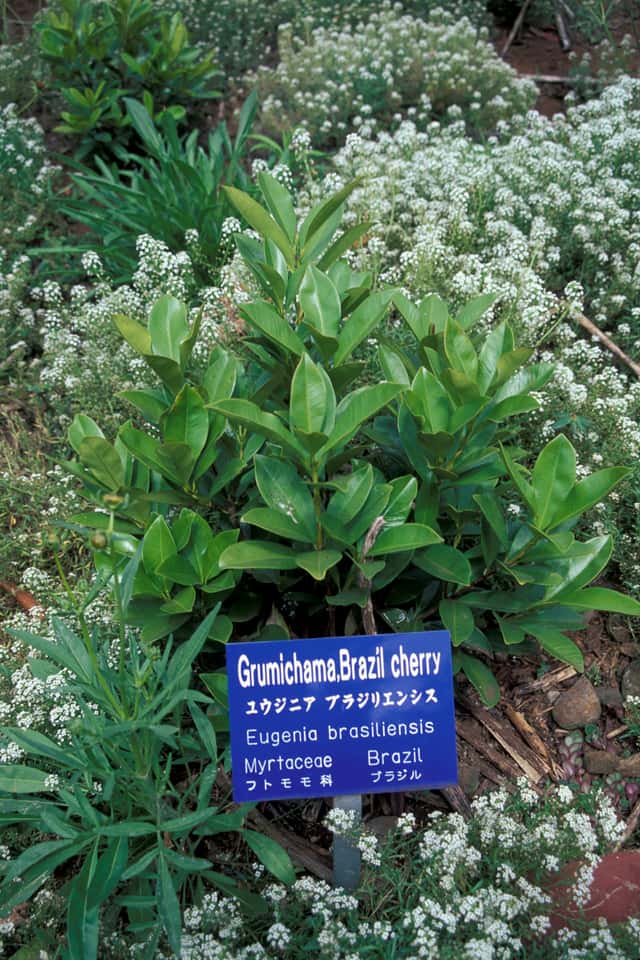
Myrtaceae
Grumichama (Eugenia brasiliensis): Complete Growing Guide
Eugenia brasiliensis
Plant in a sunny location with rich, well-draining organic soil. Water regularly to keep soil moist but never waterlogged. Fertilize twice a year, before flowering and after fruiting. A slow-growing species that begins producing fruit after 3-4 years.
Every 7 days
Bright indirect
5° - 38°C
60% - 90%
Categories
What is Grumichama?
Grumichama (Eugenia brasiliensis) is a medium-care plant from the Myrtaceae family. Grumichama (Eugenia brasiliensis) is a native fruit tree of Brazil's Atlantic Forest, belonging to the Myrtaceae family. It produces small, round berries with juicy pulp and a sweet-tart flavor, available in black, red, and yellow varieties. Highly valued both for its edible fruit and ornamental bea...
Grumichama grows up to 15.0m, spread of 600cm, watering every 7 days, 5°C – 38°C, 60–90% humidity. It is not suitable for indoor environments and safe for pets.
Unlike many popular species, Grumichama is safe to keep around pets.
How to Care for Grumichama?
TLDR: Grumichama needs Bright indirect, watering every 7 days, and temperatures between 5-38°C with 60-90% humidity.
How Often Should You Water Grumichama?
Water every 7 days, keeping the soil consistently moist but not waterlogged. During flowering and fruiting, increase watering frequency to ensure abundant, juicy fruits. Young plants need more frequent watering during establishment.
How Much Light Does Grumichama Need?
Prefers full sun for maximum fruit production, tolerating partial shade. Plant in a location with good sun exposure and shelter from strong winds.
What Is the Best Soil for Grumichama?
Use fertile, organic-rich, well-draining soil with a pH between 5.5 and 6.5. Avoid alkaline or compacted soils. Incorporate compost when planting.
What Pot Should You Use for Grumichama?
Large ceramic or wooden container for pot cultivation; prefers direct garden planting for full development.
Care Schedule
Fertilize
Every 180 days
What Is Grumichama and Where Does It Come From?
Grumichama (Eugenia brasiliensis) is a native fruit tree of Brazil's Atlantic Forest, belonging to the Myrtaceae family. It produces small, round berries with juicy pulp and a sweet-tart flavor, available in black, red, and yellow varieties. Highly valued both for its edible fruit and ornamental beauty, it is an important species for Atlantic Forest restoration.
How to Propagate Grumichama?
Seed Sowing
Use fresh seeds as they lose viability rapidly. Keep substrate moist but not waterlogged during germination.
- 1 Collect fresh seeds from ripe fruits
- 2 Plant immediately after harvest in sandy organic substrate
- 3 Keep in semi-shaded location with constant moisture
- 4 Wait for germination in 30-60 days
- 5 Transplant to permanent location when seedling reaches 30-40 cm
Materials needed:
Stem Cutting
Use sterilized tools. Maintain high humidity around cuttings with a humidity chamber.
- 1 Cut semi-hardwood cuttings 15-20 cm from healthy branches
- 2 Remove lower leaves, keeping 2-3 pairs at the top
- 3 Apply rooting hormone to the base
- 4 Plant in moist, well-draining substrate
- 5 Keep in semi-shade until rooted
Materials needed:
How Big Does Grumichama Grow?
TLDR: Grumichama can reach up to 15.0m tall with Slow growth rate.
Max height
15.0m
Spread
6.0m
Growth rate
Slow
Foliage
Evergreen
Plant Uses
Ornamental
Great for decoration
Edible
Can be consumed
Medicinal
Medicinal properties
Medicinal Uses
- Leaf and bark infusion used as aromatic astringent diuretic; traditional use for rheumatism
Culinary Uses
- Fresh fruit consumption
- Juices and smoothies
- Jams and preserves
- Ice creams and sorbets
- Pies and mousses
Is your plant showing symptoms?
Click on the symptom to discover possible causes:
What Diseases Commonly Affect Grumichama?
TLDR: Grumichama is susceptible to 11 known diseases. Monitor regularly for early detection.
Root Rot
Root rot is a serious fungal disease that affects the root system of plants, causing them to decay and die. It is primarily caused by overwatering, poor drainage, or soil-borne fungi such as Pythium, Phytophthora, Rhizoctonia, and Fusarium. The disease thrives in waterlogged conditions where roots are deprived of oxygen, making them susceptible to fungal infection.
Leaf Spot
Leaf spot is a common fungal disease caused by various pathogens including Alternaria, Ascochyta, Colletotrichum, Septoria, and Venturia. It primarily affects leaves, causing discolored spots that can lead to premature leaf drop if left untreated.
Powdery Mildew
Powdery mildew is a common fungal disease caused by various fungi species including Erysiphe, Podosphaera, Oïdium, and Leveillula. It affects over 10,000 plant species worldwide. The disease thrives in warm, dry climates with high humidity and appears as a distinctive white powdery coating on plant surfaces.
Rust
Rust is a common fungal disease caused by fungi in the order Pucciniales that affects a wide variety of plants. The disease gets its name from the characteristic orange, yellow, or reddish-brown pustules that appear on leaves, resembling metal rust. This obligate fungal parasite requires living plants to survive and can cause significant economic losses in agricultural crops.
Meaning & Symbolism
Symbol of Atlantic Forest biodiversity and native Brazilian fruit abundance, associated with the resilience of native ecosystems.
Fun Facts
Grumichama can reach up to 15 meters tall in its native Atlantic Forest habitat
There are three color varieties: black, red, and yellow
Fruits ripen quickly after flowering and are highly perishable
It is an important pioneer species for Atlantic Forest reforestation projects
Frequently asked questions
How long does it take for Grumichama to bear fruit?
Can Grumichama be grown in a container?
How often should I water Grumichama?
Is Grumichama toxic to pets?
What is the best soil for Grumichama?
Compare with similar plants
| Attribute | Difficulty | Light | Watering | Pet Safe |
|---|---|---|---|---|
| Dark Fieldcap | Medium | Low light | 2d | ⚠️ |
| Azalea | Medium | Partial shade | 3d | ⚠️ |
| Muriel's Bamboo | Medium | Partial shade | 3d | ✓ |
| Bougainvillea | Medium | Direct sun | 7d | ⚠️ |




