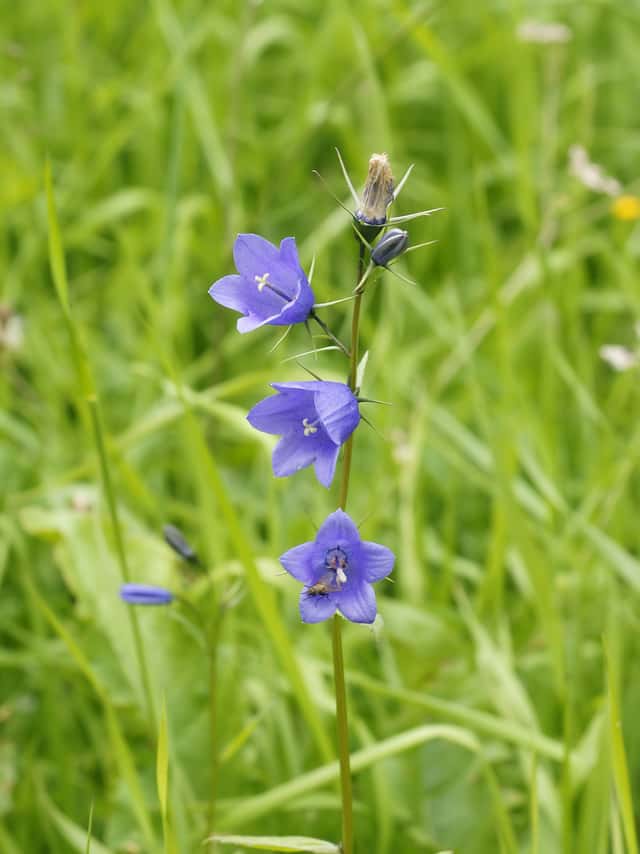
Campanulaceae
Harebell — Campanula rotundifolia
Campanula rotundifolia
Plant in full sun to partial shade in well-draining soil. Water moderately, allowing the top inch of soil to dry between waterings. Hardy to USDA zone 3. Deadhead spent blooms to extend flowering season from summer through fall.
Every 7 days
Bright indirect
-30° - 24°C
30% - 50%
Categories
What is Harebell?
Harebell (Campanula rotundifolia) is a easy-care plant from the Campanulaceae family. Campanula rotundifolia, commonly known as Harebell or Scottish Bluebell, is a delicate perennial wildflower native to Europe and North America. It produces charming nodding bell-shaped flowers in shades of violet-blue, blooming from summer through fall. This hardy plant thrives in rocky gardens, mea...
Harebell grows up to 90cm, spread of 30cm, watering every 7 days, -30°C – 24°C, 30–50% humidity. It is not suitable for indoor environments and safe for pets.
Unlike many tropical plants, Harebell tolerates watering mistakes. Best for beginners. Unlike many popular species, Harebell is safe to keep around pets.
How to Care for Harebell?
TLDR: Harebell needs Bright indirect, watering every 7 days, and temperatures between -30-24°C with 30-50% humidity.
How Often Should You Water Harebell?
Water every 7 days or when the top inch of soil feels dry. Avoid overwatering — Harebell is sensitive to waterlogged soil and prone to root rot in wet conditions.
How Much Light Does Harebell Need?
Prefers full sun to partial shade. At least 6 hours of direct sunlight produces the best flowering display. In hot climates, afternoon shade helps prevent wilting.
What Is the Best Soil for Harebell?
Plant in well-draining, sandy loam or loamy soil with a pH of 6.0–7.5. Avoid heavy clay or waterlogged soils. Amend with grit or perlite to improve drainage if needed.
What Pot Should You Use for Harebell?
Terracotta or stone container with drainage holes. Best suited for outdoor rock gardens, borders, and meadow plantings.
Care Schedule
Fertilize
Every 30 days
What Is Harebell and Where Does It Come From?
Campanula rotundifolia, commonly known as Harebell or Scottish Bluebell, is a delicate perennial wildflower native to Europe and North America. It produces charming nodding bell-shaped flowers in shades of violet-blue, blooming from summer through fall. This hardy plant thrives in rocky gardens, meadows, and grassy slopes with minimal care.
How to Propagate Harebell?
Seed sowing
Seeds can also be started indoors 8–10 weeks before the last frost. Mix tiny seeds with fine sand for even distribution. Self-seeds freely once established.
- 1 Sow seeds directly outdoors in spring after the last frost
- 2 Press seeds lightly onto the soil surface without covering — they need light to germinate
- 3 Keep the soil lightly moist until germination occurs
- 4 Thin seedlings to 15–20 cm apart once established
Materials needed:
Crown division
Division every 3–4 years keeps plants vigorous. Note that Harebell develops a deep taproot and dislikes excessive disturbance.
- 1 Lift established clumps in spring or early autumn
- 2 Separate the rootstock into sections by hand or with a clean knife
- 3 Replant divisions immediately at the same depth
- 4 Water well after planting
Materials needed:
How Big Does Harebell Grow?
TLDR: Harebell can reach up to 90cm tall with Medium growth rate.
Max height
90cm
Spread
30cm
Growth rate
Medium
Foliage
Deciduous
Plant Uses
Ornamental
Great for decoration
Ground Cover
Soil coverage
Is your plant showing symptoms?
Click on the symptom to discover possible causes:
What Diseases Commonly Affect Harebell?
TLDR: Harebell is susceptible to 7 known diseases. Monitor regularly for early detection.
Aphids
Aphids are small, soft-bodied, pear-shaped insects (1/16 to 1/8 inch long) that feed by sucking nutrient-rich sap from plants. They reproduce rapidly and can quickly weaken plants, causing distorted growth and transmitting plant viruses. Aphids come in various colors including green, black, red, yellow, brown, and gray. They secrete honeydew, a sticky substance that attracts ants and encourages sooty mold growth.
Spider Mites
Spider mites are tiny arachnids (less than 1/20 inch long) related to spiders and ticks that feed on plant sap. They thrive in hot, dry conditions and can cause significant damage to ornamental and vegetable plants. During severe infestations, crop losses can reach 14% or higher as these pests disrupt vital plant processes including photosynthesis, carbon dioxide absorption, and transpiration.
Thrips
Thrips are tiny cigar-shaped insects (1/25-inch long) that damage plants by sucking plant juices and scraping at fruits, flowers, and leaves. With over 6,000 species and rapid reproduction (lifecycle as short as 14 days), they can quickly infest plants and transmit viruses like tomato spotted wilt virus.
Slugs and Snails
Slugs and snails are mollusks that feed on plant tissue, causing irregular holes in leaves and damage to young seedlings. They are most active at night and in moist conditions, leaving characteristic silvery slime trails. These pests can quickly devastate gardens, especially during wet seasons.
Meaning & Symbolism
In the Victorian language of flowers, the Harebell symbolizes humility and constancy.
Fun Facts
It is one of the few wildflowers native to both Europe and North America, thriving on both sides of the Atlantic
Despite being called Scottish Bluebell, it is not a true bluebell — its genus Campanula means "little bell" in Latin
The name rotundifolia refers to the rounded basal leaves, even though the stem leaves are narrow and linear
It readily colonizes rock crevices and poor soils where most other plants cannot survive
Frequently asked questions
How often should I water Harebell?
Is Harebell toxic to cats and dogs?
When does Harebell bloom?
Can Harebell grow in poor soil?
How do I encourage more blooms on my Harebell?
Compare with similar plants
| Attribute | Difficulty | Light | Watering | Pet Safe |
|---|---|---|---|---|
| Field Maple | Easy | Bright indirect | 14d | ✓ |
| Silver Birch | Easy | Direct sun | 14d | ✓ |
| Common Blanketflower | Easy | Direct sun | 10d | ✓ |
| Cushion Bush | Easy | Direct sun | 14d | ✓ |





