Oleaceae
Holly Olive (Osmanthus heterophyllus)
Osmanthus heterophyllus
An easy, tough shrub for temperate gardens. Plant in full sun or part shade in well-drained soil. Water regularly the first year; after that it handles drought, heat and pollution. Prune in spring to shape. It does not like waterlogged soil.
Every 7 days
Bright indirect
° - °C
% - %
Categories
What is Holly olive?
Holly olive (Osmanthus heterophyllus) is a easy-care plant from the Oleaceae family. Holly olive (Osmanthus heterophyllus) is an evergreen shrub in the olive family, native to Japan, Taiwan and Korea. It forms a dense, oval mound 2.5 to 6 m tall with glossy dark green leaves. Leaves on young plants and low branches are spiny like holly; higher up they become smooth, which is where t...
Holly olive grows up to 6.0m, spread of 600cm, watering every 7 days. It is not suitable for indoor environments and safe for pets.
Unlike many tropical plants, Holly olive tolerates watering mistakes. Best for beginners. Unlike many popular species, Holly olive is safe to keep around pets.
How to Care for Holly olive?
TLDR: Holly olive needs Bright indirect, watering every 7 days, and temperatures between 15-30°C with 40-70% humidity.
How Often Should You Water Holly olive?
Keep the soil lightly moist the first year, watering once a week when it does not rain. Once established, water only in long dry spells. Never let water stand around the roots.
How Much Light Does Holly olive Need?
Full sun to part shade. In hot, dry regions it prefers shade during the hottest hours. In cold areas, shelter it from strong late-winter sun, which can scorch the leaves.
What Is the Best Soil for Holly olive?
Any well-drained soil, ideally with some organic matter. It tolerates acid, neutral or alkaline soil, clay and sand.
What Pot Should You Use for Holly olive?
Best in the ground. Compact cultivars grow well in a large container with drainage holes and free-draining mix.
What Is Holly olive and Where Does It Come From?
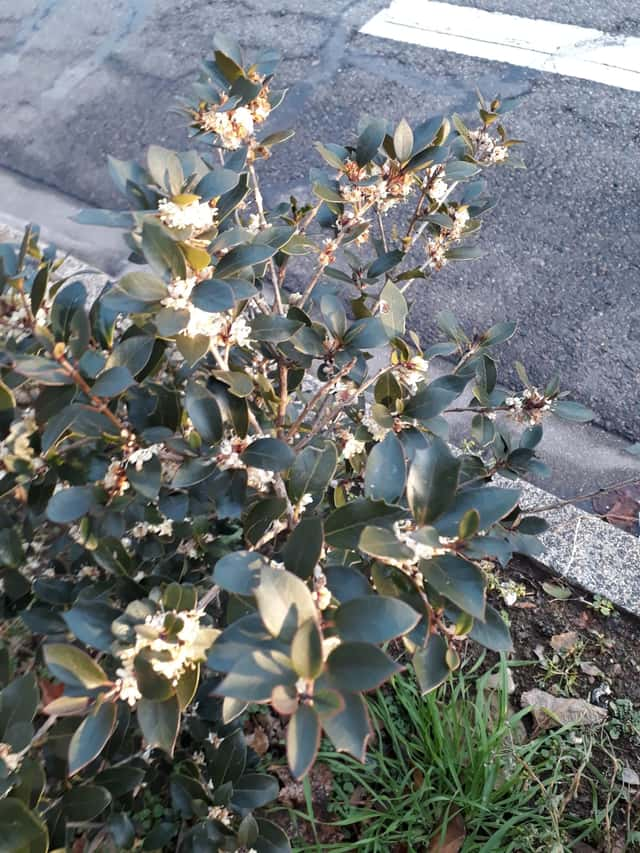
Holly olive (Osmanthus heterophyllus) is an evergreen shrub in the olive family, native to Japan, Taiwan and Korea. It forms a dense, oval mound 2.5 to 6 m tall with glossy dark green leaves. Leaves on young plants and low branches are spiny like holly; higher up they become smooth, which is where the name heterophyllus, "different leaves", comes from. From late fall into winter it bears small white flowers hidden among the leaves, with a strong sweet scent. It grows slowly and takes clipping well, so it is widely used for hedges.
How to Propagate Holly olive?
Semi-ripe stem cutting
Keep the mix moist but not soggy. A plastic bag over the pot helps hold humidity.
- 1 In late summer, cut 10-15 cm tips from this year's growth
- 2 Strip the lower leaves
- 3 Dip the base in rooting hormone
- 4 Insert into a light, moist mix and keep in a sheltered, shaded spot
Materials needed:
How Big Does Holly olive Grow?
TLDR: Holly olive can reach up to 6.0m tall with Slow growth rate.
Max height
6.0m
Spread
6.0m
Growth rate
Slow
Foliage
Evergreen
Plant Uses
Ornamental
Great for decoration
Aromatic
Pleasant fragrance
Is your plant showing symptoms?
Click on the symptom to discover possible causes:
What Diseases Commonly Affect Holly olive?
TLDR: Holly olive is susceptible to 5 known diseases. Monitor regularly for early detection.
Scale Insects
Scale insects are small sap-sucking pests that appear as brown, shell-like bumps on plant stems and leaves. There are over 25 species, divided into armored (hard) and unarmored (soft) scales. They feed by piercing plant tissue and extracting sap, which weakens the plant and can lead to yellowing, stunted growth, and even death if left untreated. They also excrete honeydew, which attracts ants and promotes sooty mold growth.
Aphids
Aphids are small, soft-bodied, pear-shaped insects (1/16 to 1/8 inch long) that feed by sucking nutrient-rich sap from plants. They reproduce rapidly and can quickly weaken plants, causing distorted growth and transmitting plant viruses. Aphids come in various colors including green, black, red, yellow, brown, and gray. They secrete honeydew, a sticky substance that attracts ants and encourages sooty mold growth.
Curculionidae
Curculionidae (weevils) are small beetles that feed on plants. Adults chew leaf margins, leaving crescent-shaped notches, primarily at night. The larvae live in the substrate and consume roots, causing decline, yellowing, and wilting even when the substrate is moist, and in severe cases, plant death. They frequently affect ornamentals and garden plants such as strawberries, citrus, roses, hydrangeas, azaleas, blueberries, begonias, and many potted plants.
Sunburn (Sun Scorch)
Sunburn or sun scorch is an environmental condition that occurs when plants are exposed to intense, direct sunlight beyond their tolerance level. This causes the breakdown of chlorophyll in the leaves, resulting in bleached, dried, and damaged foliage. The damage can happen rapidly, sometimes within just a few hours of exposure.
Fun Facts
Heterophyllus means different leaves: the same plant has spiny leaves low down and smooth ones higher up.
The scent carries a long way even though the flowers hide among the leaves.
Deer usually leave it alone.
Frequently asked questions
How is holly olive different from true holly?
When does holly olive bloom?
Can it be used as a hedge?
Does it get pests?
Compare with similar plants
| Attribute | Difficulty | Light | Watering | Pet Safe |
|---|---|---|---|---|
| Field Maple | Easy | Bright indirect | 14d | ✓ |
| Iberian Houseleek | Easy | Direct sun | 14d | ✓ |
| Silver Birch | Easy | Direct sun | 14d | ✓ |
| Common Blanketflower | Easy | Direct sun | 10d | ✓ |





