Malvaceae
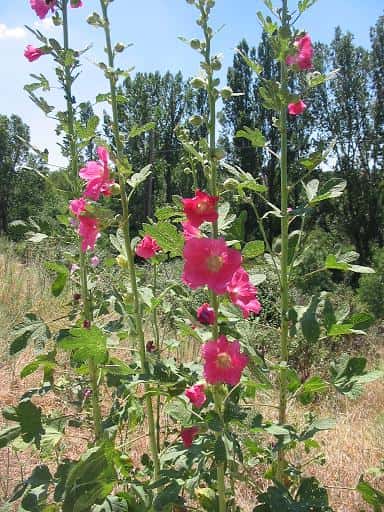
Hollyhock (Alcea rosea)
Alcea rosea
Plant hollyhocks in full sun with well-drained, fertile soil. Water every 4 to 7 days at the base to avoid wetting foliage, which can trigger rust disease. Fertilize monthly during the growing season. Cut flower stalks back after blooming to encourage reblooming. Stake taller varieties to prevent wind damage.
Every 5 days
Direct sun
-15° - 35°C
40% - 65%
Categories
What is Hollyhock?
Hollyhock (Alcea rosea) is a medium-care plant from the Malvaceae family. Hollyhock (Alcea rosea) is a biennial or short-lived perennial flowering plant in the family Malvaceae, native to southwestern and central Asia, including Turkey and China. Renowned for its towering flower spikes reaching up to 2.5 metres (8 feet) in height, it produces abundant blooms in shades of...
Hollyhock grows up to 2.5m, spread of 60cm, watering every 5 days, -15°C – 35°C, 40–65% humidity. It is not suitable for indoor environments and safe for pets.
Unlike many popular species, Hollyhock is safe to keep around pets.
How to Care for Hollyhock?
TLDR: Hollyhock needs Direct sun, watering every 5 days, and temperatures between -15-35°C with 40-65% humidity.
How Often Should You Water Hollyhock?
Water every 4 to 7 days, watering at the base and allowing soil to dry slightly between sessions. Avoid overhead watering as wet foliage promotes rust and leaf spot diseases. Established plants are fairly drought tolerant.
How Much Light Does Hollyhock Need?
Requires full sun — at least 6 hours of direct sunlight daily. A south-facing position is ideal. Insufficient light leads to weak stems and reduced flowering.
What Is the Best Soil for Hollyhock?
Prefers fertile, well-drained soil with a pH of 6.0 to 7.5. Amend clay-heavy soil with compost or grit to improve drainage. Rich organic matter supports vigorous blooming.
What Pot Should You Use for Hollyhock?
Open garden border or large stable pot with support stakes for taller varieties.
Care Schedule
Fertilize
Every 30 days
What Is Hollyhock and Where Does It Come From?
Hollyhock (Alcea rosea) is a biennial or short-lived perennial flowering plant in the family Malvaceae, native to southwestern and central Asia, including Turkey and China. Renowned for its towering flower spikes reaching up to 2.5 metres (8 feet) in height, it produces abundant blooms in shades of pink, red, white, yellow, purple, and orange throughout summer. A cottage garden classic, hollyhocks thrive along fences, walls, and borders.
How to Propagate Hollyhock?
Direct Seeding
For the best display, sow in late summer or early autumn for flowering the following year. Hollyhocks self-seed readily — leave spent flower stalks to encourage natural reseeding.
- 1 Sow seeds directly into prepared garden soil after the last frost date
- 2 Cover lightly with 0.5 cm of soil
- 3 Keep soil consistently moist until germination
- 4 Thin or transplant seedlings when they have 4 to 6 true leaves
Materials needed:
How Big Does Hollyhock Grow?
TLDR: Hollyhock can reach up to 2.5m tall with Fast growth rate.
Max height
2.5m
Spread
60cm
Growth rate
Fast
Foliage
Deciduous
Plant Uses
Ornamental
Great for decoration
Medicinal
Medicinal properties
Medicinal Uses
- Flowers and leaves have traditional medicinal uses as a demulcent for soothing throat irritation and coughs; root extracts have anti-inflammatory properties
Culinary Uses
- Flowers are edible and used to garnish salads, cakes, and desserts; young leaves can be eaten cooked
Is your plant showing symptoms?
Click on the symptom to discover possible causes:
What Diseases Commonly Affect Hollyhock?
TLDR: Hollyhock is susceptible to 6 known diseases. Monitor regularly for early detection.
Rust
Rust is a common fungal disease caused by fungi in the order Pucciniales that affects a wide variety of plants. The disease gets its name from the characteristic orange, yellow, or reddish-brown pustules that appear on leaves, resembling metal rust. This obligate fungal parasite requires living plants to survive and can cause significant economic losses in agricultural crops.
Leaf Spot
Leaf spot is a common fungal disease caused by various pathogens including Alternaria, Ascochyta, Colletotrichum, Septoria, and Venturia. It primarily affects leaves, causing discolored spots that can lead to premature leaf drop if left untreated.
Anthracnose
Anthracnose is a fungal disease caused by fungi in the genus Colletotrichum that affects many plants, including vegetables, fruits, and trees. The disease thrives in cool, wet conditions, causing dark, sunken lesions on leaves, stems, flowers, and fruits.
Aphids
Aphids are small, soft-bodied, pear-shaped insects (1/16 to 1/8 inch long) that feed by sucking nutrient-rich sap from plants. They reproduce rapidly and can quickly weaken plants, causing distorted growth and transmitting plant viruses. Aphids come in various colors including green, black, red, yellow, brown, and gray. They secrete honeydew, a sticky substance that attracts ants and encourages sooty mold growth.
Meaning & Symbolism
In the Victorian language of flowers, hollyhocks symbolise fruitfulness, ambition, and abundance. They are associated with the cycle of life and have long been grown near doorways as a symbol of welcome and prosperity.
Fun Facts
Hollyhocks can grow up to 2.5 metres tall, making them one of the tallest herbaceous flowering plants in the garden
They are biennial by nature: in year one they form a leafy rosette, and in year two they flower and set seed
Hollyhock flowers are edible and have been used to colour wines and foods, and to decorate cakes and salads
Hollyhock rust (Puccinia malvacearum) is so closely associated with the plant that it is rarely found on any other host
Frequently asked questions
How often should I water hollyhocks?
Are hollyhocks toxic to pets?
Why do my hollyhock leaves have orange spots?
Do hollyhocks come back every year?
Compare with similar plants
| Attribute | Difficulty | Light | Watering | Pet Safe |
|---|---|---|---|---|
| Dark Fieldcap | Medium | Low light | 2d | ⚠️ |
| Azalea | Medium | Partial shade | 3d | ⚠️ |
| Muriel's Bamboo | Medium | Partial shade | 3d | ✓ |
| Bougainvillea | Medium | Direct sun | 7d | ⚠️ |




