Geraniaceae
Hooded-leaf Pelargonium (Pelargonium cucullatum) Care Guide
Pelargonium cucullatum
An easy, sun-loving shrub that thrives outdoors in mild, frost-free climates or as a container plant on a bright windowsill. Let the soil dry out between waterings, feed lightly during the growing season, and prune after flowering to keep a compact shape.
Every 10 days
Direct sun
5° - 32°C
% - %
Categories
What is Hooded-leaf Pelargonium?
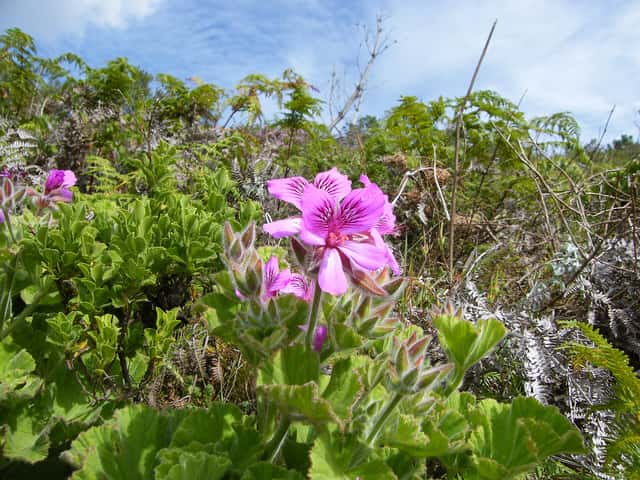
Hooded-leaf Pelargonium (Pelargonium cucullatum) is a easy-care plant from the Geraniaceae family. Pelargonium cucullatum is a tall, sprawling evergreen shrub native to the sandy and granite slopes of the Cape fynbos in South Africa, growing over 2 m tall. Its rounded, cupped, hairy leaves give the species its name, and it produces masses of pink to mauve or white flowers with striking purple vei...
Hooded-leaf Pelargonium grows up to 2.5m, spread of 150cm, watering every 10 days, 5°C – 32°C. It is suitable for indoor environments and not safe for pets.
Unlike many tropical plants, Hooded-leaf Pelargonium tolerates watering mistakes. Best for beginners. Without precautions, ingestion can cause irritation in pets. Keep out of reach of cats and dogs. Without adequate drainage, root rot can develop within 20 days.
How to Care for Hooded-leaf Pelargonium?
TLDR: Hooded-leaf Pelargonium needs Direct sun, watering every 10 days, and temperatures between 5-32°C with 40-70% humidity.
How Often Should You Water Hooded-leaf Pelargonium?
Water deeply then allow the soil to dry out before watering again; this plant is drought-tolerant and far more likely to suffer from overwatering than underwatering.
How Much Light Does Hooded-leaf Pelargonium Need?
Give it full sun to abundant bright, direct light - at least a few hours of direct sun a day - for the best flowering and compact growth.
What Is the Best Soil for Hooded-leaf Pelargonium?
Plant in well-draining, sandy or loamy soil with a slightly acid to neutral pH; heavy, waterlogged soils quickly cause root rot.
What Pot Should You Use for Hooded-leaf Pelargonium?
A wide terracotta pot with drainage holes suits this sprawling shrub well, allowing the well-draining soil mix to dry out fully between waterings.
Care Schedule
Fertilize
Every 60 days
Rotate
Every 14 days
Repot
Every 365 days
What Is Hooded-leaf Pelargonium and Where Does It Come From?
Pelargonium cucullatum is a tall, sprawling evergreen shrub native to the sandy and granite slopes of the Cape fynbos in South Africa, growing over 2 m tall. Its rounded, cupped, hairy leaves give the species its name, and it produces masses of pink to mauve or white flowers with striking purple veining from spring into summer. It is the parent species of countless modern pelargonium hybrids grown worldwide.
How to Propagate Hooded-leaf Pelargonium?
Stem cutting
Avoid overwatering while roots establish; excess moisture is the main cause of cutting failure.
- 1 Take a 10-15 cm semi-hardwood cutting just below a leaf node
- 2 Remove the lower leaves and let the cut end callus for a few hours
- 3 Insert into a well-draining, gritty rooting mix
- 4 Keep lightly moist and in bright, indirect light until roots form
Materials needed:
Seed sowing
Fresh seed germinates far more reliably than old seed.
- 1 Sow seed thinly on light, well-drained seedling mix
- 2 Cover lightly with a fine layer of mix
- 3 Keep moist and in a warm, bright spot until germination
Materials needed:
How Big Does Hooded-leaf Pelargonium Grow?
TLDR: Hooded-leaf Pelargonium can reach up to 2.5m tall with Medium growth rate.
Max height
2.5m
Spread
1.5m
Growth rate
Medium
Foliage
Evergreen
Warning: Toxic Plant
This plant can be toxic if ingested. Keep out of reach of:
Plant Uses
Ornamental
Great for decoration
Medicinal
Medicinal properties
Aromatic
Pleasant fragrance
Medicinal Uses
- Traditionally used in Cape folk medicine for colic, kidney ailments, diarrhea, coughs and fevers
Is your plant showing symptoms?
Click on the symptom to discover possible causes:
What Diseases Commonly Affect Hooded-leaf Pelargonium?
TLDR: Hooded-leaf Pelargonium is susceptible to 7 known diseases. Monitor regularly for early detection.
Rust
Rust is a common fungal disease caused by fungi in the order Pucciniales that affects a wide variety of plants. The disease gets its name from the characteristic orange, yellow, or reddish-brown pustules that appear on leaves, resembling metal rust. This obligate fungal parasite requires living plants to survive and can cause significant economic losses in agricultural crops.
Grey Mould
Aphids
Aphids are small, soft-bodied, pear-shaped insects (1/16 to 1/8 inch long) that feed by sucking nutrient-rich sap from plants. They reproduce rapidly and can quickly weaken plants, causing distorted growth and transmitting plant viruses. Aphids come in various colors including green, black, red, yellow, brown, and gray. They secrete honeydew, a sticky substance that attracts ants and encourages sooty mold growth.
Whiteflies
Whiteflies are small, soft-bodied, winged insects closely related to aphids and mealybugs. They are moth-like in appearance, about 1/16 inch long, triangular in shape, and gray-white in color. These sap-sucking pests feed on plant tissue, causing yellowing, stunted growth, and wilting. They also excrete honeydew, which attracts ants and promotes sooty mold growth. Whiteflies can transmit serious plant viruses.
Meaning & Symbolism
Represents resilience and adaptability, echoing its origins in the rugged Cape fynbos; in Victorian flower language pelargoniums symbolize true friendship and comfort.
Fun Facts
It is the parent species behind a huge number of modern ornamental pelargonium hybrids grown worldwide.
The species name cucullatum is Latin for hood, referring to its distinctive cupped leaves.
It grows wild only on the sandy and granite coastal slopes between Saldanha and Baardskeerdersbos in South Africa.
Frequently asked questions
How often should I water Pelargonium cucullatum?
Is Pelargonium cucullatum toxic to pets?
How much light does it need?
When does it flower?
Compare with similar plants
| Attribute | Difficulty | Light | Watering | Pet Safe |
|---|---|---|---|---|
| Field Maple | Easy | Bright indirect | 14d | ✓ |
| Silver Birch | Easy | Direct sun | 14d | ✓ |
| Common Blanketflower | Easy | Direct sun | 10d | ✓ |
| Cushion Bush | Easy | Direct sun | 14d | ✓ |





