Lamiaceae
horehound: Aromatic Plant
Marrubium vulgare
Plant in full sun (it tolerates light shade) in poor, sandy, well-drained soil; skip compost and fertilizer. Once established it is very drought tolerant: water at most once a week in summer and let the soil dry between waterings, because soggy ground, especially in winter, kills it. Hardy in USDA zones 3–9. Cut the flowers off before the seeds ripen, or grow it in a container, to stop it spreading. Cutting the plant back after flowering gives a fresh flush of leaves.
Every 7 days
Direct sun
° - °C
% - %
Categories
What is horehound?
horehound (Marrubium vulgare) is a easy-care plant from the Lamiaceae family. White horehound is a hardy perennial herb of the mint family, native to Europe, North Africa and western and central Asia and now naturalized across the Americas. It forms a bushy clump 30–75 cm tall with square, white-woolly stems and grey-green, deeply wrinkled, downy leaves with scalloped edges,...
horehound grows up to 75cm, spread of 90cm, watering every 7 days. It is not suitable for indoor environments and safe for pets.
Unlike many tropical plants, horehound tolerates watering mistakes. Best for beginners. Unlike many popular species, horehound is safe to keep around pets.
How to Care for horehound?
TLDR: horehound needs Direct sun, watering every 7 days, and temperatures between 15-30°C with 40-70% humidity.
How Often Should You Water horehound?
Water young plants until they root in, then only during long dry spells — no more than once a week in summer. Let the top few centimeters of soil dry out completely before watering again. Never let it stand in water.
How Much Light Does horehound Need?
Full sun gives the most compact, aromatic plants. It accepts partial shade, but in shade or humid spots it gets leggy and more prone to powdery mildew.
What Is the Best Soil for horehound?
Lean, sandy or gravelly soil with excellent drainage is ideal; it also grows in loam and clay if water does not collect. It tolerates a wide pH range (about 4.5–8.3). Rich soil and fertilizer make it floppy and less aromatic, so do not enrich the bed.
What Pot Should You Use for horehound?
A terracotta pot at least 25–30 cm wide with drainage holes and a gritty, free-draining mix. A container is also the easiest way to keep this spreading herb from taking over the bed.
What Is horehound and Where Does It Come From?
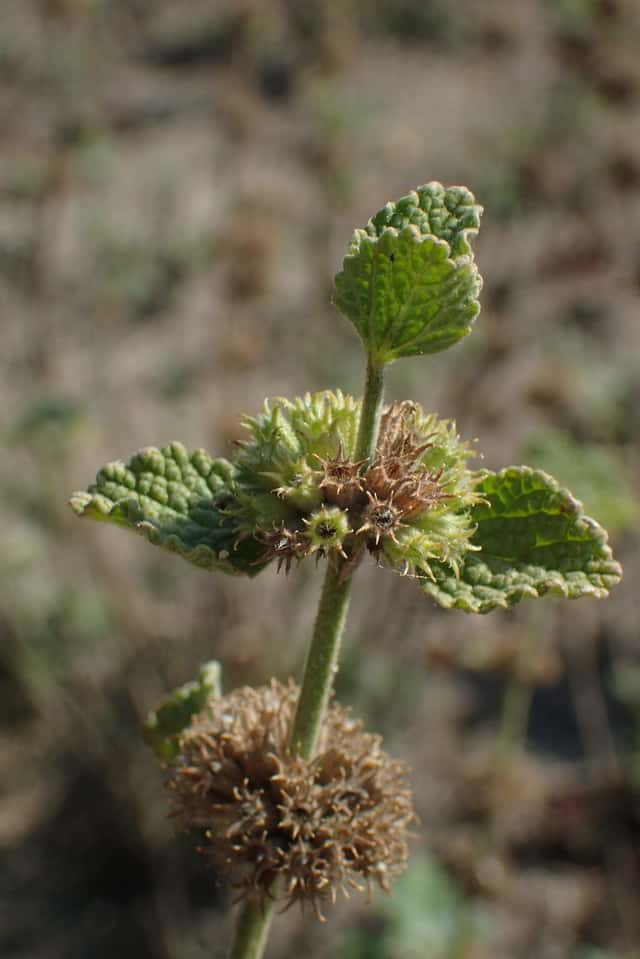
White horehound is a hardy perennial herb of the mint family, native to Europe, North Africa and western and central Asia and now naturalized across the Americas. It forms a bushy clump 30–75 cm tall with square, white-woolly stems and grey-green, deeply wrinkled, downy leaves with scalloped edges, aromatic when fresh. From early summer into autumn, small white flowers sit in dense whorls around the upper stems, followed by hooked burs that catch on fur and clothing. The leaves are very bitter, so grazing animals, deer and rabbits leave it alone. It has long been used in cough drops, horehound candy, tea and ale. Like mint it spreads by runners and self-seeding, and it is a declared weed in Australia and New Zealand.
How to Propagate horehound?
Stem cuttings
- 1 Take the cutting
Before the plant flowers, cut a young stem with at least four pairs of leaves just below a node.
- 2 Prepare it
Strip the lower leaves and dip the cut end in rooting hormone.
- 3 Root it
Insert it into moist mix and keep it warm and lightly moist; roots form in about three weeks.
- 4 Plant out
Move rooted cuttings to a sunny spot about 30 cm apart.
Materials needed:
Division
- 1 Lift the clump
In spring or fall, dig up a mature plant.
- 2 Split it
Cut the root mass into pieces, each with three or four buds and plenty of roots.
- 3 Replant
Replant the pieces right away and water them in once.
Materials needed:
Seed
- Germination is slow and erratic; some seeds wait until the next season.
- 1 Cold treatment
Sow outdoors in fall, or keep the seeds in damp sand in the fridge for about a month before sowing indoors.
- 2 Sow
Sow about 6 mm deep and keep lightly moist.
- 3 Thin
When seedlings are about 5 cm tall, space them 25–30 cm apart.
Materials needed:
How Big Does horehound Grow?
TLDR: horehound can reach up to 75cm tall with Medium growth rate.
Max height
75cm
Spread
90cm
Growth rate
Medium
Plant Uses
Medicinal
Medicinal properties
Edible
Can be consumed
Aromatic
Pleasant fragrance
Medicinal Uses
- Traditional remedy for coughs and colds (expectorant)
- Herbal tea for poor appetite and indigestion
- Not for use during pregnancy or breastfeeding
Culinary Uses
- Horehound candy and cough drops
- Bitter herbal tea
- Flavoring for horehound ale and liqueurs
Is your plant showing symptoms?
Click on the symptom to discover possible causes:
What Diseases Commonly Affect horehound?
TLDR: horehound is susceptible to 5 known diseases. Monitor regularly for early detection.
Powdery Mildew
Powdery mildew is a common fungal disease caused by various fungi species including Erysiphe, Podosphaera, Oïdium, and Leveillula. It affects over 10,000 plant species worldwide. The disease thrives in warm, dry climates with high humidity and appears as a distinctive white powdery coating on plant surfaces.
Root Rot
Root rot is a serious fungal disease that affects the root system of plants, causing them to decay and die. It is primarily caused by overwatering, poor drainage, or soil-borne fungi such as Pythium, Phytophthora, Rhizoctonia, and Fusarium. The disease thrives in waterlogged conditions where roots are deprived of oxygen, making them susceptible to fungal infection.
Overwatering
Overwatering occurs when plants receive too much water, depriving roots of oxygen and causing root rot. This environmental stress is one of the most common causes of houseplant death, as waterlogged soil prevents roots from breathing and functioning properly.
Spider Mites
Spider mites are tiny arachnids (less than 1/20 inch long) related to spiders and ticks that feed on plant sap. They thrive in hot, dry conditions and can cause significant damage to ornamental and vegetable plants. During severe infestations, crop losses can reach 14% or higher as these pests disrupt vital plant processes including photosynthesis, carbon dioxide absorption, and transpiration.
Compare with similar plants
| Attribute | Difficulty | Light | Watering | Pet Safe |
|---|---|---|---|---|
| Field Maple | Easy | Bright indirect | 14d | ✓ |
| Iberian Houseleek | Easy | Direct sun | 14d | ✓ |
| Silver Birch | Easy | Direct sun | 14d | ✓ |
| Common Blanketflower | Easy | Direct sun | 10d | ✓ |





