Violaceae
Horned Violet (Viola cornuta)
Viola cornuta
A cool-season plant that is easy in beds, edging and containers. It likes full sun to part shade and humus-rich soil kept lightly moist but not soggy. Deadhead to extend flowering, and when summer heat stops the blooms, cut plants back by half so they regrow and flower again in autumn. Feed monthly while in bloom.
Every 3 days
Bright indirect
-20° - 27°C
40% - 70%
Categories
What is Horned Violet?
Horned Violet (Viola cornuta) is a easy-care plant from the Violaceae family. Viola cornuta is a perennial herb in the family Violaceae, native to the Pyrenees of France and Spain. It forms low tufts 15-25 cm tall with creeping stems and oval, toothed leaves. The 2-4 cm flowers look like small pansies with a slender spur at the back, the horn that gives the species its name....
Horned Violet grows up to 25cm, spread of 30cm, watering every 3 days, -20°C – 27°C, 40–70% humidity. It is not suitable for indoor environments and safe for pets.
Unlike many tropical plants, Horned Violet tolerates watering mistakes. Best for beginners. Unlike many popular species, Horned Violet is safe to keep around pets.
How to Care for Horned Violet?
TLDR: Horned Violet needs Bright indirect, watering every 3 days, and temperatures between -20-27°C with 40-70% humidity.
How Often Should You Water Horned Violet?
Keep the soil lightly moist: water every 2 to 4 days in warm weather and less in cool weather. Water at the base, not over the leaves, to prevent fungal problems.
How Much Light Does Horned Violet Need?
Full sun in mild climates, part shade where summers are hot. Strong afternoon sun stops flowering and makes the plant flag.
What Is the Best Soil for Horned Violet?
Fertile, humus-rich, moist but well-drained soil, slightly acidic to neutral. Work compost into beds or use a potting mix with organic matter.
What Pot Should You Use for Horned Violet?
A pot or window box 15-20 cm deep with drainage holes; terracotta or plastic both work.
Care Schedule
Fertilize
Every 30 days
What Is Horned Violet and Where Does It Come From?
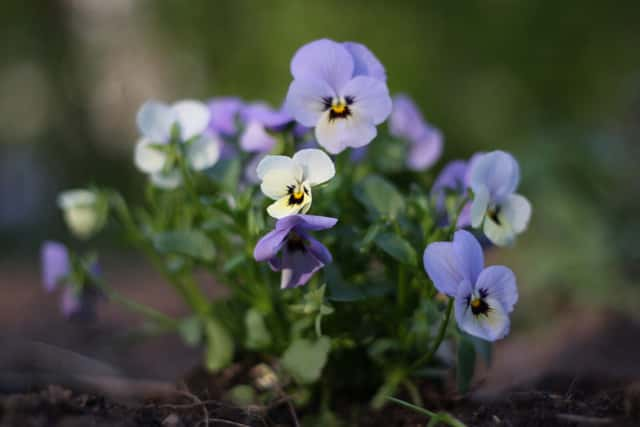
Viola cornuta is a perennial herb in the family Violaceae, native to the Pyrenees of France and Spain. It forms low tufts 15-25 cm tall with creeping stems and oval, toothed leaves. The 2-4 cm flowers look like small pansies with a slender spur at the back, the horn that gives the species its name. Wild forms are violet, blue or lavender; cultivars range from white to yellow, apricot and red. It blooms in cool weather from spring into autumn and is a parent of many garden violas.
How to Propagate Horned Violet?
Seed
Sow in late summer or autumn for spring flowers. Temperatures above 25 °C hinder germination.
- 1 Sow in a tray of light seed mix and cover lightly, as the seeds germinate in darkness.
- 2 Keep moist and cool, between 15 and 20 °C.
- 3 Transplant seedlings once they have 3 to 4 true leaves.
Materials needed:
Division
Divide in spring or early autumn in cool weather.
- 1 Lift the clump carefully.
- 2 Split it into pieces, each with roots and shoots.
- 3 Replant at the same depth and water well.
Materials needed:
How Big Does Horned Violet Grow?
TLDR: Horned Violet can reach up to 25cm tall with Fast growth rate.
Max height
25cm
Spread
30cm
Growth rate
Fast
Foliage
Evergreen
Plant Uses
Ornamental
Great for decoration
Edible
Can be consumed
Ground Cover
Soil coverage
Culinary Uses
- Edible flowers to garnish salads, desserts and drinks
- Flowers candied in sugar
- Young leaves in salads
Is your plant showing symptoms?
Click on the symptom to discover possible causes:
What Diseases Commonly Affect Horned Violet?
TLDR: Horned Violet is susceptible to 9 known diseases. Monitor regularly for early detection.
Slugs and Snails
Slugs and snails are mollusks that feed on plant tissue, causing irregular holes in leaves and damage to young seedlings. They are most active at night and in moist conditions, leaving characteristic silvery slime trails. These pests can quickly devastate gardens, especially during wet seasons.
Aphids
Aphids are small, soft-bodied, pear-shaped insects (1/16 to 1/8 inch long) that feed by sucking nutrient-rich sap from plants. They reproduce rapidly and can quickly weaken plants, causing distorted growth and transmitting plant viruses. Aphids come in various colors including green, black, red, yellow, brown, and gray. They secrete honeydew, a sticky substance that attracts ants and encourages sooty mold growth.
Spider Mites
Spider mites are tiny arachnids (less than 1/20 inch long) related to spiders and ticks that feed on plant sap. They thrive in hot, dry conditions and can cause significant damage to ornamental and vegetable plants. During severe infestations, crop losses can reach 14% or higher as these pests disrupt vital plant processes including photosynthesis, carbon dioxide absorption, and transpiration.
Powdery Mildew
Powdery mildew is a common fungal disease caused by various fungi species including Erysiphe, Podosphaera, Oïdium, and Leveillula. It affects over 10,000 plant species worldwide. The disease thrives in warm, dry climates with high humidity and appears as a distinctive white powdery coating on plant surfaces.
Fun Facts
Cornuta means horned, after the long spur behind the flower.
It is one of the species crossed to create modern garden violas and pansies.
Its leaves feed the caterpillars of fritillary butterflies.
Frequently asked questions
What is the difference between horned violet and pansy?
Why did my horned violet stop flowering in summer?
Are the flowers edible?
How often should I water it?
Compare with similar plants
| Attribute | Difficulty | Light | Watering | Pet Safe |
|---|---|---|---|---|
| Field Maple | Easy | Bright indirect | 14d | ✓ |
| Iberian Houseleek | Easy | Direct sun | 14d | ✓ |
| Silver Birch | Easy | Direct sun | 14d | ✓ |
| Common Blanketflower | Easy | Direct sun | 10d | ✓ |





