Begoniaceae
Hybrid Begonia (Begonia × hybrida): Care Guide
Begonia × hybrida
Part shade or bright indirect light with a few hours of morning sun. Water when the top 3-5 cm of soil is dry; containers may need water almost daily in summer. Use a light, well-draining mix and feed every two weeks in the growing season. Not frost tolerant.
Every 3 days
Partial shade
10° - °C
50% - 60%
Categories
What is Hybrid Begonia?
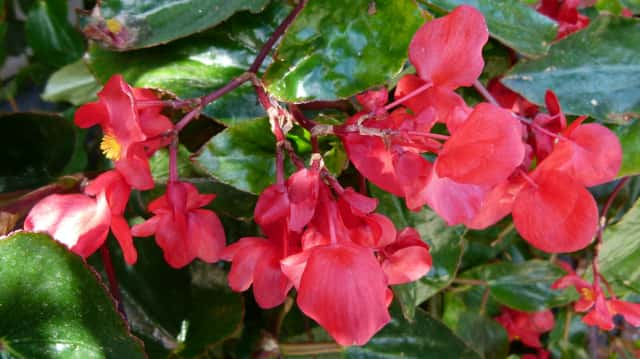
Hybrid Begonia (Begonia × hybrida) is a easy-care plant from the Begoniaceae family. Hybrid begonia (Begonia × hybrida) covers modern garden hybrids such as the Dragon Wing and Big series, bred to be tougher and more heat- and sun-tolerant than wax or tuberous begonias. It has large, glossy, wing-shaped leaves and stems that mound at first and then cascade. It blooms nonstop from sp...
Hybrid Begonia grows up to 60cm, spread of 45cm, watering every 3 days, 50–60% humidity. It is suitable for indoor environments and not safe for pets.
Unlike many tropical plants, Hybrid Begonia tolerates watering mistakes. Best for beginners. Without precautions, ingestion can cause irritation in pets. Keep out of reach of cats and dogs. Without adequate drainage, root rot can develop within 7 days.
How to Care for Hybrid Begonia?
TLDR: Hybrid Begonia needs Partial shade, watering every 3 days, and temperatures between 10-30°C with 50-60% humidity.
How Often Should You Water Hybrid Begonia?
Use the finger test: if the soil is dry an inch down, water until it runs from the drainage holes. Water the soil, not the leaves, to avoid powdery mildew. Underwatering is safer than overwatering.
How Much Light Does Hybrid Begonia Need?
Best with 3-4 hours of morning sun and shade or filtered light in the afternoon. In hot-summer areas, afternoon shade prevents scorch. Too much shade means fewer flowers and leggy stems.
What Is the Best Soil for Hybrid Begonia?
A light mix with peat, perlite or vermiculite, rich and free-draining. In beds, improve clay with compost and avoid spots where water pools.
What Pot Should You Use for Hybrid Begonia?
A pot with at least one drainage hole; about 25 cm for one plant or a 35 cm hanging basket for two or three. It shines in baskets and window boxes where the stems can spill over.
Care Schedule
Fertilize
Every 14 days
What Is Hybrid Begonia and Where Does It Come From?
Hybrid begonia (Begonia × hybrida) covers modern garden hybrids such as the Dragon Wing and Big series, bred to be tougher and more heat- and sun-tolerant than wax or tuberous begonias. It has large, glossy, wing-shaped leaves and stems that mound at first and then cascade. It blooms nonstop from spring until frost with loose clusters of red, pink or white flowers. Because it is sterile it puts no energy into seed, and it is self-cleaning: spent flowers drop on their own.
How to Propagate Hybrid Begonia?
Tip cutting
Do it in spring or early summer. Since the hybrids are sterile, cuttings are the way to multiply them.
- 1 Cut 8-10 cm tips from non-flowering stems
- 2 Remove the lower leaves
- 3 Insert into moist, sterile potting mix
- 4 Keep bright but out of direct sun, with the mix moist, until rooted
Materials needed:
How Big Does Hybrid Begonia Grow?
TLDR: Hybrid Begonia can reach up to 60cm tall with Fast growth rate.
Max height
60cm
Spread
45cm
Growth rate
Fast
Foliage
Evergreen
Warning: Toxic Plant
This plant can be toxic if ingested. Keep out of reach of:
Plant Uses
Ornamental
Great for decoration
Is your plant showing symptoms?
Click on the symptom to discover possible causes:
What Diseases Commonly Affect Hybrid Begonia?
TLDR: Hybrid Begonia is susceptible to 7 known diseases. Monitor regularly for early detection.
Gray Mold (Botrytis Blight)
Gray mold, caused by the fungus Botrytis cinerea, is a widespread necrotrophic pathogen affecting over 1,400 plant species. It thrives in cool, humid conditions and attacks weakened or aging plant tissues, causing soft rot and characteristic gray fuzzy growth.
Powdery Mildew
Powdery mildew is a common fungal disease caused by various fungi species including Erysiphe, Podosphaera, Oïdium, and Leveillula. It affects over 10,000 plant species worldwide. The disease thrives in warm, dry climates with high humidity and appears as a distinctive white powdery coating on plant surfaces.
Pythium Root Rot
Pythium root rot is a serious fungal disease caused by various Pythium species including P. aphanidermatum, P. ultimum, and P. irregulare. These water molds are present in practically all cultivated soils and attack plant roots under wet conditions, causing rapid wet rot that can extend into the stem. The disease is favored by poor drainage, overwatering, and specific temperatures depending on the species.
Bacterial Leaf Spot
Bacterial leaf spot is a plant disease caused by bacteria in the Xanthomonas and Pseudomonas genera that affects various ornamental and edible plants. The bacteria infect leaves through wounds or natural openings, causing characteristic lesions that can lead to premature leaf drop and plant weakening.
Fun Facts
Dragon Wing hybrids are sterile, so they spend all their energy on flowers.
The name comes from the large, glossy, wing-shaped leaves.
In full sun the leaves can take on a bronze or reddish tint.
Frequently asked questions
Do I need to deadhead hybrid begonias?
Is hybrid begonia toxic to cats and dogs?
Can I grow hybrid begonia indoors?
Compare with similar plants
| Attribute | Difficulty | Light | Watering | Pet Safe |
|---|---|---|---|---|
| Field Maple | Easy | Bright indirect | 14d | ✓ |
| Iberian Houseleek | Easy | Direct sun | 14d | ✓ |
| Silver Birch | Easy | Direct sun | 14d | ✓ |
| Common Blanketflower | Easy | Direct sun | 10d | ✓ |





