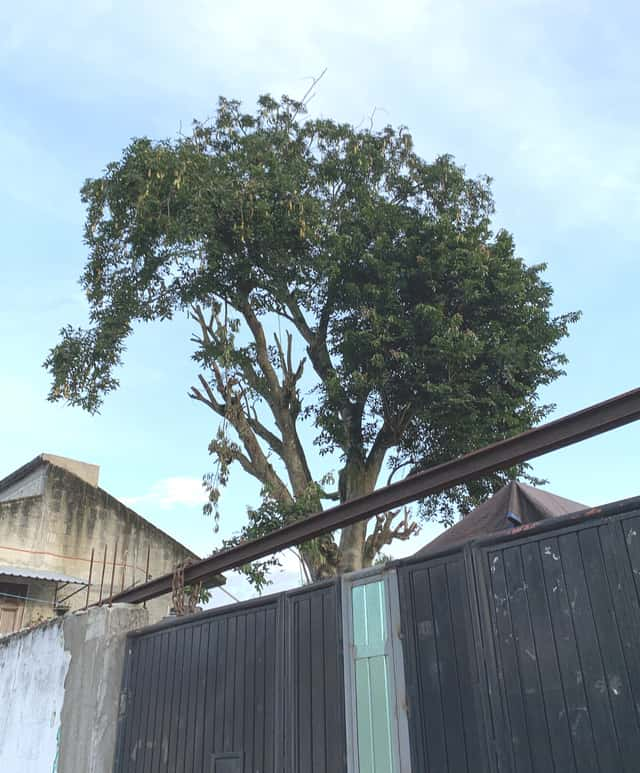
Fabaceae
Ice Cream Bean: Edible Plant
Inga edulis
Plant in an open area with sun and space for its wide canopy. New seedlings require regular watering and suffer from cold: they die at 0 °C. Once established, the tree toler tolerates acidic and poor soil, as well as periods of waterlogging.
Every 7 days
Direct sun
18° - 35°C
% - %
Categories
What is Ice Cream Bean?
Ice Cream Bean (Inga edulis) is a medium-care plant from the Fabaceae family. Inga-cipó is a legume tree, native to South America and common in the Amazon. The pods are long, with longitudinal grooves, and can exceed 1 meter. Inside, the seeds are enveloped in a white, sweet pulp with a cotton-like texture. Generally, the tree grows between 5 and 10 meters, but the largest on...
Ice Cream Bean grows up to 30.0m, watering every 7 days, 18°C – 35°C. It is not suitable for indoor environments and safe for pets.
Unlike many popular species, Ice Cream Bean is safe to keep around pets.
How to Care for Ice Cream Bean?
TLDR: Ice Cream Bean needs Direct sun, watering every 7 days, and temperatures between 18-35°C with 40-70% humidity.
How Often Should You Water Ice Cream Bean?
Water the seedling frequently in the first year, without letting the soil dry out completely. Adult trees usually thrive with only rain in areas where it rains more than 1,200 mm per year. During long dry spells, one watering per week helps.
How Much Light Does Ice Cream Bean Need?
Prefers full sun, 8 to 10 hours a day. Seeds germinate well in partial shade, but the plant needs light to grow and flower.
What Is the Best Soil for Ice Cream Bean?
Accepts poor and acidic soil. The best pH is between 5.0 and 6.5, and it also grows in pH from 4.5 to 8.0. In nature, it appears on riverbanks and in clay soil, and can withstand standing water for 2 to 3 months.
What Pot Should You Use for Ice Cream Bean?
Pots or nursery bags are only suitable for the first few months. The tree grows large and should be planted in the ground about 3 to 4 months after sowing.
What Is Ice Cream Bean and Where Does It Come From?
Inga-cipó is a legume tree, native to South America and common in the Amazon. The pods are long, with longitudinal grooves, and can exceed 1 meter. Inside, the seeds are enveloped in a white, sweet pulp with a cotton-like texture. Generally, the tree grows between 5 and 10 meters, but the largest ones reach close to 30 meters. It grows quickly, fixes nitrogen in the soil, and usually bears fruit before 2 years of planting. For this reason, it is widely used to shade coffee and cocoa.
How to Propagate Ice Cream Bean?
Seed
Some seeds begin to sprout inside the pod itself. Do not let the seed dry before planting.
- 1 Open a ripe pod and remove the seeds
- 2 Clean the pulp and sow immediately, as the seed loses viability in about 2 weeks
- 3 Place one seed per bag, at a maximum depth of 2 cm
- 4 Keep in partial shade and with regular watering
- 5 Remove the shade 1 month before planting in the ground
Materials needed:
How Big Does Ice Cream Bean Grow?
TLDR: Ice Cream Bean can reach up to 30.0m tall with Fast growth rate.
Max height
30.0m
Growth rate
Fast
Foliage
Evergreen
Plant Uses
Ornamental
Great for decoration
Edible
Can be consumed
Medicinal
Medicinal properties
Medicinal Uses
- In folk medicine, the pulp syrup is cited for bronchitis
- In folk medicine, the bark is cited for wounds and diarrhea
Culinary Uses
- The white pulp of the pods is consumed fresh where the tree is cultivated
- In the Amazon, indigenous peoples prepare the fermented drink cachiri with it
Is your plant showing symptoms?
Click on the symptom to discover possible causes:
What Diseases Commonly Affect Ice Cream Bean?
TLDR: Ice Cream Bean is susceptible to 5 known diseases. Monitor regularly for early detection.
Caterpillars
Caterpillars are the larval stage of moths and butterflies that feed voraciously on plant foliage, stems, flowers, and fruits. Common species include cabbage loopers, tomato hornworms, armyworms, and cutworms. These pests can cause extensive damage by consuming large amounts of plant tissue in a short time. They vary in size from small (1/4 inch) to large (5 inches), with colors ranging from green to brown, often featuring stripes or spots. Caterpillars are highly mobile and can quickly spread throughout gardens, making them one of the most destructive common pests.
Mealybugs
Mealybugs are small, soft-bodied insects covered with a white, waxy, cottony material. They are common pests of houseplants and outdoor plants in mild climates. These sap-sucking insects feed on plant tissue, causing damage, stunted growth, and can lead to plant death if left untreated. They produce sticky honeydew which attracts sooty mold.
Rhizoctonia solani
Rhizoctonia solani is a soil-borne fungus that attacks stems, roots, and young seedlings. It thrives in warm, humid weather and in soil that stays wet or drains poorly. Typical signs include seedlings collapsing at the soil line (damping-off), sunken brown lesions near the soil on stems, brown rotting roots, wilting even when the soil is moist, and slow, stunted growth. In lawns, it can cause the well-known “brown patch” during warm, humid periods. Many plants are at risk, including vegetables (such as lettuce, beans, and brassicas), ornamentals, houseplants, and turfgrass.
Crown Rot
Crown rot is a serious fungal disease that attacks the crown (base) of the plant where the stem meets the soil. It is caused by various fungal pathogens including Phytophthora, Fusarium, and Rhizoctonia. The disease thrives in waterlogged conditions and can quickly spread to kill the entire plant if not addressed promptly.
Compare with similar plants
| Attribute | Difficulty | Light | Watering | Pet Safe |
|---|---|---|---|---|
| Dark Fieldcap | Medium | Low light | 2d | ⚠️ |
| Azalea | Medium | Partial shade | 3d | ⚠️ |
| Muriel's Bamboo | Medium | Partial shade | 3d | ✓ |
| Bougainvillea | Medium | Direct sun | 7d | ⚠️ |




