Aizoaceae
Ice Plant (Genus Carpobrotus)
Carpobrotus
A very easy plant: full sun, sandy free-draining soil and very little water. It needs no feeding. It grows fast and covers large areas, so plant it where it has room and away from natural dunes or coastal habitats. It does not handle hard frost.
Every 21 days
Direct sun
° - °C
% - %
Categories
What is Ice plant?
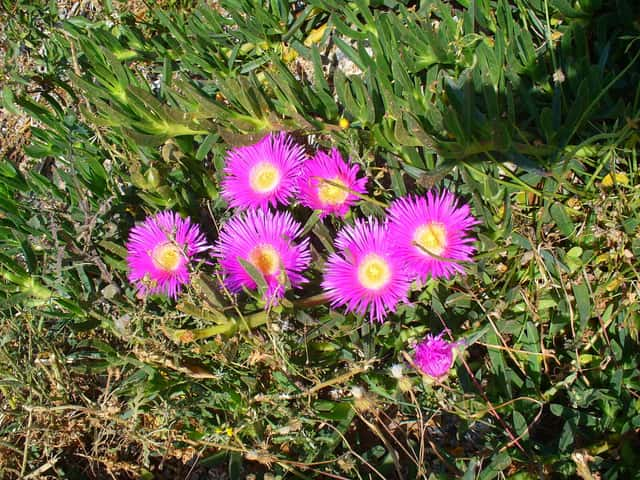
Ice plant (Carpobrotus) is a easy-care plant from the Aizoaceae family. Carpobrotus is a genus of 12 to 20 creeping succulents in the family Aizoaceae, native to South Africa, southern Australia and coastal Chile. The stems run along the ground and form dense mats of fleshy, three-angled leaves. The large, daisy-like flowers come in pink, magenta, purple or yellow and a...
Ice plant grows up to 30cm, watering every 21 days. It is not suitable for indoor environments and safe for pets.
Unlike many tropical plants, Ice plant tolerates watering mistakes. Best for beginners. Unlike many popular species, Ice plant is safe to keep around pets.
How to Care for Ice plant?
TLDR: Ice plant needs Direct sun, watering every 21 days, and temperatures between 15-30°C with 40-70% humidity.
How Often Should You Water Ice plant?
Once established, water only during long dry spells, every 3 weeks or less. Let the soil dry out completely between waterings. Soil that stays wet rots the roots and stems.
How Much Light Does Ice plant Need?
Full sun all day. In shade it flowers poorly and is more prone to fungal problems.
What Is the Best Soil for Ice plant?
Sandy or gravelly soil with excellent drainage. It tolerates poor, salty and lime-rich soil. Avoid heavy clay that stays wet.
What Pot Should You Use for Ice plant?
Best in the ground as groundcover. In a container, use a wide, shallow terracotta pot with drainage holes and succulent mix. It looks good trailing from planters.
What Is Ice plant and Where Does It Come From?
Carpobrotus is a genus of 12 to 20 creeping succulents in the family Aizoaceae, native to South Africa, southern Australia and coastal Chile. The stems run along the ground and form dense mats of fleshy, three-angled leaves. The large, daisy-like flowers come in pink, magenta, purple or yellow and appear from spring into summer. The name comes from Greek for "edible fruit": the fleshy fruits taste sour and salty. In Mediterranean climates such as California and the coasts of southern Europe, some species have escaped gardens and become invasive on sand dunes.
How to Propagate Ice plant?
Stem cutting
Roots very easily with no hormone. Stems often root on their own where they touch the ground.
- 1 In summer, cut stem tips 20-30 cm long
- 2 Let the cut end dry for a day or two
- 3 Push the base straight into the planting spot or into sand
- 4 Water lightly until new growth appears
Materials needed:
Seed
Use pure sand: seedlings damp off easily in wet compost.
- 1 Collect seeds from ripe fruit
- 2 Sow in pure sand in spring or autumn
- 3 Keep lightly moist, never soggy
- 4 Transplant once seedlings are sturdy
Materials needed:
How Big Does Ice plant Grow?
TLDR: Ice plant can reach up to 30cm tall with Fast growth rate.
Max height
30cm
Growth rate
Fast
Foliage
Evergreen
Plant Uses
Ornamental
Great for decoration
Ground Cover
Soil coverage
Edible
Can be consumed
Medicinal
Medicinal properties
Medicinal Uses
- Leaf juice is traditionally used as an astringent on insect and jellyfish stings, sunburn and as a gargle for sore throats.
Culinary Uses
- Ripe fruits are edible, sour and salty, eaten fresh or made into jam.
Is your plant showing symptoms?
Click on the symptom to discover possible causes:
What Diseases Commonly Affect Ice plant?
TLDR: Ice plant is susceptible to 7 known diseases. Monitor regularly for early detection.
Root Rot
Root rot is a serious fungal disease that affects the root system of plants, causing them to decay and die. It is primarily caused by overwatering, poor drainage, or soil-borne fungi such as Pythium, Phytophthora, Rhizoctonia, and Fusarium. The disease thrives in waterlogged conditions where roots are deprived of oxygen, making them susceptible to fungal infection.
Overwatering
Overwatering occurs when plants receive too much water, depriving roots of oxygen and causing root rot. This environmental stress is one of the most common causes of houseplant death, as waterlogged soil prevents roots from breathing and functioning properly.
Rhizoctonia solani
Rhizoctonia solani is a soil-borne fungus that attacks stems, roots, and young seedlings. It thrives in warm, humid weather and in soil that stays wet or drains poorly. Typical signs include seedlings collapsing at the soil line (damping-off), sunken brown lesions near the soil on stems, brown rotting roots, wilting even when the soil is moist, and slow, stunted growth. In lawns, it can cause the well-known “brown patch” during warm, humid periods. Many plants are at risk, including vegetables (such as lettuce, beans, and brassicas), ornamentals, houseplants, and turfgrass.
Bacterial Soft Rot
Bacterial soft rot is a destructive plant disease caused primarily by bacteria from the genera Pectobacterium (formerly Erwinia) and Dickeya. These bacteria produce enzymes that break down plant cell walls, causing rapid and foul-smelling tissue decomposition. It mainly affects succulent tissues such as tubers, fruits, stems, and bulbs, being especially problematic in warm and humid conditions.
Fun Facts
The name Carpobrotus comes from Greek for edible fruit.
It is planted to stabilize dunes and banks and as a firebreak.
Its roots form a dense network that reaches well beyond the visible stems.
Frequently asked questions
Is ice plant fruit edible?
Is ice plant invasive?
Why is my ice plant rotting?
Does it need fertilizer?
Compare with similar plants
| Attribute | Difficulty | Light | Watering | Pet Safe |
|---|---|---|---|---|
| Field Maple | Easy | Bright indirect | 14d | ✓ |
| Iberian Houseleek | Easy | Direct sun | 14d | ✓ |
| Silver Birch | Easy | Direct sun | 14d | ✓ |
| Common Blanketflower | Easy | Direct sun | 10d | ✓ |





