Myrtaceae
Jabuticaba: Edible Plant
Jaboticaba
Prefers full sun to partial shade, rich, deep, slightly acidic, and well-drained soil, and constant moisture without waterlogging. It is sensitive to intense cold when young and benefits from monthly organic fertilization during the growing season. It is generally resistant to pests and diseases but becomes vulnerable to rust and root rot in very humid conditions or with waterlogged soil.
Every 7-10 days
Bright indirect
10° - 30°C
50% - 80%
Categories
What is Jabuticaba?
Jabuticaba (Jaboticaba) is a medium-care plant from the Myrtaceae family. The jabuticabeira is a slow-growing, evergreen Brazilian fruit tree known for its cauliflory: white flowers and fruits emerge directly from the trunk and thick branches rather than just at the tips of the limbs. Native to the Atlantic Forest (primarily Minas Gerais, São Paulo, and Rio de Janeiro), i...
Jabuticaba grows up to 7.6m, spread of 600cm, 10°C – 30°C, 50–80% humidity. It is suitable for indoor environments and safe for pets.
Unlike many popular species, Jabuticaba is safe to keep around pets.
How to Care for Jabuticaba?
TLDR: Jabuticaba needs Bright indirect, watering every 7 days, and temperatures between 10-30°C with 50-80% humidity.
How Often Should You Water Jabuticaba?
Keep the soil uniformly moist during spring and summer without letting it dry out completely, but avoid waterlogging—excess water promotes root rot. In winter, allow the surface of the substrate to dry slightly between waterings.
How Much Light Does Jabuticaba Need?
Grow in full sun for best flowering and fruiting; young seedlings tolerate and even benefit from partial shade, especially in very hot climates during the summer.
What Is the Best Soil for Jabuticaba?
Use a deep substrate, rich in organic matter and well-drained, with a slightly acidic pH (between 5.5 and 7.5). Good drainage is essential to prevent root rot.
What Pot Should You Use for Jabuticaba?
Large, deep pots, preferably made of terracotta or ceramic with multiple drainage holes, as the species tolerates container cultivation well and is frequently used for bonsai.
Care Schedule
Fertilize
Every 30 days
Repot
Every 730 days
What Is Jabuticaba and Where Does It Come From?
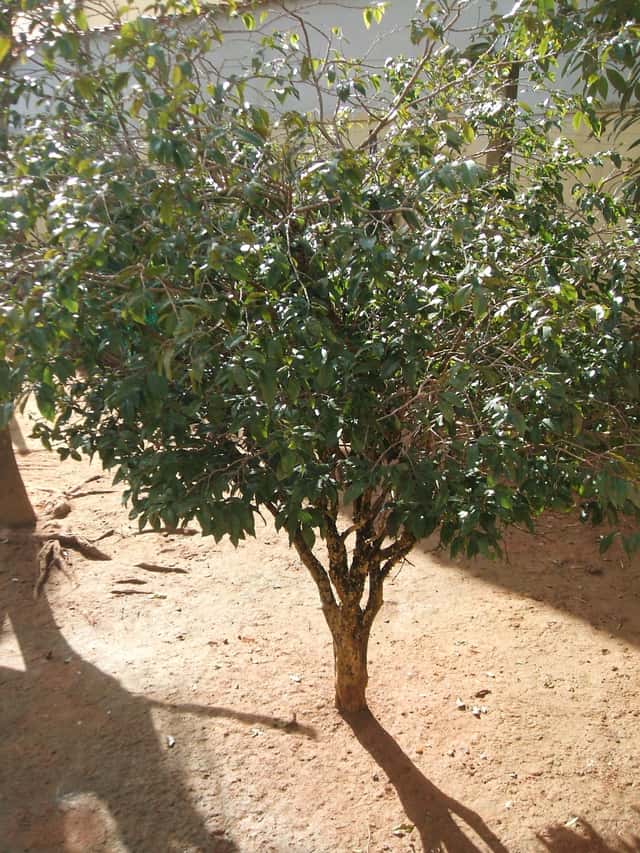
The jabuticabeira is a slow-growing, evergreen Brazilian fruit tree known for its cauliflory: white flowers and fruits emerge directly from the trunk and thick branches rather than just at the tips of the limbs. Native to the Atlantic Forest (primarily Minas Gerais, São Paulo, and Rio de Janeiro), it can take 8 to 10 years to bear fruit when grown from seed, but grafted seedlings or those obtained through air layering fruit much earlier, between 3 and 5 years. It is widely used as both a fruit-bearing and ornamental tree, including in pots and as bonsai.
How to Propagate Jabuticaba?
Seed Propagation
Seed-grown plants can take 8 to 10 years to fruit; use for rootstock development or when there is no rush to harvest fruit.
- 1 Remove seeds from ripe fruits and wash to remove pulp
- 2 Plant immediately, as seeds lose viability quickly when dried
- 3 Keep in a slightly moist substrate inside a plastic bag to retain humidity
- 4 Germination occurs in 20 to 40 days in a warm environment
Materials needed:
Air Layering
Produces plants that maintain the characteristics of the mother plant and fruit faster than seeds.
- 1 Choose a healthy branch already in the fruiting stage
- 2 Make a ring cut in the bark and remove the cambium in the chosen area
- 3 Wrap the area with sphagnum moss or moist substrate and cover with plastic
- 4 Maintain moisture and wait for rooting before detaching the branch
Materials needed:
Grafting
Over 70% success rate when performed by professionals; ensures genetic fidelity and early fruiting.
- 1 Prepare 1 to 2-year-old jabuticaba rootstocks
- 2 Collect scions from productive and healthy mother plants
- 3 Perform grafting by cleft or bud grafting onto the rootstock
- 4 Protect the graft point until complete healing
Materials needed:
How Big Does Jabuticaba Grow?
TLDR: Jabuticaba can reach up to 7.6m tall with Slow growth rate.
Max height
7.6m
Spread
6.0m
Growth rate
Slow
Foliage
Evergreen
Plant Uses
Edible
Can be consumed
Ornamental
Great for decoration
Medicinal
Medicinal properties
Medicinal Uses
- Bark traditionally used in infusions to relieve sore throats and inflammation
- Popular use in the treatment of asthma and diarrhea
- Fruit peel rich in anthocyanins, studied for its antioxidant and anti-inflammatory potential
- Traditional use to assist in blood glucose control
Culinary Uses
- Fruit consumed fresh
- Preparation of jams and preserves
- Juice production
- Craft wine and liqueur manufacturing
Is your plant showing symptoms?
Click on the symptom to discover possible causes:
What Diseases Commonly Affect Jabuticaba?
TLDR: Jabuticaba is susceptible to 7 known diseases. Monitor regularly for early detection.
Rust
Rust is a common fungal disease caused by fungi in the order Pucciniales that affects a wide variety of plants. The disease gets its name from the characteristic orange, yellow, or reddish-brown pustules that appear on leaves, resembling metal rust. This obligate fungal parasite requires living plants to survive and can cause significant economic losses in agricultural crops.
Root Rot
Root rot is a serious fungal disease that affects the root system of plants, causing them to decay and die. It is primarily caused by overwatering, poor drainage, or soil-borne fungi such as Pythium, Phytophthora, Rhizoctonia, and Fusarium. The disease thrives in waterlogged conditions where roots are deprived of oxygen, making them susceptible to fungal infection.
Canker
Canker is a disease caused by various fungi and bacteria that create necrotic, sunken areas on bark of branches, stems, and trunks. Pathogens enter through wounds and natural openings, especially when plants are stressed. Canker can gradually weaken or kill branches by disrupting water and nutrient flow.
Aphids
Aphids are small, soft-bodied, pear-shaped insects (1/16 to 1/8 inch long) that feed by sucking nutrient-rich sap from plants. They reproduce rapidly and can quickly weaken plants, causing distorted growth and transmitting plant viruses. Aphids come in various colors including green, black, red, yellow, brown, and gray. They secrete honeydew, a sticky substance that attracts ants and encourages sooty mold growth.
Meaning & Symbolism
In Brazil, the jabuticabeira is associated with childhood in the countryside, abundance, and hospitality, being common in family backyards as a tree that generates emotional memories.
Compare with similar plants
| Attribute | Difficulty | Light | Watering | Pet Safe |
|---|---|---|---|---|
| Dark Fieldcap | Medium | Low light | 2d | ⚠️ |
| Azalea | Medium | Partial shade | 3d | ⚠️ |
| Muriel's Bamboo | Medium | Partial shade | 3d | ✓ |
| Bougainvillea | Medium | Direct sun | 7d | ⚠️ |




