Muntingiaceae
Jamaica cherry: Edible Plant
Muntingia calabura
It is one of the easiest fruit trees to grow in warm climates: full sun, almost any well-draining soil, and watering only until established. Under good conditions, it bears fruit in about 18 months and produces nearly year-round. It does not tolerate frost or salty soil. Because birds spread its seeds and it is considered potentially invasive in some regions, it is best planted in urban areas or orchards away from native forests.
Every 7 days
Direct sun
0° - °C
% - %
Categories
What is Jamaica cherry?
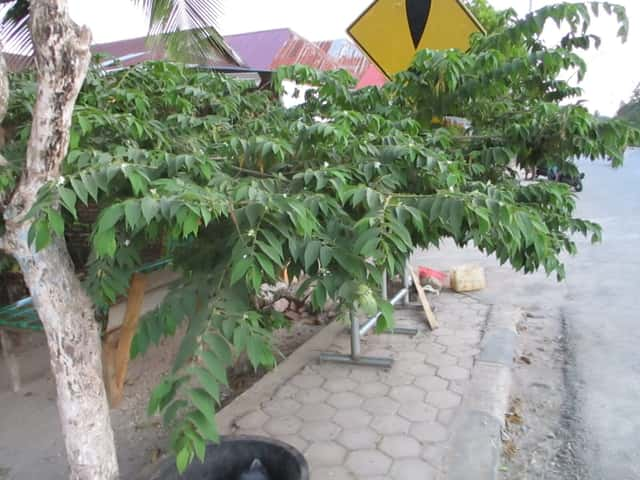
Jamaica cherry (Muntingia calabura) is a easy-care plant from the Muntingiaceae family. The Jamaica cherry is a small tree native to the tropical Americas, ranging from southern Mexico to Peru and the West Indies, introduced to Brazil by the Campinas Agronomic Institute around 1960. It grows very rapidly, reaching 3–12 m, with nearly horizontal, fan-like branches and evergreen, long, s...
Jamaica cherry grows up to 12.0m, watering every 7 days. It is not suitable for indoor environments and safe for pets.
Unlike many tropical plants, Jamaica cherry tolerates watering mistakes. Best for beginners. Unlike many popular species, Jamaica cherry is safe to keep around pets.
How to Care for Jamaica cherry?
TLDR: Jamaica cherry needs Direct sun, watering every 7 days, and temperatures between 0-30°C with 40-70% humidity.
How Often Should You Water Jamaica cherry?
Water frequently during the first year, roughly once a week or whenever the soil dries out. Once established, it is quite drought-tolerant, though regular watering during hot spells increases fruit production. Do not allow the soil to become waterlogged.
How Much Light Does Jamaica cherry Need?
Plant in full sun; this is essential for heavy flowering and fruiting. It tolerates partial shade, but deep shade significantly reduces fruit yield and results in a sparse canopy.
What Is the Best Soil for Jamaica cherry?
Not demanding: it grows even in poor, acidic, or alkaline soils, provided they drain well. When planting, mix organic fertilizer into the hole to help the sapling establish faster. Avoid saline soil and coastal locations with direct salt spray.
What Pot Should You Use for Jamaica cherry?
Not a long-term container plant: it grows fast and becomes quite large. For seedlings, use a deep pot with drainage holes and well-draining substrate, then transplant to the ground once it reaches 30–50 cm.
What Is Jamaica cherry and Where Does It Come From?
The Jamaica cherry is a small tree native to the tropical Americas, ranging from southern Mexico to Peru and the West Indies, introduced to Brazil by the Campinas Agronomic Institute around 1960. It grows very rapidly, reaching 3–12 m, with nearly horizontal, fan-like branches and evergreen, long, serrated leaves that are fuzzy and grayish underneath. The white flowers resemble strawberry blossoms and last only a single day. The fruits are small red berries, 1 to 1.5 cm in diameter, with soft, very sweet pulp containing thousands of tiny seeds that are unnoticeable when eaten. Birds and bats love the fruit, making it a popular choice for reforestation to attract wildlife. The wood is brittle and can break in strong winds.
How to Propagate Jamaica cherry?
Seed
The seeds are tiny: mix them with a little water or sand to spread them evenly. Use a clean substrate to prevent seedling damping-off.
- 1 Squeeze very ripe fruits and wash the seeds with water several times, discarding the pulp
- 2 Spread the tiny seeds over fine, moist substrate without burying them
- 3 Keep the substrate moist in a bright, warm location
- 4 Transplant seedlings into individual bags once they have several leaves
Materials needed:
How Big Does Jamaica cherry Grow?
TLDR: Jamaica cherry can reach up to 12.0m tall with Fast growth rate.
Max height
12.0m
Growth rate
Fast
Foliage
Evergreen
Plant Uses
Ornamental
Great for decoration
Edible
Can be consumed
Medicinal
Medicinal properties
Medicinal Uses
- In folk medicine, an infusion of the flowers is used to treat headaches and early cold symptoms
- The flowers are considered antispasmodic and antiseptic in traditional practices
Culinary Uses
- Fruit eaten fresh, straight from the tree
- Jams, preserves, and tart fillings
- Leaves used in infusions as a tea-like beverage
Is your plant showing symptoms?
Click on the symptom to discover possible causes:
What Diseases Commonly Affect Jamaica cherry?
TLDR: Jamaica cherry is susceptible to 3 known diseases. Monitor regularly for early detection.
Phyllosticta Leaf Spot
Phyllosticta is a genus of fungi responsible for leaf spot diseases in a wide range of garden and indoor plants. These pathogens thrive in warm, humid conditions, spreading primarily through water splash and prolonged leaf wetness. Symptoms typically include small, circular lesions that transition from tan or light brown to having distinct dark brown or black margins. As the disease progresses, these spots may coalesce, leading to chlorosis (yellowing) and premature abscission (leaf drop). Characteristic pycnidia—tiny, black, pinhead-sized fruiting bodies—often develop within the lesions. Phyllosticta commonly affects ornamentals like hydrangeas, irises, peonies, lilacs, maples, and roses, as well as citrus and various fruit trees.
Cercospora Leaf Spot
Damping Off
Damping off is a soil-borne fungal disease that affects seeds and young seedlings, causing rotting of stem and root tissues at and below the soil line. It is caused by several fungi including Pythium, Rhizoctonia, Fusarium, and Phytophthora. The disease thrives in cold, wet conditions with poor air circulation.
Compare with similar plants
| Attribute | Difficulty | Light | Watering | Pet Safe |
|---|---|---|---|---|
| Field Maple | Easy | Bright indirect | 14d | ✓ |
| Iberian Houseleek | Easy | Direct sun | 14d | ✓ |
| Silver Birch | Easy | Direct sun | 14d | ✓ |
| Common Blanketflower | Easy | Direct sun | 10d | ✓ |





