Ranunculaceae
Japanese Anemone: Complete Care Guide
Anemone hupehensis
Japanese Anemone thrives in partial shade with consistently moist, nutrient-rich, and well-draining soil. It is relatively easy to care for but sensitive to standing water, which can easily cause root rot. It overwinters well under mulch in zones 4a-8b, and flowering is most abundant when the soil does not dry out during the growing season.
Every 7 days
Partial shade
-23° - 35°C
40% - 60%
Categories
What is Japanese Anemone?
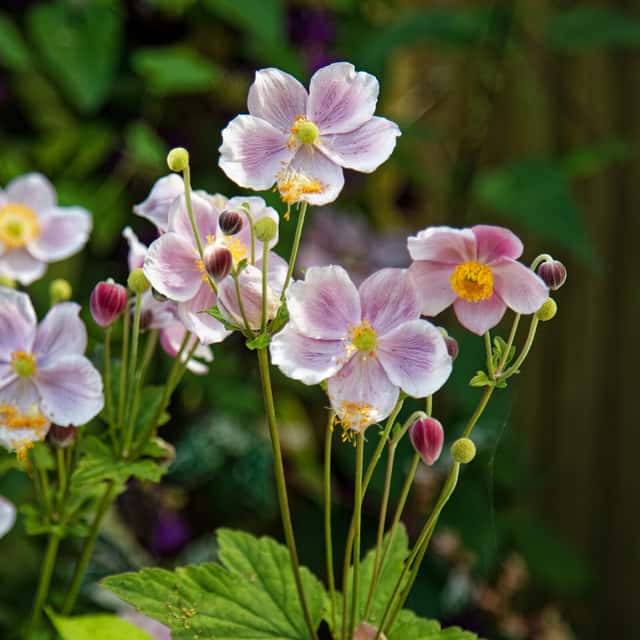
Japanese Anemone (Anemone hupehensis) is a medium-care plant from the Ranunculaceae family. Japanese Anemone (Anemone hupehensis) is a perennial ornamental plant belonging to the buttercup family (Ranunculaceae), native to the Hubei province of Central China. It forms a dense rosette of dark green leaves, from which 5-7-petaled flowers emerge from August to October, in shades of pink, whit...
Japanese Anemone grows up to 90cm, spread of 45cm, watering every 7 days, -23°C – 35°C, 40–60% humidity. It is not suitable for indoor environments and not safe for pets.
Without precautions, ingestion can cause irritation in pets. Keep out of reach of cats and dogs.
How to Care for Japanese Anemone?
TLDR: Japanese Anemone needs Partial shade, watering every 7 days, and temperatures between -23-35°C with 40-60% humidity.
How Often Should You Water Japanese Anemone?
Keep the soil consistently moist, but never soggy – water when the topsoil begins to dry out. Avoid standing water, especially in winter, as Japanese Anemone is susceptible to root rot.
How Much Light Does Japanese Anemone Need?
The best flowering is achieved in partial shade, with morning sun and afternoon shade. The plant can also tolerate full sun, provided the soil remains moist; excessive shade will cause the plant to become leggy and reduce flowering.
What Is the Best Soil for Japanese Anemone?
Prefer nutrient-rich, humus-rich, and well-draining soil with a pH close to neutral (6.0-7.5). When planting, mix in compost or leaf mold to improve soil structure and water retention.
What Pot Should You Use for Japanese Anemone?
If growing Japanese Anemone in a pot, choose a spacious container at least 30 cm (12 inches) wide and deep, with plenty of drainage holes to remove excess water. In winter, it's advisable to move the pot to a sheltered location or insulate it from frost, as the roots of potted plants are less tolerant of freezing temperatures than those grown in the ground.
Care Schedule
Fertilize
Every 90 days
What Is Japanese Anemone and Where Does It Come From?
Japanese Anemone (Anemone hupehensis) is a perennial ornamental plant belonging to the buttercup family (Ranunculaceae), native to the Hubei province of Central China. It forms a dense rosette of dark green leaves, from which 5-7-petaled flowers emerge from August to October, in shades of pink, white, or purple with yellow centers. The plant spreads slowly via its underground rhizomes and is excellent for perennial beds, bringing color to the late summer and autumn landscape. All parts of the plant contain protoanemonin, which is mildly toxic to both humans and pets.
How Big Does Japanese Anemone Grow?
TLDR: Japanese Anemone can reach up to 90cm tall with Medium growth rate.
Max height
90cm
Spread
45cm
Growth rate
Medium
Foliage
Deciduous
Warning: Toxic Plant
This plant can be toxic if ingested. Keep out of reach of:
Plant Uses
Ornamental
Great for decoration
Is your plant showing symptoms?
Click on the symptom to discover possible causes:
What Diseases Commonly Affect Japanese Anemone?
TLDR: Japanese Anemone is susceptible to 12 known diseases. Monitor regularly for early detection.
Downy Mildew
Downy mildew is a fungal-like disease caused by oomycetes (water molds) that thrives in cool, wet conditions. It affects a wide range of plants, causing yellowing leaves with fuzzy white-gray growth underneath, leading to defoliation and reduced yields if left untreated.
Powdery Mildew
Powdery mildew is a common fungal disease caused by various fungi species including Erysiphe, Podosphaera, Oïdium, and Leveillula. It affects over 10,000 plant species worldwide. The disease thrives in warm, dry climates with high humidity and appears as a distinctive white powdery coating on plant surfaces.
Leaf Spot
Leaf spot is a common fungal disease caused by various pathogens including Alternaria, Ascochyta, Colletotrichum, Septoria, and Venturia. It primarily affects leaves, causing discolored spots that can lead to premature leaf drop if left untreated.
Rust
Rust is a common fungal disease caused by fungi in the order Pucciniales that affects a wide variety of plants. The disease gets its name from the characteristic orange, yellow, or reddish-brown pustules that appear on leaves, resembling metal rust. This obligate fungal parasite requires living plants to survive and can cause significant economic losses in agricultural crops.
Meaning & Symbolism
In Japan, the Japanese Anemone, or 'windflower,' is considered a plant that brings good luck and protection from evil spirits. In the language of flowers, it symbolizes anticipation and fragility – the flower closes at night and reopens in the morning, which has been interpreted as a metaphor for longing and quiet expectation.
Compare with similar plants
| Attribute | Difficulty | Light | Watering | Pet Safe |
|---|---|---|---|---|
| Dark Fieldcap | Medium | Low light | 2d | ⚠️ |
| Azalea | Medium | Partial shade | 3d | ⚠️ |
| Muriel's Bamboo | Medium | Partial shade | 3d | ✓ |
| Bougainvillea | Medium | Direct sun | 7d | ⚠️ |
Choose & Compare
Sources & References
- Eriocapitella hupehensis - NC State Extension Plant Toolbox
- How To Grow Japanese Anemones - Gardenia.net
- Japanese Anemone Plant Care - Greg App
- Japanese anemone - The Morton Arboretum
- Common diseases and insect pests of anemone and their control - The Plant Aide
- Common Pests And Diseases That Cause Damage To Anemone Flowers - House Digest
- Perennial Solutions: Anemone x hybrida Honorine Jobert - GPN Mag
- Anemone Flower: Meaning, Symbolism, and Colors - Pansy Maiden
- Syysvuokko - Wikipedia




