Araliaceae
Japanese Angelica Tree: Edible Plant
Aralia elata
A hardy, low-maintenance plant, adapted to full sun or partial shade and various soil types, as long as they are well-drained. It tolerates dry periods once established but benefits from fertile, moist soil when young. It can suffer from aphids, scale insects, mites, and leaf spots in humid locations with poor air circulation; root rot can occur in poorly drained soil. Caution: it vigorously sends out suckers from its roots and is considered invasive in parts of the northeastern USA.
Every 7-10 days
Bright indirect
° - °C
% - %
Categories
What is Japanese Angelica Tree?
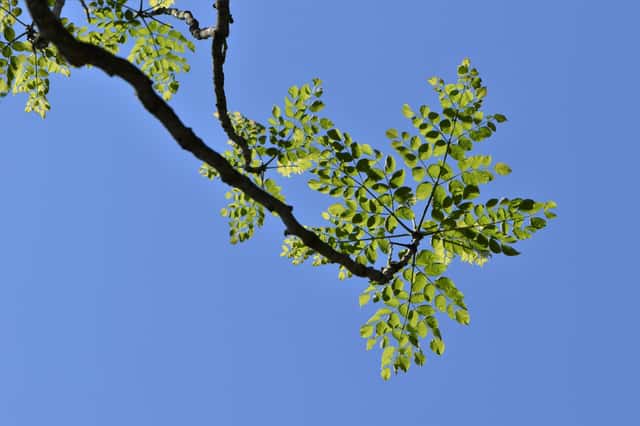
Japanese Angelica Tree (Aralia elata) is a easy-care plant from the Araliaceae family. Aralia elata is a large deciduous shrub or small tree, native to East Asia (Japan, Korea, China, and the Russian Far East). Its stems are spiny, usually sparsely branched, crowned by an umbrella-shaped canopy of huge bipinnately compound leaves, which can reach 1 meter in length. In late summer, it...
Japanese Angelica Tree grows up to 5.5m, spread of 305cm. It is not suitable for indoor environments and safe for pets.
Unlike many tropical plants, Japanese Angelica Tree tolerates watering mistakes. Best for beginners. Unlike many popular species, Japanese Angelica Tree is safe to keep around pets.
How to Care for Japanese Angelica Tree?
TLDR: Japanese Angelica Tree needs Bright indirect, watering every 7 days, and temperatures between 15-30°C with 40-70% humidity.
How Often Should You Water Japanese Angelica Tree?
Water regularly to keep the soil uniformly moist during the first year of establishment; after that, the plant tolerates dry periods well and can be watered less frequently.
How Much Light Does Japanese Angelica Tree Need?
Prefers full sun for more vigorous growth and flowering, but also thrives in partial shade (2 to 6 hours of direct light per day).
What Is the Best Soil for Japanese Angelica Tree?
Adapts to sandy, clay, or rocky soils, provided they have good drainage; grows best in fertile soil, rich in organic matter, and slightly moist.
What Pot Should You Use for Japanese Angelica Tree?
Not the ideal choice for small pots due to its large size and habit of sending out root suckers; if grown in a container, prefer a large, sturdy pot with good drainage, with the expectation of transplanting it into the ground in the future.
What Is Japanese Angelica Tree and Where Does It Come From?
Aralia elata is a large deciduous shrub or small tree, native to East Asia (Japan, Korea, China, and the Russian Far East). Its stems are spiny, usually sparsely branched, crowned by an umbrella-shaped canopy of huge bipinnately compound leaves, which can reach 1 meter in length. In late summer, it produces large terminal panicles of small white to cream flowers, highly sought after by bees, followed by clusters of black globose fruits appreciated by birds. In autumn, the foliage turns shades of yellow to reddish-purple. It is cultivated both as a prominent ornamental plant in gardens and for harvesting its young spring shoots, a traditional food in Japan and Korea.
How to Propagate Japanese Angelica Tree?
Propagation by seeds
Fresh seeds germinate more easily than stored seeds.
- 1 Harvest mature seeds from fruits as soon as possible
- 2 Sow in a cold frame immediately after harvesting
- 3 If seeds have been stored, cold stratify for 3 to 5 months before sowing
- 4 Keep substrate moist at about 20°C until germination
Materials needed:
Root cuttings
Method with a reported high success rate.
- 1 Take root segments about 8 cm long in December
- 2 Store cuttings inverted in slightly moist sand during winter
- 3 Plant in pots in March or April
- 4 Keep in a protected location until new shoots emerge
Materials needed:
Division of suckers
Method described as very easy; takes advantage of the species' natural habit of producing suckers.
- 1 Locate suckers emerging from the roots of the mother plant
- 2 Carefully separate the sucker with part of its root system
- 3 Plant directly in the permanent location
Materials needed:
How Big Does Japanese Angelica Tree Grow?
TLDR: Japanese Angelica Tree can reach up to 5.5m tall with Medium growth rate.
Max height
5.5m
Spread
3.0m
Growth rate
Medium
Foliage
Deciduous
Warning: Toxic Plant
This plant can be toxic if ingested. Keep out of reach of:
Plant Uses
Ornamental
Great for decoration
Edible
Can be consumed
Medicinal
Medicinal properties
Medicinal Uses
- Roots and stems used in traditional East Asian medicine as an anodyne (pain reliever) and carminative
- Traditional use in the treatment of rheumatic joint pain
- Traditional use for coughs, diabetes, jaundice, and stomach problems
Culinary Uses
- Young spring shoots (tara-no-me) fried as tempura
- Young shoots boiled or sautéed in Korean (dureup) and Japanese cuisine
- Blanched young leaves used in salads
Is your plant showing symptoms?
Click on the symptom to discover possible causes:
What Diseases Commonly Affect Japanese Angelica Tree?
TLDR: Japanese Angelica Tree is susceptible to 6 known diseases. Monitor regularly for early detection.
Leaf Spot
Leaf spot is a common fungal disease caused by various pathogens including Alternaria, Ascochyta, Colletotrichum, Septoria, and Venturia. It primarily affects leaves, causing discolored spots that can lead to premature leaf drop if left untreated.
Aphids
Aphids are small, soft-bodied, pear-shaped insects (1/16 to 1/8 inch long) that feed by sucking nutrient-rich sap from plants. They reproduce rapidly and can quickly weaken plants, causing distorted growth and transmitting plant viruses. Aphids come in various colors including green, black, red, yellow, brown, and gray. They secrete honeydew, a sticky substance that attracts ants and encourages sooty mold growth.
Spider Mites
Spider mites are tiny arachnids (less than 1/20 inch long) related to spiders and ticks that feed on plant sap. They thrive in hot, dry conditions and can cause significant damage to ornamental and vegetable plants. During severe infestations, crop losses can reach 14% or higher as these pests disrupt vital plant processes including photosynthesis, carbon dioxide absorption, and transpiration.
Scale Insects
Scale insects are small sap-sucking pests that appear as brown, shell-like bumps on plant stems and leaves. There are over 25 species, divided into armored (hard) and unarmored (soft) scales. They feed by piercing plant tissue and extracting sap, which weakens the plant and can lead to yellowing, stunted growth, and even death if left untreated. They also excrete honeydew, which attracts ants and promotes sooty mold growth.
Meaning & Symbolism
There is no culturally consolidated and widely documented symbolism specifically associated with Aralia elata.
Compare with similar plants
| Attribute | Difficulty | Light | Watering | Pet Safe |
|---|---|---|---|---|
| Field Maple | Easy | Bright indirect | 14d | ✓ |
| Silver Birch | Easy | Direct sun | 14d | ✓ |
| Common Blanketflower | Easy | Direct sun | 10d | ✓ |
| Cushion Bush | Easy | Direct sun | 14d | ✓ |





