Liliaceae
Japanese Lily (Lilium speciosum)
Lilium speciosum
One of the easiest lilies to grow. Plant the bulb in fertile, slightly acidic, well-drained soil, with sun on the top of the plant and the base in shade. Keep the soil moist but never soggy. It handles cold winters (USDA zones 5 to 8). Every 3 years, in fall, divide the clump and replant quickly, because the bulbs dry out easily. Keep it away from cats.
Every 7 days
Bright indirect
-29° - °C
% - %
Categories
What is Japanese lily?
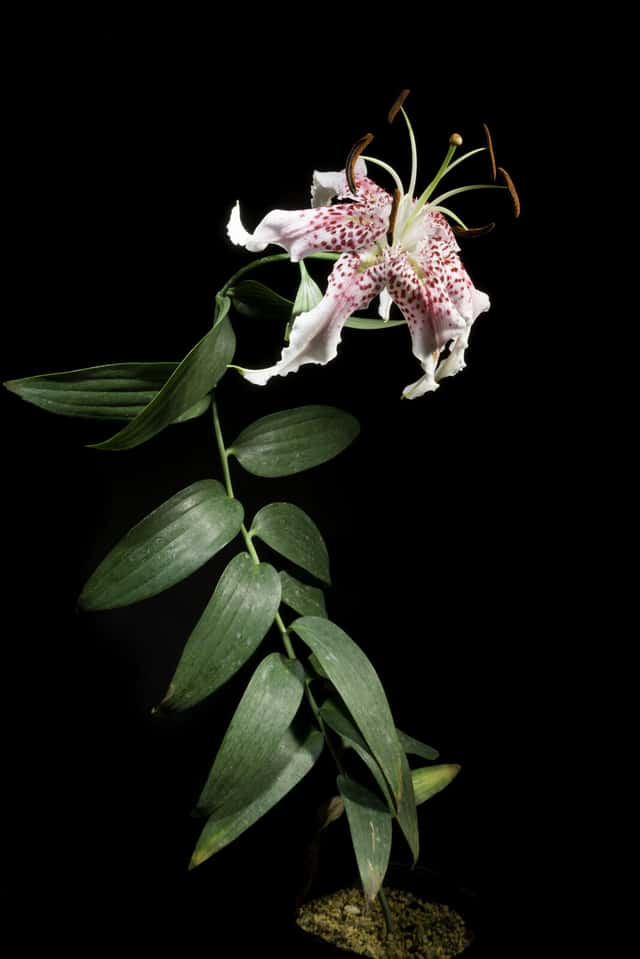
Japanese lily (Lilium speciosum) is a easy-care plant from the Liliaceae family. Lilium speciosum is a bulb lily native to southern Japan, Taiwan and southeastern China, where it grows in woodland and on grassy slopes. The stem reaches 1.2-1.8 m and, in late summer, after most other lilies, opens up to 12 nodding flowers with swept-back petals. The flowers are white or pink, usu...
Japanese lily grows up to 1.5m, spread of 45cm, watering every 7 days. It is not suitable for indoor environments and not safe for pets.
Unlike many tropical plants, Japanese lily tolerates watering mistakes. Best for beginners. Without precautions, ingestion can cause irritation in pets. Keep out of reach of cats and dogs.
How to Care for Japanese lily?
TLDR: Japanese lily needs Bright indirect, watering every 7 days, and temperatures between -29-30°C with 40-70% humidity.
How Often Should You Water Japanese lily?
Water once a week, more in hot weather, so the soil never dries out. Water the soil, not the leaves: leaves that stay wet invite mold. Once the foliage dies back in fall, water less.
How Much Light Does Japanese lily Need?
Full sun or part shade. Best with sun on the flowers and shade at the base, using low plants around it or a mulch layer to keep the roots cool.
What Is the Best Soil for Japanese lily?
Fertile soil rich in organic matter, slightly acidic and well drained. Avoid chalky soil and spots where water pools.
What Pot Should You Use for Japanese lily?
Grows well in a deep pot, at least 30 cm, with drainage holes and free-draining mix. Put it where you can enjoy the scent.
Care Schedule
Fertilize
Every 30 days
Repot
Every 1095 days
What Is Japanese lily and Where Does It Come From?
Lilium speciosum is a bulb lily native to southern Japan, Taiwan and southeastern China, where it grows in woodland and on grassy slopes. The stem reaches 1.2-1.8 m and, in late summer, after most other lilies, opens up to 12 nodding flowers with swept-back petals. The flowers are white or pink, usually with crimson spots, and strongly scented. It is one of the parents of the Oriental lilies sold by florists today. The plant and its pollen are very dangerous to cats.
How to Propagate Japanese lily?
Bulb division
Do not leave the bulbs out of the ground: they have no papery skin and dry out within days.
- 1 In fall, once the leaves have died back, dig up the clump carefully
- 2 Separate the smaller bulbs that formed beside the main one
- 3 Replant right away, about 15-20 cm deep and 18 cm apart
- 4 Water and cover with mulch
Materials needed:
Seed
Plants from seed take a few years to flower.
- 1 Collect ripe capsules in fall
- 2 Sow in moist, well-drained mix
- 3 Keep in a cool, bright place and do not let it dry out
- 4 Transplant the seedlings once the little bulbs fatten
Materials needed:
How Big Does Japanese lily Grow?
TLDR: Japanese lily can reach up to 1.5m tall with Medium growth rate.
Max height
1.5m
Spread
45cm
Growth rate
Medium
Foliage
Deciduous
Warning: Toxic Plant
This plant can be toxic if ingested. Keep out of reach of:
Plant Uses
Ornamental
Great for decoration
Aromatic
Pleasant fragrance
Is your plant showing symptoms?
Click on the symptom to discover possible causes:
What Diseases Commonly Affect Japanese lily?
TLDR: Japanese lily is susceptible to 6 known diseases. Monitor regularly for early detection.
Mosaic Virus
Mosaic virus is a group of plant viruses that cause mottled, patchy patterns on leaves and can affect a wide variety of plants. The virus creates characteristic yellow, white, and green mosaic patterns, often accompanied by stunted growth and deformed plant parts. This highly contagious disease spreads rapidly through insect vectors and contaminated tools.
Gray Mold (Botrytis Blight)
Gray mold, caused by the fungus Botrytis cinerea, is one of the most common fungal diseases in plants. It affects over 200 plant species, including ornamentals, vegetables, fruits, and houseplants. The disease thrives in cool, humid conditions with poor air circulation, causing grayish spots and soft rot on infected tissues.
Fusarium Wilt
Fusarium is a soil-borne fungus that primarily attacks the roots and vascular tissues of plants. It enters through small wounds or stressed roots, is favored by warm temperatures and waterlogging, and then obstructs the flow of sap. Symptoms include yellowing, often on only one side of the plant, wilting even with moist soil, stunted growth, and, when cutting the stem, internal brown streaks. It frequently affects tomatoes, peppers, eggplants, basil, cucumbers, and zucchini, as well as ornamentals like carnations and cyclamen. In potted plants, it can manifest as root rot with a darkened crown.
Aphids
Aphids are small, soft-bodied, pear-shaped insects (1/16 to 1/8 inch long) that feed by sucking nutrient-rich sap from plants. They reproduce rapidly and can quickly weaken plants, causing distorted growth and transmitting plant viruses. Aphids come in various colors including green, black, red, yellow, brown, and gray. They secrete honeydew, a sticky substance that attracts ants and encourages sooty mold growth.
Fun Facts
It blooms after almost every other lily, at the end of summer.
A single stem can carry up to 12 flowers.
The name speciosum is Latin for "showy".
Frequently asked questions
Is the Japanese lily dangerous to cats?
The leaves have brown spots. What is it?
The flowers came out streaked and twisted. Why?
When will it bloom again?
Compare with similar plants
| Attribute | Difficulty | Light | Watering | Pet Safe |
|---|---|---|---|---|
| Field Maple | Easy | Bright indirect | 14d | ✓ |
| Iberian Houseleek | Easy | Direct sun | 14d | ✓ |
| Silver Birch | Easy | Direct sun | 14d | ✓ |
| Common Blanketflower | Easy | Direct sun | 10d | ✓ |





