Solanaceae
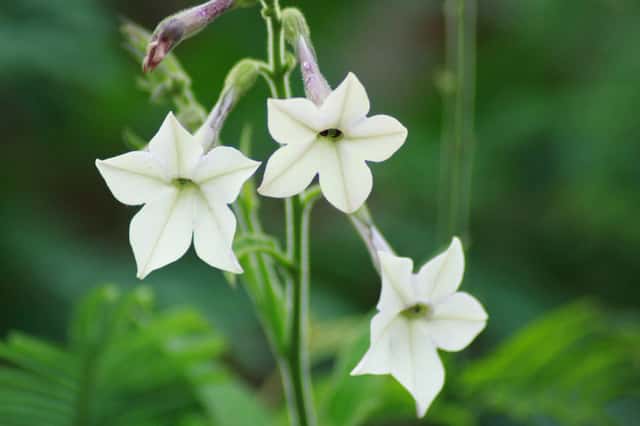
Nicotiana alata - Jasmine Tobacco
Nicotiana alata
Thrives in full sun to partial shade, fertile well-drained soil, and consistent watering to keep the soil lightly moist without becoming soggy. Easy to grow in beds, containers, and fragrant evening gardens.
Every 4 days
Bright indirect
10° - 29°C
% - %
Categories
What is Jasmine Tobacco?
Jasmine Tobacco (Nicotiana alata) is a easy-care plant from the Solanaceae family. Nicotiana alata, commonly known as jasmine tobacco or flowering tobacco, is a herbaceous plant in the Solanaceae family, native to South America (Argentina, Brazil, Paraguay, and Bolivia). It is grown for its fragrant, star-shaped tubular flowers that open in the evening and release a sweet scent to...
Jasmine Tobacco grows up to 1.5m, spread of 45cm, watering every 4 days, 10°C – 29°C. It is not suitable for indoor environments and not safe for pets.
Unlike many tropical plants, Jasmine Tobacco tolerates watering mistakes. Best for beginners. Without precautions, ingestion can cause irritation in pets. Keep out of reach of cats and dogs.
How to Care for Jasmine Tobacco?
TLDR: Jasmine Tobacco needs Bright indirect, watering every 4 days, and temperatures between 10-29°C with 40-70% humidity.
How Often Should You Water Jasmine Tobacco?
Water when the top 2-3 cm of soil feels dry, keeping the soil evenly moist but never waterlogged, which encourages root rot. Water at the base to reduce fungal leaf diseases.
How Much Light Does Jasmine Tobacco Need?
Provide at least 6 hours of direct sunlight daily. In hot climates, afternoon shade helps prevent heat stress and wilting flowers.
What Is the Best Soil for Jasmine Tobacco?
Use light, rich, well-draining soil with a slightly acidic to neutral pH (6.0-7.5). Amend with compost at planting time to support vigorous growth.
What Pot Should You Use for Jasmine Tobacco?
A container at least 20-25 cm (8-10 in) in diameter with good drainage, or direct planting in garden beds.
Care Schedule
Fertilize
Every 21 days
What Is Jasmine Tobacco and Where Does It Come From?
Nicotiana alata, commonly known as jasmine tobacco or flowering tobacco, is a herbaceous plant in the Solanaceae family, native to South America (Argentina, Brazil, Paraguay, and Bolivia). It is grown for its fragrant, star-shaped tubular flowers that open in the evening and release a sweet scent to attract night-flying moth pollinators. Upright stems reach up to 1.5 m tall, with large sticky basal leaves and blooms in white, red, burgundy, yellow, and lime-green. It is grown as a perennial in warm climates (USDA zones 10-11) and as a frost-tender annual elsewhere. The entire plant contains nicotine and is toxic if ingested.
How to Propagate Jasmine Tobacco?
Seed propagation
The seeds are extremely tiny; mix them with fine sand for more even sowing.
- 1 Sow seeds on the surface of moist potting mix without covering them, as they need light to germinate
- 2 Keep the growing medium moist at a temperature of 18-21°C (64-70°F)
- 3 Transplant seedlings into individual pots once they develop 2-3 true leaves
- 4 Move to the final location after the last frost, spacing plants 30-40 cm apart
Materials needed:
How Big Does Jasmine Tobacco Grow?
TLDR: Jasmine Tobacco can reach up to 1.5m tall with Medium growth rate.
Max height
1.5m
Spread
45cm
Growth rate
Medium
Foliage
Deciduous
Warning: Toxic Plant
This plant can be toxic if ingested. Keep out of reach of:
Plant Uses
Ornamental
Great for decoration
Aromatic
Pleasant fragrance
Is your plant showing symptoms?
Click on the symptom to discover possible causes:
What Diseases Commonly Affect Jasmine Tobacco?
TLDR: Jasmine Tobacco is susceptible to 8 known diseases. Monitor regularly for early detection.
Mosaic Virus
Mosaic virus is a group of plant viruses that cause mottled, patchy patterns on leaves and can affect a wide variety of plants. The virus creates characteristic yellow, white, and green mosaic patterns, often accompanied by stunted growth and deformed plant parts. This highly contagious disease spreads rapidly through insect vectors and contaminated tools.
Gray Mold (Botrytis Blight)
Gray mold, caused by the fungus Botrytis cinerea, is a widespread necrotrophic pathogen affecting over 1,400 plant species. It thrives in cool, humid conditions and attacks weakened or aging plant tissues, causing soft rot and characteristic gray fuzzy growth.
Bacterial Blight
Pseudomonas is a group of bacteria that causes leaf spots, blights, cankers, and soft rots on many garden and houseplants. It thrives in cool, wet, or humid weather and spreads with splashing water, rain, handling, and contaminated tools. Look for small, water‑soaked spots that turn dark brown or black, often with a yellow halo; on tomatoes, these can appear as tiny dark specks on leaves and fruit. On woody plants such as cherry, plum, and lilac, it can cause sunken cankers, oozing, dieback, or blossoms that fail after a cool, wet spring. Succulents and fleshy tissues may develop soft, slimy rot. Commonly affected plants include tomatoes, peppers, beans, brassicas, roses, lilacs, stone fruits, and various houseplants.
Aphids
Aphids are small, soft-bodied, pear-shaped insects (1/16 to 1/8 inch long) that feed by sucking nutrient-rich sap from plants. They reproduce rapidly and can quickly weaken plants, causing distorted growth and transmitting plant viruses. Aphids come in various colors including green, black, red, yellow, brown, and gray. They secrete honeydew, a sticky substance that attracts ants and encourages sooty mold growth.
Meaning & Symbolism
Because its blooms release fragrance mainly after dark, jasmine tobacco has come to symbolize hidden beauty and the quiet magic that awakens in gardens at night.
Fun Facts
Nicotiana alata flowers release their strongest fragrance at night to attract moth pollinators.
It is a close relative of commercial tobacco (Nicotiana tabacum), but is grown purely as an ornamental.
Its star-shaped tubular flowers often stay open from dusk until early morning before closing again.
Despite its beauty, the entire plant is toxic due to nicotine content and should never be ingested.
Frequently asked questions
Is Nicotiana alata toxic to cats and dogs?
How often should I water jasmine tobacco?
Why does not my Nicotiana alata smell fragrant during the day?
How do I propagate Nicotiana alata?
Is Nicotiana alata a perennial or an annual?
Compare with similar plants
| Attribute | Difficulty | Light | Watering | Pet Safe |
|---|---|---|---|---|
| Field Maple | Easy | Bright indirect | 14d | ✓ |
| Silver Birch | Easy | Direct sun | 14d | ✓ |
| Common Blanketflower | Easy | Direct sun | 10d | ✓ |
| Cushion Bush | Easy | Direct sun | 14d | ✓ |





