Cucurbitaceae
Jiaogulan (Gynostemma pentaphyllum)
Gynostemma pentaphyllum
Fast-growing vine: part shade, rich soil kept moist and something to climb on. In cold winters it dies back and returns in spring.
Every 4 days
Partial shade
-10° - 32°C
% - %
Categories
What is Jiaogulan?
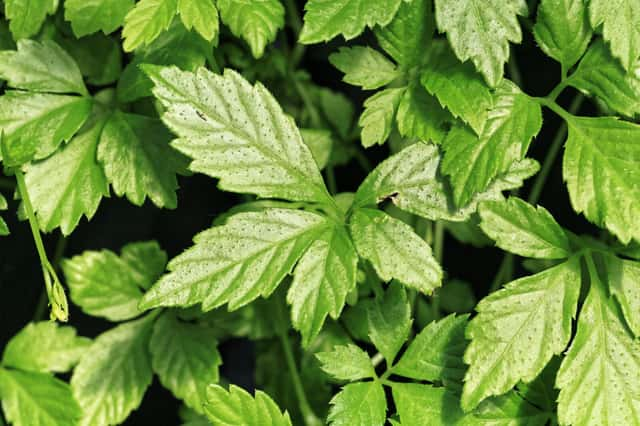
Jiaogulan (Gynostemma pentaphyllum) is a easy-care plant from the Cucurbitaceae family. Gynostemma pentaphyllum, jiaogulan, is a climbing vine in the cucumber family, native to China, Japan, Korea, India and Southeast Asia. It climbs with tendrils and has leaves split into 5 toothed leaflets, a bit like Virginia creeper. Each plant is male or female, and females bear small purple berri...
Jiaogulan grows up to 6.0m, watering every 4 days, -10°C – 32°C. It is suitable for indoor environments and safe for pets.
Unlike many tropical plants, Jiaogulan tolerates watering mistakes. Best for beginners. Unlike many popular species, Jiaogulan is safe to keep around pets. Without adequate drainage, root rot can develop within 8 days.
How to Care for Jiaogulan?
TLDR: Jiaogulan needs Partial shade, watering every 4 days, and temperatures between -10-32°C with 40-70% humidity.
How Often Should You Water Jiaogulan?
Keep the soil moist, watering every 3 or 4 days and more in hot weather. If it wilts from thirst, it usually bounces back soon after watering.
How Much Light Does Jiaogulan Need?
Part shade or morning sun. It takes full sun in mild climates, but in strong heat it prefers afternoon shade.
What Is the Best Soil for Jiaogulan?
Rich, loose soil with plenty of organic matter that drains well. In pots, use regular potting mix with compost.
What Pot Should You Use for Jiaogulan?
A wide 25 to 30 cm pot with drainage and a trellis or stake. Roots stay near the surface, so width matters more than depth.
Care Schedule
Fertilize
Every 30 days
Repot
Every 365 days
What Is Jiaogulan and Where Does It Come From?
Gynostemma pentaphyllum, jiaogulan, is a climbing vine in the cucumber family, native to China, Japan, Korea, India and Southeast Asia. It climbs with tendrils and has leaves split into 5 toothed leaflets, a bit like Virginia creeper. Each plant is male or female, and females bear small purple berries that are not eaten. The leaves taste sweet and are brewed as tea in China, where the plant is linked to long life. It grows fast and, in cold winters, dies back to the root and sprouts again.
How to Propagate Jiaogulan?
Stem cutting
Since each plant is male or female, cuttings copy the parent's sex. To get seeds you need both.
- 1 Cut a piece of vine with 2 or 3 nodes
- 2 Remove the lower leaves
- 3 Bury one node in moist mix or set it in water
- 4 Keep it in bright shade until it sprouts
Materials needed:
Seed
Germination is uneven: sow more than you need.
- 1 Soak the seeds overnight
- 2 Sow half a centimeter deep
- 3 Keep moist and warm
Materials needed:
How Big Does Jiaogulan Grow?
TLDR: Jiaogulan can reach up to 6.0m tall with Fast growth rate.
Max height
6.0m
Growth rate
Fast
Foliage
Deciduous
Plant Uses
Edible
Can be consumed
Medicinal
Medicinal properties
Ornamental
Great for decoration
Medicinal Uses
- Leaf tea used in traditional Chinese medicine as a tonic
Culinary Uses
- Fresh or dried leaves for a sweet tea
- Young leaves in salads
Is your plant showing symptoms?
Click on the symptom to discover possible causes:
What Diseases Commonly Affect Jiaogulan?
TLDR: Jiaogulan is susceptible to 5 known diseases. Monitor regularly for early detection.
Aphids
Aphids are small, soft-bodied, pear-shaped insects (1/16 to 1/8 inch long) that feed by sucking nutrient-rich sap from plants. They reproduce rapidly and can quickly weaken plants, causing distorted growth and transmitting plant viruses. Aphids come in various colors including green, black, red, yellow, brown, and gray. They secrete honeydew, a sticky substance that attracts ants and encourages sooty mold growth.
Spider Mites
Spider mites are tiny arachnids (less than 1/20 inch long) related to spiders and ticks that feed on plant sap. They thrive in hot, dry conditions and can cause significant damage to ornamental and vegetable plants. During severe infestations, crop losses can reach 14% or higher as these pests disrupt vital plant processes including photosynthesis, carbon dioxide absorption, and transpiration.
Whiteflies
Whiteflies are small, soft-bodied, winged insects closely related to aphids and mealybugs. They are moth-like in appearance, about 1/16 inch long, triangular in shape, and gray-white in color. These sap-sucking pests feed on plant tissue, causing yellowing, stunted growth, and wilting. They also excrete honeydew, which attracts ants and promotes sooty mold growth. Whiteflies can transmit serious plant viruses.
Root Rot
Root rot is a serious fungal disease that affects the root system of plants, causing them to decay and die. It is primarily caused by overwatering, poor drainage, or soil-borne fungi such as Pythium, Phytophthora, Rhizoctonia, and Fusarium. The disease thrives in waterlogged conditions where roots are deprived of oxygen, making them susceptible to fungal infection.
Meaning & Symbolism
Long life and good health in Chinese tradition, where it is called the immortality herb.
Fun Facts
It is related to cucumbers and squash
It contains some of the same compounds as ginseng, hence the name southern ginseng
Some compounds in the leaves are 200 times sweeter than sugar
Frequently asked questions
My jiaogulan died back in winter. Is it dead?
How do I make the tea?
Why doesn't my plant make seeds?
Can it grow indoors?
Compare with similar plants
| Attribute | Difficulty | Light | Watering | Pet Safe |
|---|---|---|---|---|
| Field Maple | Easy | Bright indirect | 14d | ✓ |
| Iberian Houseleek | Easy | Direct sun | 14d | ✓ |
| Silver Birch | Easy | Direct sun | 14d | ✓ |
| Common Blanketflower | Easy | Direct sun | 10d | ✓ |





