Solanaceae
Jurubeba (Solanum paniculatum)
Solanum paniculatum
A tough plant that often seeds itself. It likes strong sun and sandy soil, and handles drought once grown. The stems have prickles, so plant it away from paths and wear gloves when handling it. If it came up in your yard and you do not want it, pull it while small, before it sets fruit.
Every 10 days
Bright indirect
° - °C
% - %
Categories
What is Jurubeba?
Jurubeba (Solanum paniculatum) is a easy-care plant from the Solanaceae family. Solanum paniculatum, called jurubeba in Brazil, is a shrub in the nightshade family (Solanaceae), the same family as tomato and potato. It is native to tropical America and grows across all regions of Brazil and in Paraguay. It usually reaches 1 to 3 meters, sometimes more, and the stems carry curve...
Jurubeba grows up to 3.0m, watering every 10 days. It is not suitable for indoor environments and safe for pets.
Unlike many tropical plants, Jurubeba tolerates watering mistakes. Best for beginners. Unlike many popular species, Jurubeba is safe to keep around pets.
How to Care for Jurubeba?
TLDR: Jurubeba needs Bright indirect, watering every 10 days, and temperatures between 15-30°C with 40-70% humidity.
How Often Should You Water Jurubeba?
Once established it handles drought well. Water young plants every 7-10 days if it does not rain, without soaking the soil.
How Much Light Does Jurubeba Need?
Full sun. It grows in pastures and along roads, in open places with no shade.
What Is the Best Soil for Jurubeba?
Prefers sandy, free-draining soil, even if poor.
What Pot Should You Use for Jurubeba?
Best in the ground. In a container, use a very large, deep pot with a drainage hole, since the shrub grows over 2 meters.
What Is Jurubeba and Where Does It Come From?
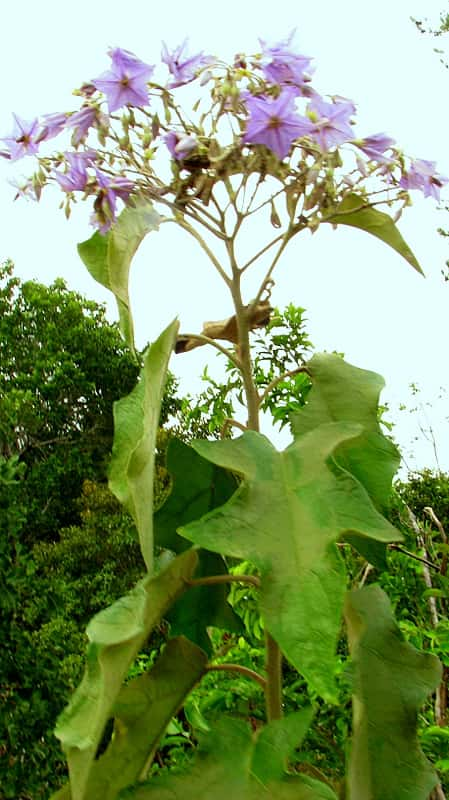
Solanum paniculatum, called jurubeba in Brazil, is a shrub in the nightshade family (Solanaceae), the same family as tomato and potato. It is native to tropical America and grows across all regions of Brazil and in Paraguay. It usually reaches 1 to 3 meters, sometimes more, and the stems carry curved prickles. The leaves are large and lobed. The flowers come in branched clusters and range from white to lilac, pale blue or violet, with a yellow center. The fruits are small, bitter green berries. It comes up on its own in pastures, roadsides and vacant lots, often as a weed. The name comes from the Tupi language, and in northeastern Brazil the fruit is known for jurubeba-flavored liquor and pickles.
How to Propagate Jurubeba?
Seed
Wear gloves when picking: stems and leaves have prickles.
- 1 Pick ripe fruit and remove the seeds
- 2 Rinse and let them dry in the shade
- 3 Sow shallowly in sandy soil
- 4 Keep the soil lightly moist, in sun, until seedlings appear
Materials needed:
How Big Does Jurubeba Grow?
TLDR: Jurubeba can reach up to 3.0m tall with Medium growth rate.
Max height
3.0m
Warning: Toxic Plant
This plant can be toxic if ingested. Keep out of reach of:
Plant Uses
Medicinal
Medicinal properties
Medicinal Uses
- Traditionally used in Brazil as a bitter herb for poor digestion, and listed by the Brazilian public health system (Renisus). Too much, or use for more than a week, may harm the liver and stomach; not for children, pregnancy or breastfeeding. Use only with medical advice.
Culinary Uses
- In northeastern Brazil the fruit flavors liquor and wine and is pickled. It contains alkaloids: do not eat it without expert advice.
Is your plant showing symptoms?
Click on the symptom to discover possible causes:
Fun Facts
The name jurubeba comes from the Tupi language.
In northeastern Brazil the fruit is used to flavor cachaça and wine.
Native Brazilian wasps visit the flowers.
Frequently asked questions
How do I identify jurubeba?
Is jurubeba toxic?
Jurubeba came up in my yard. Should I pull it?
Does it need much care?
Compare with similar plants
| Attribute | Difficulty | Light | Watering | Pet Safe |
|---|---|---|---|---|
| Field Maple | Easy | Bright indirect | 14d | ✓ |
| Iberian Houseleek | Easy | Direct sun | 14d | ✓ |
| Silver Birch | Easy | Direct sun | 14d | ✓ |
| Common Blanketflower | Easy | Direct sun | 10d | ✓ |





