Polypodiaceae
Kangaroo Fern (Zealandia pustulata)
Zealandia pustulata
An easy-care, shade-loving fern that thrives in bright indirect light, a consistently moist but well-drained, peat-based mix, and moderate to high humidity. Water when the top of the soil starts to dry out, feed lightly once a month during the growing season, and keep away from direct sun and cold drafts.
Every 7 days
Low light
16° - 24°C
50% - 80%
Categories
What is Kangaroo Fern?
Kangaroo Fern (Zealandia pustulata) is a easy-care plant from the Polypodiaceae family. Zealandia pustulata, commonly known as the kangaroo fern or hound's tongue fern, is an epiphytic and lithophytic fern native to New Zealand, eastern Australia (Queensland, New South Wales, Victoria, Tasmania), Lord Howe Island and Norfolk Island. In the wild it climbs over rocks, tree trunks and for...
Kangaroo Fern grows up to 30cm, spread of 120cm, watering every 7 days, 16°C – 24°C, 50–80% humidity. It is suitable for indoor environments and safe for pets.
Unlike many tropical plants, Kangaroo Fern tolerates watering mistakes. Best for beginners. Unlike many popular species, Kangaroo Fern is safe to keep around pets. Without adequate drainage, root rot can develop within 14 days.
How to Care for Kangaroo Fern?
TLDR: Kangaroo Fern needs Low light, watering every 7 days, and temperatures between 16-24°C with 50-80% humidity.
How Often Should You Water Kangaroo Fern?
Water when the top inch (2-3 cm) of soil feels dry, keeping the mix evenly moist but never waterlogged; reduce frequency in cooler months and always let excess water drain away to prevent root rot.
How Much Light Does Kangaroo Fern Need?
Provide medium to bright indirect light, such as near an east- or north-facing window; direct sun will scorch the fronds, while deep shade slows growth.
What Is the Best Soil for Kangaroo Fern?
Use a well-draining, peat-based mix amended with perlite or orchid bark to mimic the loose, organic substrate this epiphytic fern roots into in the wild.
What Pot Should You Use for Kangaroo Fern?
A hanging basket or a wide, shallow pot with generous drainage holes suits its trailing, creeping rhizomes best.
Care Schedule
Fertilize
Every 30 days
Misting
Every 3 days
Repot
Every 730 days
What Is Kangaroo Fern and Where Does It Come From?
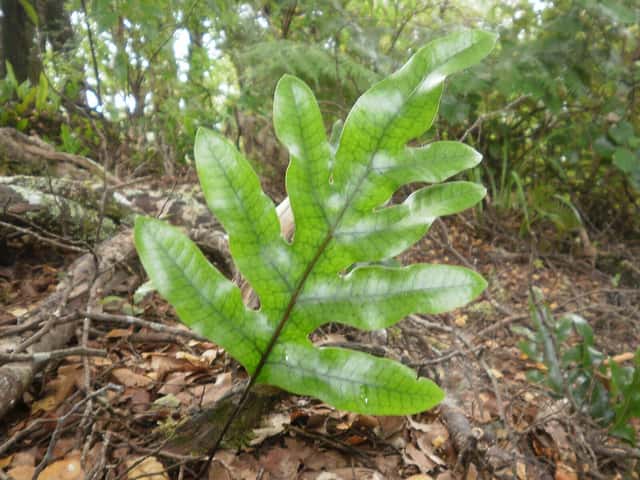
Zealandia pustulata, commonly known as the kangaroo fern or hound's tongue fern, is an epiphytic and lithophytic fern native to New Zealand, eastern Australia (Queensland, New South Wales, Victoria, Tasmania), Lord Howe Island and Norfolk Island. In the wild it climbs over rocks, tree trunks and forest floor debris via long, creeping grey-green rhizomes, producing leathery, glossy green fronds that range from simple to deeply lobed. Formerly classified under Microsorum and Phymatosorus, it was moved to its own genus, Zealandia, in 2019. Slow-growing but tough and adaptable, it is prized as a low-maintenance houseplant, hanging basket subject, or shaded ground cover, tolerating periods of drought once established and rarely troubled by pests or disease.
How to Propagate Kangaroo Fern?
Rhizome Division
Divide in spring for the fastest establishment, and avoid letting the new division dry out completely during its first few weeks.
- 1 Remove the plant from its pot and gently expose the creeping rhizomes.
- 2 Using clean, sharp scissors or a knife, cut a healthy rhizome section with at least one frond and root growth attached.
- 3 Plant the division in a well-draining, peat-based mix and keep it lightly moist.
- 4 Place in bright, indirect light and maintain high humidity until new growth appears.
Materials needed:
Spore Propagation
This method is slow and best suited for experienced growers; keep the growing medium consistently moist and covered to maintain humidity.
- 1 Allow spores to mature and dry on the underside of the fronds.
- 2 Collect the ripe brown spores by tapping the fronds over a paper sheet.
- 3 Scatter the spores over a moist mix of peat and fine soil in a covered tray.
- 4 Keep the tray warm, humid and out of direct sun until sporelings appear, which can take several months.
Materials needed:
How Big Does Kangaroo Fern Grow?
TLDR: Kangaroo Fern can reach up to 30cm tall with Fast growth rate.
Max height
30cm
Spread
1.2m
Growth rate
Fast
Foliage
Evergreen
Plant Uses
Ornamental
Great for decoration
Ground Cover
Soil coverage
Is your plant showing symptoms?
Click on the symptom to discover possible causes:
What Diseases Commonly Affect Kangaroo Fern?
TLDR: Kangaroo Fern is susceptible to 4 known diseases. Monitor regularly for early detection.
Aphids
Aphids are small, soft-bodied, pear-shaped insects (1/16 to 1/8 inch long) that feed by sucking nutrient-rich sap from plants. They reproduce rapidly and can quickly weaken plants, causing distorted growth and transmitting plant viruses. Aphids come in various colors including green, black, red, yellow, brown, and gray. They secrete honeydew, a sticky substance that attracts ants and encourages sooty mold growth.
Whiteflies
Whiteflies are small, soft-bodied, winged insects closely related to aphids and mealybugs. They are moth-like in appearance, about 1/16 inch long, triangular in shape, and gray-white in color. These sap-sucking pests feed on plant tissue, causing yellowing, stunted growth, and wilting. They also excrete honeydew, which attracts ants and promotes sooty mold growth. Whiteflies can transmit serious plant viruses.
Spider Mites
Spider mites are tiny arachnids (less than 1/20 inch long) related to spiders and ticks that feed on plant sap. They thrive in hot, dry conditions and can cause significant damage to ornamental and vegetable plants. During severe infestations, crop losses can reach 14% or higher as these pests disrupt vital plant processes including photosynthesis, carbon dioxide absorption, and transpiration.
Root Rot
Root rot is a serious fungal disease that affects the root system of plants, causing them to decay and die. It is primarily caused by overwatering, poor drainage, or soil-borne fungi such as Pythium, Phytophthora, Rhizoctonia, and Fusarium. The disease thrives in waterlogged conditions where roots are deprived of oxygen, making them susceptible to fungal infection.
Meaning & Symbolism
As with many ferns, the kangaroo fern is associated with new growth, resilience and endurance, thanks to its ability to thrive in tough, shaded conditions and bounce back from drought.
Fun Facts
Its common name comes from the shape of its lobed fronds, which some think resemble a kangaroo's paw or footprint.
In its native New Zealand and Australia it grows as an epiphyte, climbing over rocks, tree trunks and forest debris using long creeping rhizomes rather than true roots in soil.
The genus Zealandia was only established in 2019, separating this fern from its former classification under Microsorum and Phymatosorus.
Maori names for the plant include kowaowao and paraharaha.
Frequently asked questions
Is the kangaroo fern toxic to cats and dogs?
Why are the fronds turning brown or crispy?
Can I grow the kangaroo fern outdoors?
Does the kangaroo fern need frequent repotting?
Compare with similar plants
| Attribute | Difficulty | Light | Watering | Pet Safe |
|---|---|---|---|---|
| Field Maple | Easy | Bright indirect | 14d | ✓ |
| Silver Birch | Easy | Direct sun | 14d | ✓ |
| Common Blanketflower | Easy | Direct sun | 10d | ✓ |
| Cushion Bush | Easy | Direct sun | 14d | ✓ |





