Haemodoraceae
Tall Kangaroo Paw: Edible Plant
Anigozanthos flavidus
It requires a sunny location, well-draining sandy soil, and moderate but regular watering. Mature plants are drought-tolerant, but overwatering can easily lead to root rot. Prefer low-phosphorus fertilizers specifically designed for native plants.
Every 7 days
Direct sun
-6.7° - 32°C
% - %
Categories
What is Tall Kangaroo Paw?
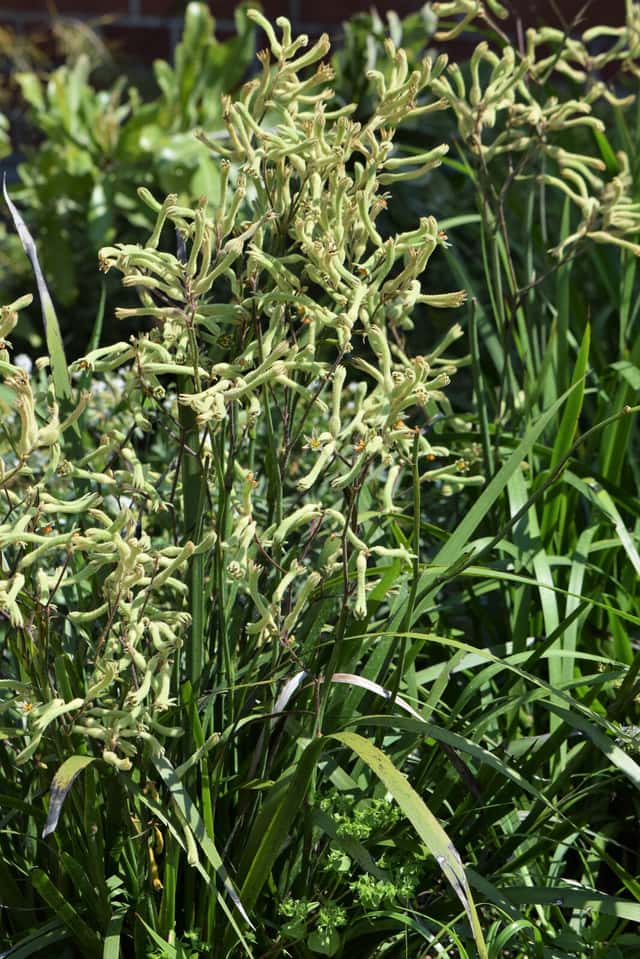
Tall Kangaroo Paw (Anigozanthos flavidus) is a easy-care plant from the Haemodoraceae family. The Tall Kangaroo Paw (Anigozanthos flavidus) is a member of the Haemodoraceae family and a perennial plant native to Southwest Australia. Its fibrous, sword-like leaves form a basal rosette, from which 1-2 meter tall flower stalks covered in velvety hairs emerge. Its distinctive tubular flowers, re...
Tall Kangaroo Paw grows up to 1.8m, spread of 120cm, watering every 7 days, -6.7°C – 32°C. It is not suitable for indoor environments and safe for pets.
Unlike many tropical plants, Tall Kangaroo Paw tolerates watering mistakes. Best for beginners. Unlike many popular species, Tall Kangaroo Paw is safe to keep around pets.
How to Care for Tall Kangaroo Paw?
TLDR: Tall Kangaroo Paw needs Direct sun, watering every 7 days, and temperatures between -6.7-32°C with 40-70% humidity.
How Often Should You Water Tall Kangaroo Paw?
Water regularly during the blooming period, but allow the top layer of soil to dry out between waterings; keep it almost dry in winter. Use rainwater or filtered water if possible, and avoid overhead watering, as wet foliage promotes the development of ink spot disease.
How Much Light Does Tall Kangaroo Paw Need?
It requires full sun, with at least 6 hours of direct sunlight daily for abundant flowering; it can tolerate light partial shade but will produce fewer flowers there.
What Is the Best Soil for Tall Kangaroo Paw?
It requires well-draining sandy or sandy loam soil, with a pH ranging from slightly acidic to neutral (approx. 5.5-7.5). Stagnant water and heavy, clayey soil can lead to root rot.
What Pot Should You Use for Tall Kangaroo Paw?
If grown in a pot, choose a well-ventilated clay or terracotta pot with ample drainage holes to allow water to escape quickly and avoid root rot.
Care Schedule
Fertilize
Every 30 days
What Is Tall Kangaroo Paw and Where Does It Come From?
The Tall Kangaroo Paw (Anigozanthos flavidus) is a member of the Haemodoraceae family and a perennial plant native to Southwest Australia. Its fibrous, sword-like leaves form a basal rosette, from which 1-2 meter tall flower stalks covered in velvety hairs emerge. Its distinctive tubular flowers, resembling a kangaroo's paw, range in color from yellowish-green to red and bloom almost continuously from spring to fall. It has been the official floral emblem of Western Australia since 1960.
How to Propagate Tall Kangaroo Paw?
Division (Rhizome Division)
- The most vigorous species, including Anigozanthos flavidus, tolerate division well.
- Avoid dividing during summer heat.
- 1 Lifting the clump
In early spring or fall, carefully lift the entire clump from the soil using a garden fork.
- 2 Division
Cut the rhizome into smaller pieces with a sharp knife, ensuring each part has healthy roots and at least one shoot.
- 3 Planting
Plant the individual sections in well-draining sandy soil at the same depth they were previously.
- 4 Care
Water thoroughly after planting, then keep slightly moist until the plant has established roots.
Materials needed:
Sowing Seeds
- Germination rate of untreated fresh seeds is very low (below approx. 3%).
- Smoke water or heat treatment significantly improves germination.
- 1 Seed collection
Collect seeds around March-April when the fruits ripen.
- 2 Pre-treatment
Fresh seeds are in a strong state of dormancy; dormancy can be broken with dry heat (approx. 100°C for 1 hour) or smoke water treatment, mimicking natural post-fire germination.
- 3 Sowing
Sow the seeds in a sandy seed-starting mix, covering lightly.
- 4 Germination
Keep at 15-20°C in light; germination occurs within 15-40 days.
Materials needed:
How Big Does Tall Kangaroo Paw Grow?
TLDR: Tall Kangaroo Paw can reach up to 1.8m tall with Medium growth rate.
Max height
1.8m
Spread
1.2m
Growth rate
Medium
Foliage
Evergreen
Plant Uses
Ornamental
Great for decoration
Edible
Can be consumed
Medicinal
Medicinal properties
Medicinal Uses
- Indigenous Australian peoples traditionally used plant extracts as skin-soothing and regenerating agents; this is not a medically proven therapeutic effect, but a traditional cultural use.
- Modern cosmetic research is investigating the skin-protective and anti-inflammatory properties of the flower extract, primarily in skincare products.
Culinary Uses
- The Nyoongar people consumed nectar sucked from the flowers or a sweet drink made by soaking them in water.
- Young rhizomes (rootstocks) were traditionally eaten by some indigenous groups; it is no longer considered a common food source today.
Is your plant showing symptoms?
Click on the symptom to discover possible causes:
What Diseases Commonly Affect Tall Kangaroo Paw?
TLDR: Tall Kangaroo Paw is susceptible to 7 known diseases. Monitor regularly for early detection.
Alternaria Leaf Spot
Alternaria leaf spot is a common fungal disease caused by Alternaria solani and Alternaria alternata that affects a wide range of plants including tomatoes, potatoes, brassicas, and ornamentals. The disease thrives in warm, humid conditions and can cause significant crop damage if left untreated. Spores overwinter on plant debris and can attach to seeds, making complete elimination difficult.
Rust
Rust is a common fungal disease caused by fungi in the order Pucciniales that affects a wide variety of plants. The disease gets its name from the characteristic orange, yellow, or reddish-brown pustules that appear on leaves, resembling metal rust. This obligate fungal parasite requires living plants to survive and can cause significant economic losses in agricultural crops.
Powdery Mildew
Powdery mildew is a common fungal disease caused by various fungi species including Erysiphe, Podosphaera, Oïdium, and Leveillula. It affects over 10,000 plant species worldwide. The disease thrives in warm, dry climates with high humidity and appears as a distinctive white powdery coating on plant surfaces.
Root Rot
Root rot is a serious fungal disease that affects the root system of plants, causing them to decay and die. It is primarily caused by overwatering, poor drainage, or soil-borne fungi such as Pythium, Phytophthora, Rhizoctonia, and Fusarium. The disease thrives in waterlogged conditions where roots are deprived of oxygen, making them susceptible to fungal infection.
Meaning & Symbolism
A symbol of uniqueness, identity, and resilience; it has been the floral emblem of Western Australia since 1960. Known as Nollamara, Kurulbrang, or Yonga Marra by the Nyoongar indigenous people, it is revered as a symbol of connection to the land, perseverance, and hope.
Compare with similar plants
| Attribute | Difficulty | Light | Watering | Pet Safe |
|---|---|---|---|---|
| Field Maple | Easy | Bright indirect | 14d | ✓ |
| Silver Birch | Easy | Direct sun | 14d | ✓ |
| Common Blanketflower | Easy | Direct sun | 10d | ✓ |
| Cushion Bush | Easy | Direct sun | 14d | ✓ |
Choose & Compare
Sources & References
- NC State Extension Gardener Plant Toolbox
- Gardenia.net - Anigozanthos flavidus
- Silverstone Gardening - Kangaroo Paw
- Kangaroo paw Ink disease technical note
- Missouri Botanical Garden Plant Finder
- PictureThis - Temperature FAQ
- Plant and Soil - Phosphorus sensitivity study
- The Wetlands Centre - Kangaroo Paw emblem
- Native Extracts - Kangaroo Paw Flower pharmacopoeia
- Propagate One - Anigozanthos flavidus propagation
- Germination Requirements of Kangaroo Paw and Catspaw Taxa
- Greg App - Kangaroo Paw toxicity to humans





