Apocynaceae
Kangaroo Pocket (Dischidia vidalii)
Dischidia vidalii
Easy indoors. Give it bright, indirect light, with at most a little gentle morning or late-afternoon sun. Use an epiphyte mix of bark or coconut husk and water when the medium is nearly dry, never leaving it sitting in water. It likes humid air: mist often or grow it in a terrarium. Keep it above 15 °C. Feed at half strength while it is growing.
Every 5 days
Partial shade
15° - 35°C
50% - %
Categories
What is Kangaroo Pocket?
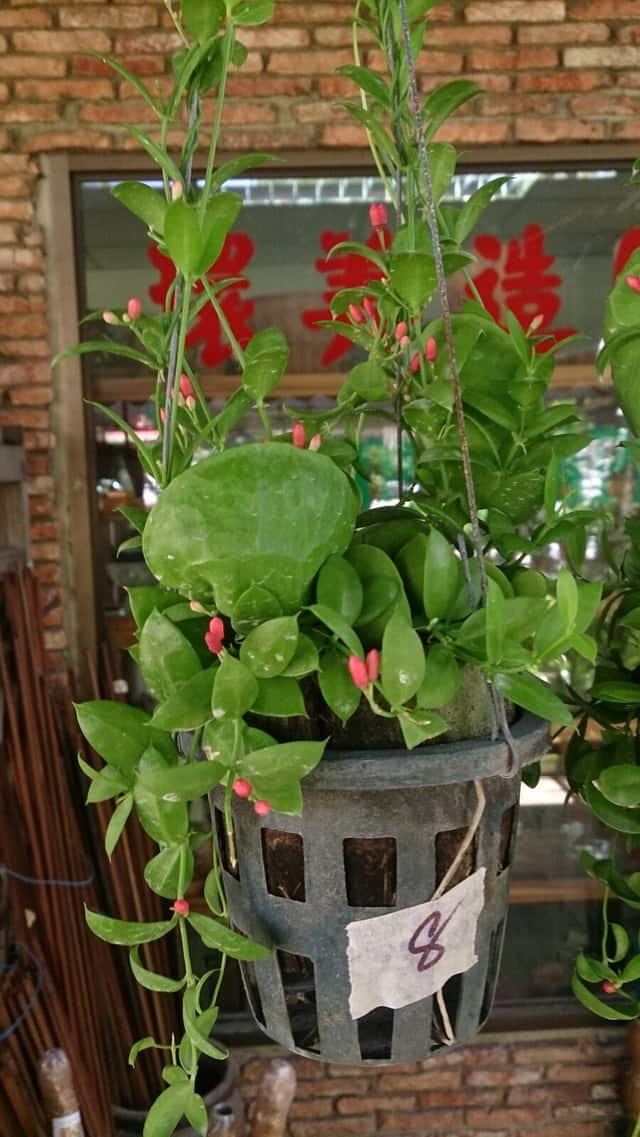
Kangaroo Pocket (Dischidia vidalii) is a easy-care plant from the Apocynaceae family. Dischidia vidalii is an epiphytic climber in the dogbane family (Apocynaceae), native to the Philippines. It is also sold as Dischidia pectenoides, since botanists have not settled which name applies. It has two kinds of leaves: small, oval, fleshy light green ones, and much larger hollow, purse-sha...
Kangaroo Pocket grows up to 60cm, watering every 5 days, 15°C – 35°C. It is suitable for indoor environments and safe for pets.
Unlike many tropical plants, Kangaroo Pocket tolerates watering mistakes. Best for beginners. Unlike many popular species, Kangaroo Pocket is safe to keep around pets. Without adequate drainage, root rot can develop within 10 days.
How to Care for Kangaroo Pocket?
TLDR: Kangaroo Pocket needs Partial shade, watering every 5 days, and temperatures between 15-35°C with 50-70% humidity.
How Often Should You Water Kangaroo Pocket?
Water when the mix is nearly dry or the leaves start to wrinkle slightly. Soak it, then let it drain; standing water rots the roots quickly.
How Much Light Does Kangaroo Pocket Need?
Bright, indirect light near a sunny window, out of harsh midday sun. In dim light it gets long and sparse.
What Is the Best Soil for Kangaroo Pocket?
Loose epiphyte mix: bark, coconut husk or orchid mix. It can also be mounted on bark or a board.
What Pot Should You Use for Kangaroo Pocket?
Hanging basket, small pot with drainage holes or a bark mount, always with a well-drained epiphyte mix.
Care Schedule
Fertilize
Every 30 days
Misting
Every 3 days
What Is Kangaroo Pocket and Where Does It Come From?
Dischidia vidalii is an epiphytic climber in the dogbane family (Apocynaceae), native to the Philippines. It is also sold as Dischidia pectenoides, since botanists have not settled which name applies. It has two kinds of leaves: small, oval, fleshy light green ones, and much larger hollow, purse-shaped ones. The plant grows roots inside these pouches, and in the wild ants live there, guard the plant and feed it with their waste. The small red to magenta flowers come in clusters at the leaf joints. It reaches about 60 cm.
How to Propagate Kangaroo Pocket?
Stem cutting
Soil works better than water. Keep it moist but not soggy until new growth shows.
- 1 Cut a piece of stem with a few nodes
- 2 Strip the leaves from the lowest node
- 3 Bury that node in light, slightly moist mix
- 4 Cover with a clear plastic bag to keep the air humid
Materials needed:
Sowing
The seeds need light to germinate.
- 1 Scatter seed on moist mix without covering it
- 2 Keep in a bright, warm, humid spot
- 3 Pot up the seedlings once they are sturdy
Materials needed:
How Big Does Kangaroo Pocket Grow?
TLDR: Kangaroo Pocket can reach up to 60cm tall with Medium growth rate.
Max height
60cm
Growth rate
Medium
Foliage
Evergreen
Plant Uses
Ornamental
Great for decoration
Is your plant showing symptoms?
Click on the symptom to discover possible causes:
What Diseases Commonly Affect Kangaroo Pocket?
TLDR: Kangaroo Pocket is susceptible to 4 known diseases. Monitor regularly for early detection.
Root Rot
Root rot is a serious fungal disease that affects the root system of plants, causing them to decay and die. It is primarily caused by overwatering, poor drainage, or soil-borne fungi such as Pythium, Phytophthora, Rhizoctonia, and Fusarium. The disease thrives in waterlogged conditions where roots are deprived of oxygen, making them susceptible to fungal infection.
Scale Insects
Scale insects are small sap-sucking pests that appear as brown, shell-like bumps on plant stems and leaves. There are over 25 species, divided into armored (hard) and unarmored (soft) scales. They feed by piercing plant tissue and extracting sap, which weakens the plant and can lead to yellowing, stunted growth, and even death if left untreated. They also excrete honeydew, which attracts ants and promotes sooty mold growth.
Thrips
Thrips are tiny cigar-shaped insects (1/25-inch long) that damage plants by sucking plant juices and scraping at fruits, flowers, and leaves. With over 6,000 species and rapid reproduction (lifecycle as short as 14 days), they can quickly infest plants and transmit viruses like tomato spotted wilt virus.
Low Humidity Stress
Low humidity stress occurs when indoor air becomes too dry, causing plants to lose moisture faster than they can absorb it through their roots. This is especially common during winter heating periods, near radiators and heating vents, or in air-conditioned spaces. Tropical plants are particularly susceptible to low humidity damage.
Fun Facts
In the wild, ants nest inside the hollow pouch leaves.
The plant grows roots inside its own pouch leaves to use the moisture and the ants' debris.
Botanists still debate whether the correct name is Dischidia vidalii or Dischidia pectenoides.
Frequently asked questions
How often should I water Dischidia vidalii?
What are the pouch leaves for?
Is Dischidia vidalii toxic?
Why is it dropping new leaves?
Compare with similar plants
| Attribute | Difficulty | Light | Watering | Pet Safe |
|---|---|---|---|---|
| Field Maple | Easy | Bright indirect | 14d | ✓ |
| Iberian Houseleek | Easy | Direct sun | 14d | ✓ |
| Silver Birch | Easy | Direct sun | 14d | ✓ |
| Common Blanketflower | Easy | Direct sun | 10d | ✓ |





