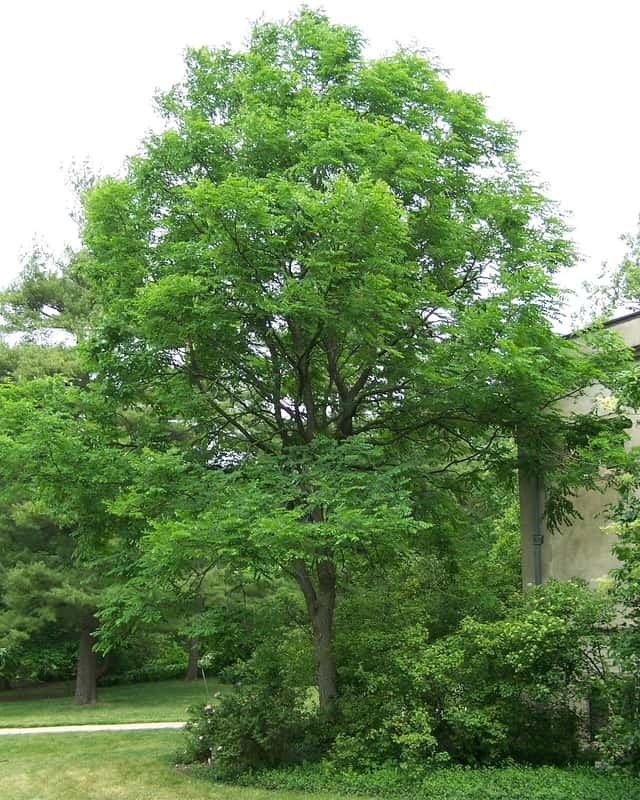
Fabaceae
Kentucky Coffeetree (Gymnocladus dioicus)
Gymnocladus dioicus
A very tough shade tree for temperate climates (USDA zones 3 to 8). Plant it in full sun in well-drained soil; it tolerates clay, sand, alkaline soil, urban pollution, road salt, drought and occasional flooding. It has almost no pests or diseases. Choose a male cultivar (such as 'Espresso') if you do not want pods dropping on paving. Seeds, leaves and pod pulp are toxic if eaten.
Every 10 days
Bright indirect
-40° - °C
% - %
Categories
What is Kentucky coffeetree?
Kentucky coffeetree (Gymnocladus dioicus) is a easy-care plant from the Fabaceae family. Kentucky coffeetree (Gymnocladus dioicus) is a deciduous tree in the legume family, native to southeastern Canada and the central and eastern United States, where it grows in moist woods, on hillsides and in floodplains. It reaches 18-24 m tall. Its bipinnate leaves are huge, up to 90 cm long, with...
Kentucky coffeetree grows up to 24.0m, spread of 1500cm, watering every 10 days. It is not suitable for indoor environments and not safe for pets.
Unlike many tropical plants, Kentucky coffeetree tolerates watering mistakes. Best for beginners. Without precautions, ingestion can cause irritation in pets. Keep out of reach of cats and dogs.
How to Care for Kentucky coffeetree?
TLDR: Kentucky coffeetree needs Bright indirect, watering every 10 days, and temperatures between -40-30°C with 40-70% humidity.
How Often Should You Water Kentucky coffeetree?
Water deeply every 7-10 days for the first two years. Once established it handles drought; water only in long dry spells.
How Much Light Does Kentucky coffeetree Need?
Full sun, 6 or more hours a day. In shade it grows slowly and looks sparse.
What Is the Best Soil for Kentucky coffeetree?
Prefers moist, well-drained soil but adapts to clay, sand, rich organic soil, and acid, neutral or alkaline pH.
What Pot Should You Use for Kentucky coffeetree?
Not a container tree. Plant it in the ground in a spacious spot; the taproot makes transplanting hard, so move seedlings while small.
What Is Kentucky coffeetree and Where Does It Come From?
Kentucky coffeetree (Gymnocladus dioicus) is a deciduous tree in the legume family, native to southeastern Canada and the central and eastern United States, where it grows in moist woods, on hillsides and in floodplains. It reaches 18-24 m tall. Its bipinnate leaves are huge, up to 90 cm long, with blue-green leaflets that open pink and turn yellow in fall. The tree leafs out late and drops its leaves early, so it stands bare for many months, which is where the name Gymnocladus ("naked branch") comes from. Trees are male or female: females bear fragrant greenish-white flowers in late spring and thick reddish-brown pods that hang on through winter. Native peoples and settlers roasted the seeds to brew a coffee-like drink.
How to Propagate Kentucky coffeetree?
Seed
Without scarification the seed can take years to germinate. Wear gloves: the pulp and seeds are toxic.
- 1 Remove seeds from ripe pods in fall and wash off the pulp
- 2 Scarify the hard coat: file or nick it until you see the pale inside, or soak in hot water
- 3 Soak in water for 24 hours until the seeds swell
- 4 Sow 2-3 cm deep in deep pots or directly in place
Materials needed:
Root cutting
This is how to multiply podless male trees, which you cannot guarantee from seed.
- 1 In winter, while the tree is dormant, take root pieces about 1 cm thick and 8-10 cm long
- 2 Mark which end was closer to the trunk
- 3 Plant upright with that end on top in moist sandy mix
- 4 Keep in a cool, sheltered spot until shoots appear
Materials needed:
How Big Does Kentucky coffeetree Grow?
TLDR: Kentucky coffeetree can reach up to 24.0m tall with Medium growth rate.
Max height
24.0m
Spread
15.0m
Growth rate
Medium
Foliage
Deciduous
Warning: Toxic Plant
This plant can be toxic if ingested. Keep out of reach of:
Plant Uses
Ornamental
Great for decoration
Is your plant showing symptoms?
Click on the symptom to discover possible causes:
Fun Facts
The name Gymnocladus means "naked branch", because the tree stays leafless for many months.
It was the state tree of Kentucky from 1976 to 1994.
Its large pods may once have been eaten by extinct giant mammals, which could explain why almost no animal spreads its seeds today.
Frequently asked questions
Is Kentucky coffeetree poisonous?
Can you make coffee from the seeds?
Why does my tree have no pods?
Why does it lose its leaves so early?
Compare with similar plants
| Attribute | Difficulty | Light | Watering | Pet Safe |
|---|---|---|---|---|
| Field Maple | Easy | Bright indirect | 14d | ✓ |
| Iberian Houseleek | Easy | Direct sun | 14d | ✓ |
| Silver Birch | Easy | Direct sun | 14d | ✓ |
| Common Blanketflower | Easy | Direct sun | 10d | ✓ |





