Polygonaceae
Knotgrass
Polygonum
It needs no care: it grows by itself in sun, in poor, trampled soil. If you do not want it to spread, pull it up before it sets seed.
Every 10 days
Bright indirect
° - °C
% - %
Categories
What is Knotgrass?
Knotgrass (Polygonum) is a easy-care plant from the Polygonaceae family. Polygonum is a genus of small herbs in the buckwheat family, with somewhere between 50 and 130 species, mostly from temperate parts of the northern hemisphere. The name means many knees, after the swollen joints on the stem, each wrapped in a thin, papery sheath. The leaves are small, usually under...
Knotgrass grows up to watering every 10 days. It is not suitable for indoor environments and safe for pets.
Unlike many tropical plants, Knotgrass tolerates watering mistakes. Best for beginners. Unlike many popular species, Knotgrass is safe to keep around pets.
How to Care for Knotgrass?
TLDR: Knotgrass needs Bright indirect, watering every 10 days, and temperatures between 15-30°C with 40-70% humidity.
How Often Should You Water Knotgrass?
It almost never needs watering. In a pot, water when the soil is dry, about every 10 days.
How Much Light Does Knotgrass Need?
Full sun. In shade it gets sparse and stops flowering.
What Is the Best Soil for Knotgrass?
Any soil, even compacted and poor. That is exactly where it shows up when other plants cannot grow.
What Pot Should You Use for Knotgrass?
It is rarely grown in pots. If you want to, any shallow pot with a drainage hole will do.
What Is Knotgrass and Where Does It Come From?
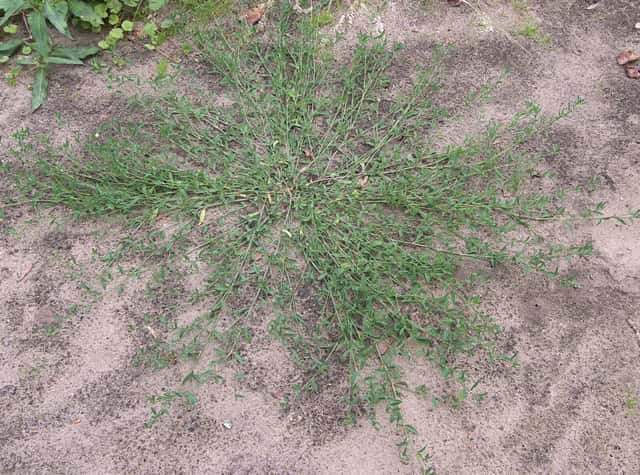
Polygonum is a genus of small herbs in the buckwheat family, with somewhere between 50 and 130 species, mostly from temperate parts of the northern hemisphere. The name means many knees, after the swollen joints on the stem, each wrapped in a thin, papery sheath. The leaves are small, usually under 2 cm, and the flowers are tiny, white, pink or greenish, tucked in by the leaves. Many species spread flat along the ground and turn up on their own in pavement cracks, packed soil and path edges, so they are usually treated as weeds. The most common is knotgrass (Polygonum aviculare), which has its own page. Plants once called Polygonum, such as Japanese knotweed and pink knotweed, now sit in other genera.
How to Propagate Knotgrass?
Seed
One plant sheds thousands of seeds that last for years in the soil. To keep it in check, pull it out with the root before the flowers turn to seed.
- 1 In practice it sows itself
- 2 To grow it on purpose, scatter seed on loose soil in late winter
- 3 Cover lightly and keep moist until it sprouts
Materials needed:
How Big Does Knotgrass Grow?
TLDR: Knotgrass can reach up to ?cm tall with Fast growth rate.
Growth rate
Fast
Foliage
Deciduous
Plant Uses
Medicinal
Medicinal properties
Ground Cover
Soil coverage
Medicinal Uses
- Dried knotgrass herb (P. aviculare) is used as a tea in European folk medicine; talk to a health professional before using it
Is your plant showing symptoms?
Click on the symptom to discover possible causes:
What Diseases Commonly Affect Knotgrass?
TLDR: Knotgrass is susceptible to 5 known diseases. Monitor regularly for early detection.
Powdery Mildew
Powdery mildew is a common fungal disease caused by various fungi species including Erysiphe, Podosphaera, Oïdium, and Leveillula. It affects over 10,000 plant species worldwide. The disease thrives in warm, dry climates with high humidity and appears as a distinctive white powdery coating on plant surfaces.
Rust
Rust is a common fungal disease caused by fungi in the order Pucciniales that affects a wide variety of plants. The disease gets its name from the characteristic orange, yellow, or reddish-brown pustules that appear on leaves, resembling metal rust. This obligate fungal parasite requires living plants to survive and can cause significant economic losses in agricultural crops.
Leaf Spot
Leaf spot is a common fungal disease caused by various pathogens including Alternaria, Ascochyta, Colletotrichum, Septoria, and Venturia. It primarily affects leaves, causing discolored spots that can lead to premature leaf drop if left untreated.
Aphids
Aphids are small, soft-bodied, pear-shaped insects (1/16 to 1/8 inch long) that feed by sucking nutrient-rich sap from plants. They reproduce rapidly and can quickly weaken plants, causing distorted growth and transmitting plant viruses. Aphids come in various colors including green, black, red, yellow, brown, and gray. They secrete honeydew, a sticky substance that attracts ants and encourages sooty mold growth.
Fun Facts
The name comes from Greek and means many knees, after the stem joints
Buckwheat was once classified as Polygonum fagopyrum
In Middle English herbals it was called ars-smerte
Frequently asked questions
Is this plant a weed?
How do I recognise a Polygonum?
Is it toxic to cats and dogs?
Is Polygonum the same as Japanese knotweed?
Compare with similar plants
| Attribute | Difficulty | Light | Watering | Pet Safe |
|---|---|---|---|---|
| Field Maple | Easy | Bright indirect | 14d | ✓ |
| Iberian Houseleek | Easy | Direct sun | 14d | ✓ |
| Silver Birch | Easy | Direct sun | 14d | ✓ |
| Common Blanketflower | Easy | Direct sun | 10d | ✓ |





