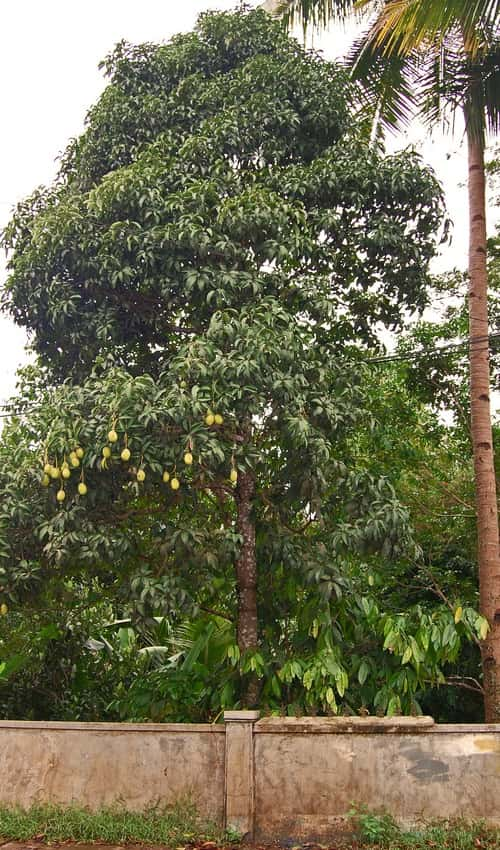
Anacardiaceae
Kuini (Mangifera odorata)
Mangifera odorata
A tree for the humid tropics: full sun, rain spread through the year and deep, well-drained soil. It does not tolerate long dry seasons or frost. Feed it during growth and give it room — trees are planted 12–14 m apart. Peel the fruit before eating; the skin juice and trunk sap irritate the skin.
Every 7 days
Direct sun
10° - °C
60% - 90%
Categories
What is Kuini?
Kuini (Mangifera odorata) is a medium-care plant from the Anacardiaceae family. Kuini (Mangifera odorata) is a tropical fruit tree in the cashew family (Anacardiaceae), grown in village orchards and home gardens from southern Thailand through Malaysia and Indonesia to the southern Philippines. It is known only in cultivation and is thought to be a natural hybrid between the com...
Kuini grows up to 20.0m, watering every 7 days, 60–90% humidity. It is not suitable for indoor environments and safe for pets.
Unlike many popular species, Kuini is safe to keep around pets.
How to Care for Kuini?
TLDR: Kuini needs Direct sun, watering every 7 days, and temperatures between 10-30°C with 60-90% humidity.
How Often Should You Water Kuini?
Water young trees weekly so the soil never dries out completely. Mature trees rely on regular rainfall; in dry spells give deep waterings, as it cannot cope with prolonged drought.
How Much Light Does Kuini Need?
Full sun, at least 6–8 hours a day. Young plants accept a little shade.
What Is the Best Soil for Kuini?
Deep, fertile, well-drained soil. Avoid waterlogged spots. A mulch of organic matter keeps moisture and feeds the roots.
What Pot Should You Use for Kuini?
Best in the ground. A young tree can spend a few years in a large, deep container with drainage before planting out.
Care Schedule
Fertilize
Every 90 days
What Is Kuini and Where Does It Come From?
Kuini (Mangifera odorata) is a tropical fruit tree in the cashew family (Anacardiaceae), grown in village orchards and home gardens from southern Thailand through Malaysia and Indonesia to the southern Philippines. It is known only in cultivation and is thought to be a natural hybrid between the common mango and the horse mango (Mangifera foetida). The tree reaches 10–15 m with a broad, rounded crown and bears small, fragrant flowers. Its oblong green to yellow-green fruits, 10–13 cm long, have orange-yellow, fibrous, sweet-sour flesh with a strong resinous aroma.
How to Propagate Kuini?
Seed
Sow fresh: the seed loses viability quickly. Seed is the usual way to grow kuini.
- 1 Take the seed from a ripe fruit and clean off the flesh
- 2 Carefully open the fibrous husk and remove the kernel
- 3 Sow the kernel 2-3 cm deep in a deep pot of moist, free-draining mix
- 4 Keep warm and in light shade
- 5 Plant out when the seedling is sturdy
Materials needed:
Grafting
Grafting is uncommon but keeps the qualities of a good tree. Some mango combinations show incompatibility after a few years.
- 1 Choose a vigorous seedling rootstock of kuini or a compatible Mangifera
- 2 Take a scion from a healthy, productive tree
- 3 Join with a cleft or veneer graft and tie firmly
- 4 Cover to keep humid and shade until the buds grow
Materials needed:
How Big Does Kuini Grow?
TLDR: Kuini can reach up to 20.0m tall with Medium growth rate.
Max height
20.0m
Growth rate
Medium
Foliage
Evergreen
Warning: Toxic Plant
This plant can be toxic if ingested. Keep out of reach of:
Plant Uses
Edible
Can be consumed
Culinary Uses
- Fruit eaten fresh once peeled
- Young fruits made into chutney and salted pickles
- Seed kernel flour used in sweets such as dodol in Java
Is your plant showing symptoms?
Click on the symptom to discover possible causes:
What Diseases Commonly Affect Kuini?
TLDR: Kuini is susceptible to 2 known diseases. Monitor regularly for early detection.
Curculionidae
Curculionidae (weevils) are small beetles that feed on plants. Adults chew leaf margins, leaving crescent-shaped notches, primarily at night. The larvae live in the substrate and consume roots, causing decline, yellowing, and wilting even when the substrate is moist, and in severe cases, plant death. They frequently affect ornamentals and garden plants such as strawberries, citrus, roses, hydrangeas, azaleas, blueberries, begonias, and many potted plants.
Caterpillars
Caterpillars are the larval stage of moths and butterflies that feed voraciously on plant foliage, stems, flowers, and fruits. Common species include cabbage loopers, tomato hornworms, armyworms, and cutworms. These pests can cause extensive damage by consuming large amounts of plant tissue in a short time. They vary in size from small (1/4 inch) to large (5 inches), with colors ranging from green to brown, often featuring stripes or spots. Caterpillars are highly mobile and can quickly spread throughout gardens, making them one of the most destructive common pests.
Fun Facts
It has never been found growing truly wild, only in cultivation.
Its name odorata means fragrant, after its scented flowers and strongly aromatic fruit.
Where there are two dry seasons a year, the tree can fruit twice.
Frequently asked questions
Can you eat kuini fruit?
Where does kuini grow?
Is kuini a hybrid?
How is it propagated?
Compare with similar plants
| Attribute | Difficulty | Light | Watering | Pet Safe |
|---|---|---|---|---|
| Dark Fieldcap | Medium | Low light | 2d | ⚠️ |
| Azalea | Medium | Partial shade | 3d | ⚠️ |
| Muriel's Bamboo | Medium | Partial shade | 3d | ✓ |
| Bougainvillea | Medium | Direct sun | 7d | ⚠️ |




