Cactaceae
Leaf Cactus (Pereskia): How to Grow and Care for It
Pereskia
Easy, fast-rooting cactus with leaves. It wants plenty of light, rich but free-draining soil, regular water in the warm months and protection from cold. It may drop its leaves in winter and regrow them in spring.
Every 10 days
Bright indirect
10° - 35°C
% - %
Categories
What is Leaf Cactus?
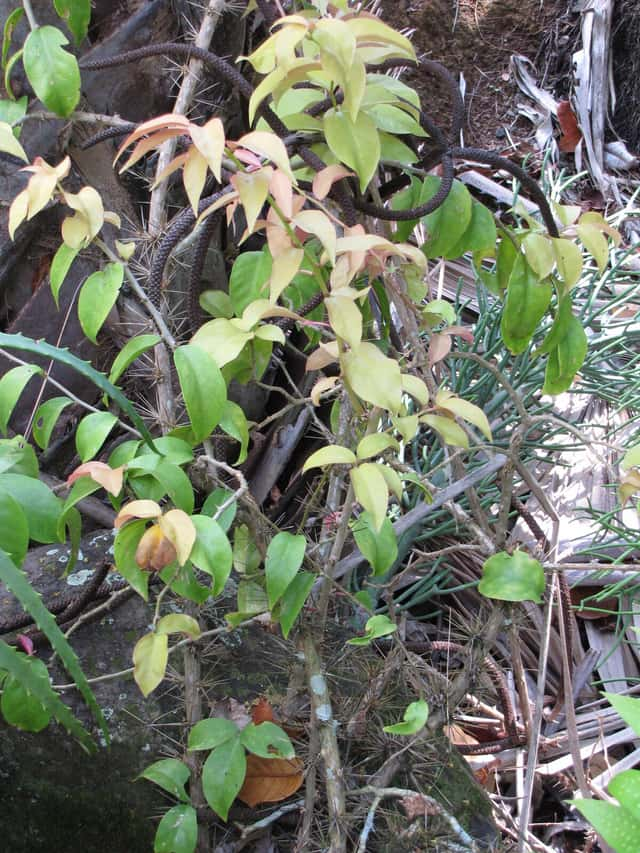
Leaf Cactus (Pereskia) is a easy-care plant from the Cactaceae family. Pereskia is a genus of about ten cacti that do not look like cacti: they have flat green leaves and woody stems instead of fleshy, leafless bodies. They grow as shrubs, small trees or scrambling vines 3 to 10 m long, with sharp spines on the stems. They come from tropical and southern South America,...
Leaf Cactus grows up to 10.0m, spread of 500cm, watering every 10 days, 10°C – 35°C. It is suitable for indoor environments and safe for pets.
Unlike many tropical plants, Leaf Cactus tolerates watering mistakes. Best for beginners. Unlike many popular species, Leaf Cactus is safe to keep around pets. Without adequate drainage, root rot can develop within 20 days.
How to Care for Leaf Cactus?
TLDR: Leaf Cactus needs Bright indirect, watering every 10 days, and temperatures between 10-35°C with 40-70% humidity.
How Often Should You Water Leaf Cactus?
In spring and summer, water when the top few centimeters of soil are dry, roughly every 10 days. In winter, especially if the plant has dropped its leaves, water only lightly every 3-4 weeks. Soggy soil causes root rot.
How Much Light Does Leaf Cactus Need?
Give full sun or very bright light with a few hours of direct sun. Indoors, a sunny south- or west-facing window works; in very hot climates some afternoon shade prevents leaf scorch.
What Is the Best Soil for Leaf Cactus?
Rich soil with good drainage: mix potting soil with compost and coarse sand or perlite. Neutral pH (6-8) is fine.
What Pot Should You Use for Leaf Cactus?
Large pot with drainage holes and a trellis or stake for climbing species; terracotta helps the soil dry between waterings.
Care Schedule
Fertilize
Every 30 days
What Is Leaf Cactus and Where Does It Come From?
Pereskia is a genus of about ten cacti that do not look like cacti: they have flat green leaves and woody stems instead of fleshy, leafless bodies. They grow as shrubs, small trees or scrambling vines 3 to 10 m long, with sharp spines on the stems. They come from tropical and southern South America, and one species, Pereskia aculeata, reaches Central America and the Caribbean. In spring and summer they bear flowers that look like wild roses, white, cream, pink, orange or red depending on the species. The leaves of Pereskia aculeata (ora-pro-nobis) and Pereskia grandifolia are eaten as a vegetable in Brazil, and P. aculeata also has edible fruit.
How to Propagate Leaf Cactus?
Stem cuttings
Pereskia cuttings root easily, even in a glass of water. Plant them soon after cutting; unlike other cacti they do not need to callus for long.
- 1 Wearing gloves, cut a 15-20 cm piece of semi-woody stem
- 2 Remove the lower leaves
- 3 Optionally dip the base in rooting hormone
- 4 Plant in light, porous mix or stand it in water
- 5 Keep the mix slightly moist in a warm, bright spot
Materials needed:
Seed
Seedlings grow fast but take a few years to flower; cuttings are quicker.
- 1 Clean seeds from ripe fruit
- 2 Sow in a half peat, half perlite mix
- 3 Keep moist and warm until they sprout
Materials needed:
How Big Does Leaf Cactus Grow?
TLDR: Leaf Cactus can reach up to 10.0m tall with Medium growth rate.
Max height
10.0m
Spread
5.0m
Growth rate
Medium
Foliage
Semi-evergreen
Plant Uses
Ornamental
Great for decoration
Edible
Can be consumed
Culinary Uses
- Young leaves of P. aculeata and P. grandifolia cooked or raw in salads, soups and stir-fries
- Ripe fruit of P. aculeata eaten fresh
Is your plant showing symptoms?
Click on the symptom to discover possible causes:
What Diseases Commonly Affect Leaf Cactus?
TLDR: Leaf Cactus is susceptible to 4 known diseases. Monitor regularly for early detection.
Root Rot
Root rot is a serious fungal disease that affects the root system of plants, causing them to decay and die. It is primarily caused by overwatering, poor drainage, or soil-borne fungi such as Pythium, Phytophthora, Rhizoctonia, and Fusarium. The disease thrives in waterlogged conditions where roots are deprived of oxygen, making them susceptible to fungal infection.
Mealybugs
Mealybugs are small, soft-bodied insects covered with a white, waxy, cottony material. They are common pests of houseplants and outdoor plants in mild climates. These sap-sucking insects feed on plant tissue, causing damage, stunted growth, and can lead to plant death if left untreated. They produce sticky honeydew which attracts sooty mold.
Scale Insects
Scale insects are small sap-sucking pests that appear as brown, shell-like bumps on plant stems and leaves. There are over 25 species, divided into armored (hard) and unarmored (soft) scales. They feed by piercing plant tissue and extracting sap, which weakens the plant and can lead to yellowing, stunted growth, and even death if left untreated. They also excrete honeydew, which attracts ants and promotes sooty mold growth.
Spider Mites
Spider mites are tiny arachnids (less than 1/20 inch long) related to spiders and ticks that feed on plant sap. They thrive in hot, dry conditions and can cause significant damage to ornamental and vegetable plants. During severe infestations, crop losses can reach 14% or higher as these pests disrupt vital plant processes including photosynthesis, carbon dioxide absorption, and transpiration.
Fun Facts
Pereskia is thought to resemble the leafy plants that cacti evolved from.
In Brazil, the leaves of Pereskia aculeata (ora-pro-nobis) are a protein-rich vegetable.
Gardeners use Pereskia stems as rootstock to graft Christmas cactus into standards.
Frequently asked questions
Why is my Pereskia dropping its leaves?
Is Pereskia toxic to pets?
How often should I water it?
Can I grow it indoors?
Compare with similar plants
| Attribute | Difficulty | Light | Watering | Pet Safe |
|---|---|---|---|---|
| Field Maple | Easy | Bright indirect | 14d | ✓ |
| Iberian Houseleek | Easy | Direct sun | 14d | ✓ |
| Silver Birch | Easy | Direct sun | 14d | ✓ |
| Common Blanketflower | Easy | Direct sun | 10d | ✓ |





