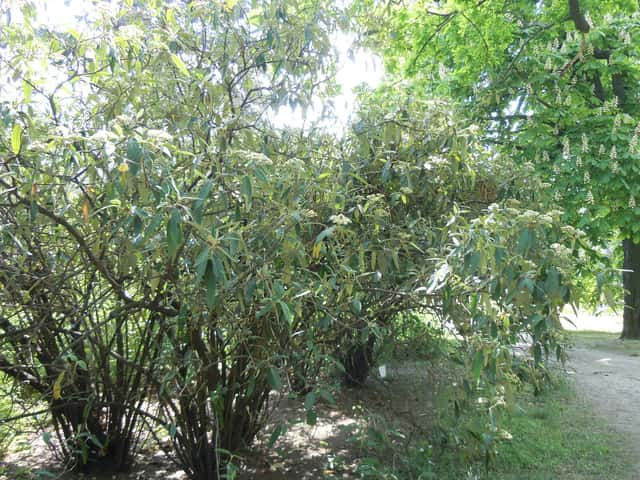
Adoxaceae
Leatherleaf Viburnum (Viburnum rhytidophyllum)
Viburnum rhytidophyllum
Tough, low-maintenance shrub: sun or part shade, moist free-draining soil and shelter from winter wind.
Every 7 days
Partial shade
-25° - 32°C
% - %
Categories
What is Leatherleaf Viburnum?
Leatherleaf Viburnum (Viburnum rhytidophyllum) is a easy-care plant from the Adoxaceae family. Leatherleaf viburnum is an evergreen shrub from China that reaches 3 to 4.5 m tall and wide. Its long, dark green leaves are deeply wrinkled on top and covered in buff felt underneath, with a leathery feel. In late spring it bears flat clusters of creamy flowers 10 to 20 cm across that draw butterfl...
Leatherleaf Viburnum grows up to 4.5m, spread of 450cm, watering every 7 days, -25°C – 32°C. It is not suitable for indoor environments and safe for pets.
Unlike many tropical plants, Leatherleaf Viburnum tolerates watering mistakes. Best for beginners. Unlike many popular species, Leatherleaf Viburnum is safe to keep around pets.
How to Care for Leatherleaf Viburnum?
TLDR: Leatherleaf Viburnum needs Partial shade, watering every 7 days, and temperatures between -25-32°C with 40-70% humidity.
How Often Should You Water Leatherleaf Viburnum?
Water weekly for the first two years, then during summer droughts. Soggy soil encourages root rot.
How Much Light Does Leatherleaf Viburnum Need?
Full sun to part shade. In strong sun and dry winter wind, leaves can scorch and curl.
What Is the Best Soil for Leatherleaf Viburnum?
Moist, rich, well-drained soil, ideally slightly acidic. It accepts clay, sand or ordinary loam.
What Pot Should You Use for Leatherleaf Viburnum?
A garden shrub. Young plants can grow for a few years in a large pot of 50 cm or more with a drainage hole.
What Is Leatherleaf Viburnum and Where Does It Come From?
Leatherleaf viburnum is an evergreen shrub from China that reaches 3 to 4.5 m tall and wide. Its long, dark green leaves are deeply wrinkled on top and covered in buff felt underneath, with a leathery feel. In late spring it bears flat clusters of creamy flowers 10 to 20 cm across that draw butterflies, followed by small red fruits that turn black and hang into winter. The flower buds are visible from the previous fall. It is used as a tall screen and specimen shrub in cold to temperate climates.
How to Propagate Leatherleaf Viburnum?
Semi-hardwood cutting
Wear gloves: the leaf hairs irritate skin. Keep moist but not soggy until new growth appears.
- 1 In summer, cut 10 to 15 cm tips from shoots that did not flower
- 2 Strip the lower leaves and cut the upper ones in half
- 3 Dip the base in rooting hormone
- 4 Insert in a sand and compost mix, cover with a plastic bag and keep in bright shade
Materials needed:
Ground layering
Slow, but it nearly always works. Ideal if you already have a mature plant.
- 1 Choose a low, flexible branch
- 2 Make a shallow cut in the bark where it touches the soil
- 3 Bury that section and pin it with a peg or stone
- 4 Separate from the parent once it has firm roots
Materials needed:
How Big Does Leatherleaf Viburnum Grow?
TLDR: Leatherleaf Viburnum can reach up to 4.5m tall with Medium growth rate.
Max height
4.5m
Spread
4.5m
Growth rate
Medium
Foliage
Evergreen
Warning: Toxic Plant
This plant can be toxic if ingested. Keep out of reach of:
Plant Uses
Ornamental
Great for decoration
Is your plant showing symptoms?
Click on the symptom to discover possible causes:
What Diseases Commonly Affect Leatherleaf Viburnum?
TLDR: Leatherleaf Viburnum is susceptible to 5 known diseases. Monitor regularly for early detection.
Aphids
Aphids are small, soft-bodied, pear-shaped insects (1/16 to 1/8 inch long) that feed by sucking nutrient-rich sap from plants. They reproduce rapidly and can quickly weaken plants, causing distorted growth and transmitting plant viruses. Aphids come in various colors including green, black, red, yellow, brown, and gray. They secrete honeydew, a sticky substance that attracts ants and encourages sooty mold growth.
Phytophthora Root Rot
Disease caused by fungus-like organisms (oomycetes) that live in soil and can survive for years. It affects roots, stem, and crown of plants, being especially severe in waterlogged or poorly drained soils. It is the second most common cause of root rot in trees and shrubs.
Gray Mold (Botrytis Blight)
Gray mold, caused by the fungus Botrytis cinerea, is a widespread necrotrophic pathogen affecting over 1,400 plant species. It thrives in cool, humid conditions and attacks weakened or aging plant tissues, causing soft rot and characteristic gray fuzzy growth.
Leaf Spot
Leaf spot is a common fungal disease caused by various pathogens including Alternaria, Ascochyta, Colletotrichum, Septoria, and Venturia. It primarily affects leaves, causing discolored spots that can lead to premature leaf drop if left untreated.
Fun Facts
Rhytidophyllum comes from Greek for wrinkled leaf
Its flower buds stay on show all winter, ready to open in spring
For a heavy berry crop it needs a genetically different plant nearby
Frequently asked questions
Why do the leaves curl in winter?
Are the berries edible?
When should I prune it?
Why did my hands itch after handling it?
Compare with similar plants
| Attribute | Difficulty | Light | Watering | Pet Safe |
|---|---|---|---|---|
| Field Maple | Easy | Bright indirect | 14d | ✓ |
| Iberian Houseleek | Easy | Direct sun | 14d | ✓ |
| Silver Birch | Easy | Direct sun | 14d | ✓ |
| Common Blanketflower | Easy | Direct sun | 10d | ✓ |





