Myrtaceae
Lemon-scented Gum (Corymbia citriodora)
Corymbia citriodora
A fast-growing tree for full sun that copes with drought once established. It needs well-drained soil and plenty of room: it gets huge and can drop branches. Young plants are damaged by frost in their first 2-3 years. Not an indoor plant.
Every 14 days
Direct sun
-5° - °C
% - %
Categories
What is Lemon-scented Gum?
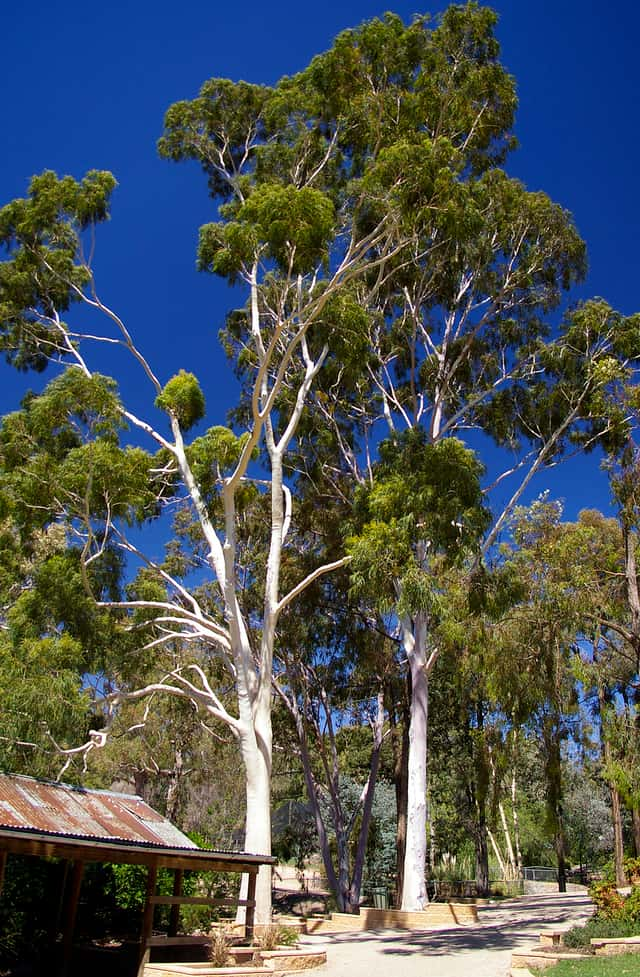
Lemon-scented Gum (Corymbia citriodora) is a easy-care plant from the Myrtaceae family. Corymbia citriodora is a tall evergreen tree from north-eastern Australia, ranging from Queensland to northern New South Wales. It usually grows 25-40 m tall. The trunk is smooth and pale, white to pink or coppery, and sheds its bark in thin flakes. Adult leaves are narrow, glossy green and give off...
Lemon-scented Gum grows up to 40.0m, spread of 1500cm, watering every 14 days. It is not suitable for indoor environments and not safe for pets.
Unlike many tropical plants, Lemon-scented Gum tolerates watering mistakes. Best for beginners. Without precautions, ingestion can cause irritation in pets. Keep out of reach of cats and dogs.
How to Care for Lemon-scented Gum?
TLDR: Lemon-scented Gum needs Direct sun, watering every 14 days, and temperatures between -5-30°C with 40-70% humidity.
How Often Should You Water Lemon-scented Gum?
Water regularly only in the first year, letting the soil dry between waterings. Once established it needs almost no watering. Overwatering and waterlogged soil are its main cause of death.
How Much Light Does Lemon-scented Gum Need?
Full sun all day. In shade it grows leggy and weak.
What Is the Best Soil for Lemon-scented Gum?
Any soil that drains well: sandy, loamy or clay, as long as water does not sit.
What Pot Should You Use for Lemon-scented Gum?
Only as a temporary seedling, in a deep pot with drainage holes. Plant it out early; kept in a pot too long, the roots circle.
What Is Lemon-scented Gum and Where Does It Come From?
Corymbia citriodora is a tall evergreen tree from north-eastern Australia, ranging from Queensland to northern New South Wales. It usually grows 25-40 m tall. The trunk is smooth and pale, white to pink or coppery, and sheds its bark in thin flakes. Adult leaves are narrow, glossy green and give off a strong lemon scent when crushed, thanks to an oil rich in citronellal. Small white to cream flowers appear in threes, mostly in winter. Until recently it was called Eucalyptus citriodora, a name still common in the trade.
How to Propagate Lemon-scented Gum?
Seed
Seed is the normal way to propagate it. Protect seedlings from frost in their first winters.
- 1 Scatter the fine seed over a light, moist mix without burying it deep
- 2 Keep in a bright, warm spot with the mix lightly moist
- 3 Once seedlings have 2-4 pairs of leaves, move them to individual tubes
- 4 Plant out while young, at 20-40 cm, as it dislikes root disturbance
Materials needed:
How Big Does Lemon-scented Gum Grow?
TLDR: Lemon-scented Gum can reach up to 40.0m tall with Fast growth rate.
Max height
40.0m
Spread
15.0m
Growth rate
Fast
Foliage
Evergreen
Warning: Toxic Plant
This plant can be toxic if ingested. Keep out of reach of:
Plant Uses
Ornamental
Great for decoration
Aromatic
Pleasant fragrance
Is your plant showing symptoms?
Click on the symptom to discover possible causes:
What Diseases Commonly Affect Lemon-scented Gum?
TLDR: Lemon-scented Gum is susceptible to 4 known diseases. Monitor regularly for early detection.
sap-sucking pests
Group of pests including aphids and scales, feeding on sugary sap on leaves, twigs, and branches. These pests often produce honeydew, which can later be infected by a fungal disease
Edema
Edema (also spelled oedema) is a non-infectious physiological disorder caused by an imbalance between water uptake and transpiration. When roots absorb water faster than leaves can release it through transpiration, cells in the leaf tissue swell and burst, forming characteristic wart-like blisters. This is purely a cosmetic issue and does not threaten plant health.
Root Rot
Root rot is a serious fungal disease that affects the root system of plants, causing them to decay and die. It is primarily caused by overwatering, poor drainage, or soil-borne fungi such as Pythium, Phytophthora, Rhizoctonia, and Fusarium. The disease thrives in waterlogged conditions where roots are deprived of oxygen, making them susceptible to fungal infection.
Cold Damage
Cold damage, also known as frost injury, occurs when plants are exposed to freezing or near-freezing temperatures. This environmental stress can cause cellular damage as ice crystals form within plant tissues, rupturing cells and disrupting normal plant functions. Chilling injury can also occur in sensitive species at temperatures between 32-55°F (0-10°C), even without actual freezing.
Fun Facts
The lemon smell comes from citronellal, the same compound as in citronella; a refined form of the oil is used in mosquito repellents.
The bark sheds in thin flakes and the trunk changes colour through the year, from white to pink and copper.
In the wild it can grow taller than 50 m.
Frequently asked questions
Is lemon-scented gum the same as Eucalyptus citriodora?
Can I plant it near the house?
Is it frost hardy?
Is it toxic to dogs and cats?
Compare with similar plants
| Attribute | Difficulty | Light | Watering | Pet Safe |
|---|---|---|---|---|
| Field Maple | Easy | Bright indirect | 14d | ✓ |
| Iberian Houseleek | Easy | Direct sun | 14d | ✓ |
| Silver Birch | Easy | Direct sun | 14d | ✓ |
| Common Blanketflower | Easy | Direct sun | 10d | ✓ |





